There’s something beautifully pure about loving a game so much that you keep its strategy guide for decades – even when you never actually owned the game itself.
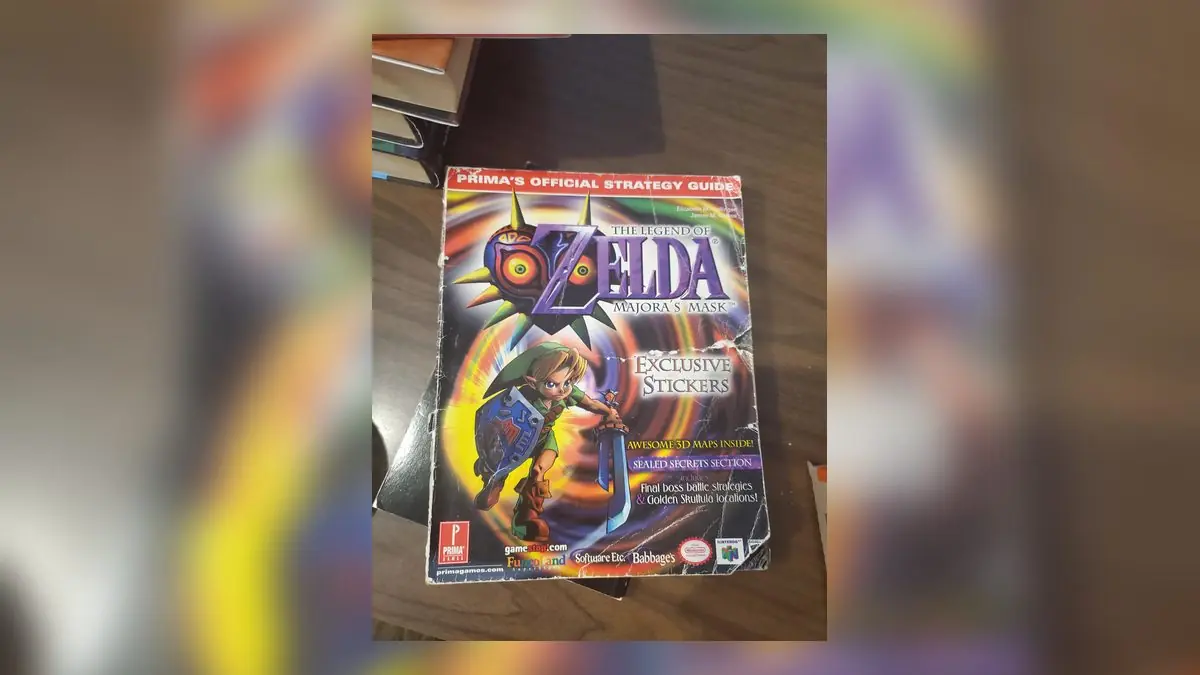
That’s exactly what happened to one Reddit user who recently shared a photo of their well-worn Legend of Zelda: Majora’s Mask strategy guide. The confession that followed hit right in the childhood feels.
“I’ve held on to this for decades and I didn’t even own the game, I would just play someone else’s copy of it. I don’t think I would have ever figured out how to get all the Masks considering how specific some of the time requirement stuff is.” — u/Ketsukoni on r/gaming
This sweet gaming confession perfectly captures something special about the N64 era. Back then, strategy guides weren’t just helpful – they were your gaming best friend, especially for a mind-bending adventure like Majora’s Mask.
And let’s be real about Majora’s Mask for a second. This wasn’t your typical “save the princess” Zelda adventure. Nintendo crafted a time-loop puzzle box that would make even seasoned gamers scratch their heads. The three-day cycle meant that every NPC had a specific schedule, every side quest had perfect timing windows, and collecting all those masks? Good luck figuring that out on your own.
Remember trying to get the Couple’s Mask without a guide? You’d need to track Kafei and Anju’s entire storyline across multiple three-day cycles, knowing exactly when and where to be at specific times. Miss one window and you’d have to start the whole sequence over. It was the kind of complex storytelling that made you feel like a detective – if you had the right clues.
That’s where those chunky strategy guides came in. They weren’t just books – they were treasure maps to gaming’s best secrets. Opening up to that glossy center section with all the artwork felt like Christmas morning. The smell of fresh pages mixed with that excitement of knowing you were about to unlock everything the game had to offer.
Physical strategy guides had this magic that today’s online wikis can’t quite match. You could bookmark important pages, scribble notes in the margins, and flip back and forth between sections. Plus, there was something satisfying about having that physical companion sitting next to you as you played.
For games like Majora’s Mask, strategy guides were practically required reading. The game had 24 unique masks to collect, each with its own quest chain and timing requirements. The Stone Mask quest alone required you to be in a specific spot at a specific time with specific items – and the game gave you almost zero hints about any of it.
Without a guide, most of us would have missed half the game’s coolest content. The Captain’s Mask quest, the Romani Ranch alien invasion, the entire Ikana Valley storyline – these were gaming’s hidden gems that only revealed themselves to the truly dedicated (or those smart enough to buy the guide).
What makes this Reddit post so heartwarming is how it shows that gaming love goes beyond just the cartridge. This person treasured their strategy guide because it represented all those borrowed gaming sessions, all those mask-hunting adventures at friends’ houses, all those “Oh wow, I never knew you could do that!” moments.
It’s a reminder that gaming has always been about more than just the games themselves. It’s about the community, the shared discoveries, the helpful resources that brought us all together. Whether you were the friend who owned the game or the friend who owned the guide, you both had something valuable to contribute to the adventure.
Today’s gamers have instant access to every secret, every walkthrough, every hidden easter egg. YouTube tutorials, online wikis, and streaming guides make gaming help more accessible than ever. But there’s something to be said for the dedication it took to seek out and keep those physical strategy guides.
They represented a different kind of gaming commitment – one where you invested in the journey, not just the destination. Where figuring out the Clock Town bank password or unlocking the Stone Tower Temple felt like real achievements worth celebrating.
So here’s to everyone who still has their old strategy guides tucked away somewhere. Whether it’s Majora’s Mask, Final Fantasy VII, or that massive Morrowind tome – those books were more than just game help. They were proof of how much we loved this hobby, even when we were just borrowing someone else’s adventure.
And honestly? In a world of instant everything, maybe holding onto something that required patience, planning, and a little bit of faith isn’t such a bad thing after all.