The gaming industry’s layoff wave just hit another studio that’s been quietly keeping our favorite games running behind the scenes. Iron Galaxy Studios announced job cuts this week, and it’s like watching another piece of the infrastructure that keeps gaming’s ecosystem alive get chipped away.
This isn’t some faceless mega-corp either. Iron Galaxy is the studio that brought us the modern Killer Instinct reboot and has been the unsung hero porting major titles across platforms for years. They’re the kind of team that makes sure your favorite game actually works when it jumps from PC to console — the digital engineers of gaming’s multiverse, if you will.
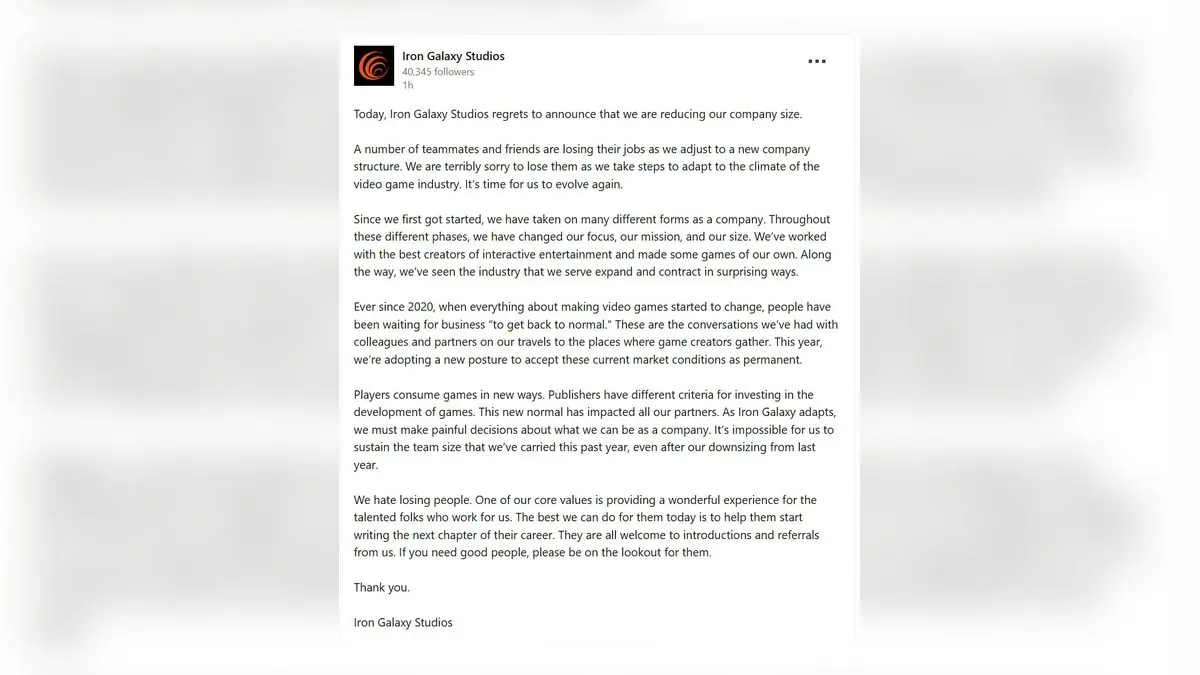
“A number of teammates and friends are losing their jobs as we adjust to a new company.” — @IdleSloth84_
The announcement came through social media, which feels painfully familiar at this point. That clinical phrase “adjust to a new company” hits different when you know real people are losing their livelihoods. It’s like when a sci-fi corporation talks about “restructuring personnel” — corporate speak that sanitizes human impact.
What makes this particularly rough is Iron Galaxy’s track record. These aren’t just any developers getting laid off. This is a studio that’s been instrumental in bringing games like Destiny 2, Diablo III, and countless others to new platforms. They’re the bridge-builders of gaming, making sure experiences translate properly across the digital landscape.
The timing couldn’t be worse either. We’re barely into 2026 and the gaming industry is already looking like a dystopian corporate thriller. Major studios, indie teams, tech giants — everyone’s cutting staff like they’re trimming dead weight from a space station before launch. But here’s the thing: these aren’t dead weight. These are the people who actually make the games we love.
Iron Galaxy has always been that reliable partner studio — think of them as the engineering crew on a starship. They might not be the captain or the flashy bridge officers, but they’re the ones making sure everything actually functions when the captain says “engage.” Losing talent from teams like this doesn’t just hurt the immediate workforce; it weakens the whole industry’s ability to deliver quality experiences.
The studio’s work on Killer Instinct was particularly impressive because they took a beloved fighting game franchise and modernized it without losing what made it special. That takes serious skill — it’s like retrofitting classic sci-fi tech with modern capabilities while keeping the original soul intact. Those kinds of developers don’t grow on trees.
What’s especially frustrating is how these layoffs keep happening right after companies post strong earnings or announce new projects. It’s like watching the Empire fire stormtroopers right after completing the Death Star. The logic doesn’t compute from a human perspective, even if the spreadsheets say it makes sense.
The broader pattern here is alarming too. The gaming industry promised it would learn from past boom-bust cycles, but here we are again. Studios are treating skilled developers like seasonal workers, hiring them up for big projects then cutting them loose when the quarterly reports demand it. It’s not sustainable, and it’s definitely not building the kind of stable creative environment that produces the next generation of groundbreaking games.
For the developers affected, the support from the gaming community has been immediate and genuine. That’s one bright spot in this whole mess — gamers and industry folks rallying around displaced talent, sharing job leads, and offering connections. It’s like seeing the Rebel Alliance network activate when the Empire strikes.
Looking ahead, Iron Galaxy will likely survive this restructuring. Studios with their track record and specialized skills usually do. But the cost in human talent and institutional knowledge is real. Every experienced developer who leaves takes years of problem-solving know-how with them. That’s not easily replaced, no matter what the corporate restructuring docs claim.
The bigger question is whether the industry will ever break this cycle. We keep seeing the same pattern: rapid hiring during good times, mass layoffs when things get uncertain. It’s like the gaming industry is stuck in its own time loop, destined to repeat the same mistakes until someone figures out how to write a better ending.
For now, the affected Iron Galaxy developers join thousands of other talented people looking for their next opportunity in an industry that desperately needs their skills but seems determined to treat them as expendable. Here’s hoping they land somewhere that values what they bring to the table — and that Iron Galaxy figures out how to move forward without losing what made them valuable partners in the first place.