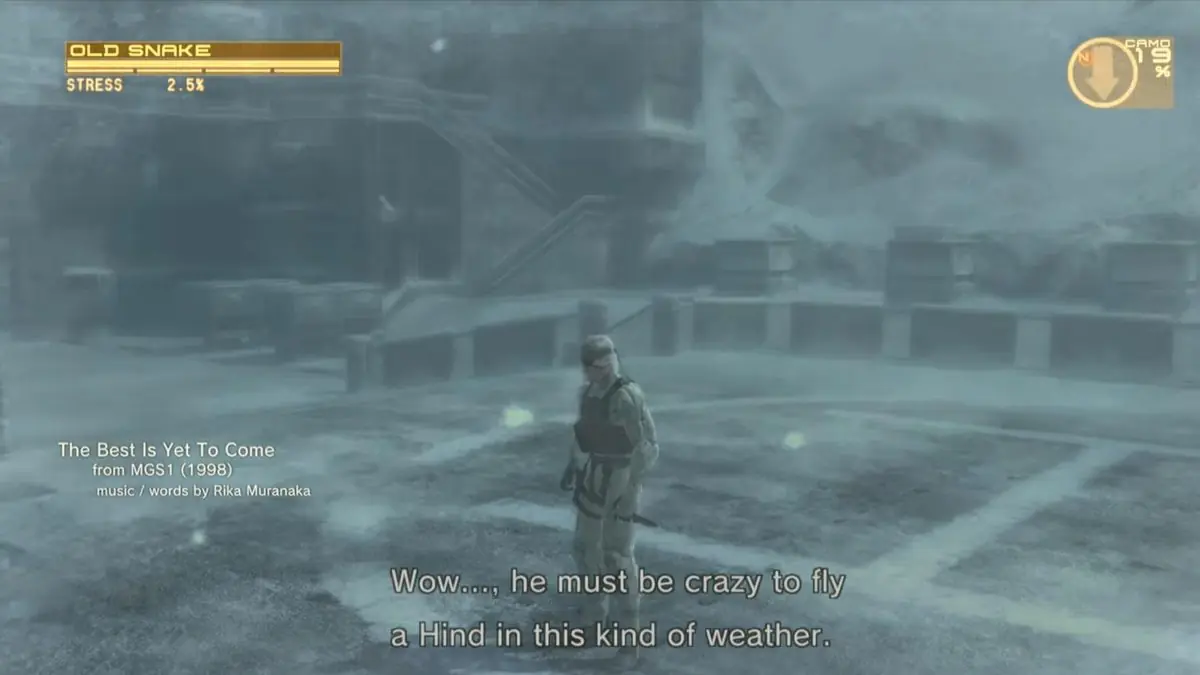
Sometimes the smallest posts hit the hardest. A simple Reddit submission featuring just six words from Metal Gear Solid 4 managed to capture something that bigger gaming announcements often miss — the raw emotional connection that defines our relationship with certain games.
The post was deceptively simple: a quote from Kojima Productions’ 2008 stealth masterpiece paired with the game’s cover art. Yet it generated 227 engagement points on r/gaming, proving that some gaming moments transcend their original context to become cultural touchstones.
“You feel it too, don’t you? [Metal Gear Solid 4: Guns of the Patriots]” — u/DarkMatterM4 on r/gaming
That particular line, delivered during one of MGS4’s most emotionally charged moments, carries weight that extends far beyond its original PlayStation 3 context. It speaks to shared experience — the kind of gaming moment that creates instant recognition among those who lived through it.
Meanwhile, the response reveals something fascinating about gaming nostalgia cycles. We’re witnessing peak PS3-era nostalgia right now, roughly 18 years after the console’s launch. This follows the industry’s established pattern where gaming memories hit peak emotional resonance around the 15-20 year mark — long enough for rose-colored glasses to form, recent enough for visceral recall.
Metal Gear Solid 4 represents a particularly potent nostalgia target because it arrived at a unique inflection point. The game served as both Solid Snake’s final mission and the conclusion of gaming’s most ambitious narrative experiment. Kojima Productions crafted what many consider the medium’s most successful attempt at interactive cinema, complete with 90-minute cutscenes that somehow never felt excessive.
Notably, MGS4 also marked the end of an era for single-player narrative ambition. The game’s massive budget and development scope represented the kind of creative risk-taking that became increasingly rare as the industry shifted toward safer, more monetizable models. Looking back, it feels like the last time a major studio was willing to bet everything on pure storytelling ambition.
The technical achievement cannot be understated either. MGS4 pushed the PS3’s Cell processor to its absolute limits, delivering visuals and AI behaviors that still impress today. The game’s famous installation sequences became memes, but they masked incredible technical wizardry that made seamless stealth gameplay possible across massive environments.
This Reddit post also highlights how certain gaming quotes achieve meme status through emotional resonance rather than humor. Unlike typical gaming memes that rely on absurdity or irony, “You feel it too, don’t you?” works because it directly addresses shared experience. It’s gaming’s equivalent of “I am your father” — a line that carries cultural weight beyond its source material.
The timing feels significant too. As the gaming industry grapples with live service fatigue and questions about narrative depth in modern AAA development, MGS4 represents a road not taken. Its commitment to single-player storytelling and player emotional investment feels almost revolutionary by current standards.
Kojima’s post-Konami success with Death Stranding proves his narrative approach still resonates, but MGS4 remains his most complete statement about games as emotional vehicles. The fact that a simple Reddit post can generate this level of engagement suggests the industry might be ready to rediscover what made that approach so compelling.
Looking ahead, we’re likely entering peak nostalgia territory for the entire seventh console generation. Expect similar waves of appreciation for other PS3/Xbox 360-era exclusives as they hit that sweet spot of emotional distance. The pattern suggests we’ll see renewed interest in games like The Last of Us, Uncharted 2, and Mass Effect 2 as defining experiences of their generation.
More importantly, this nostalgia wave might influence current development priorities. As studios observe which past games generate authentic emotional responses, we could see a return to the kind of narrative ambition that defined MGS4’s era. Sometimes the best way forward involves remembering what worked before.