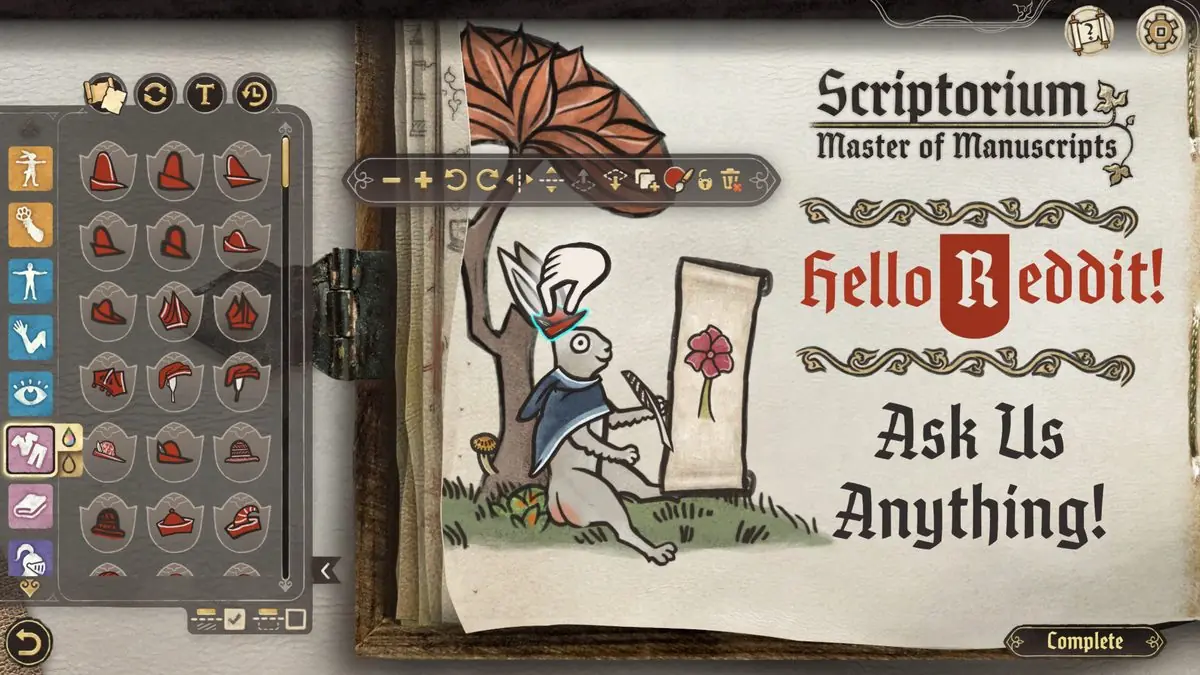
In a gaming landscape increasingly dominated by AI-generated content, Polish indie studio Yaza Games just dropped something that feels like finding an illuminated manuscript in a digital wasteland. Scriptorium: Master of Manuscripts launched yesterday, and it’s not just another cozy game — it’s a love letter to the lost art of medieval storytelling.
The game transforms players into medieval scribes for hire, crafting illuminated manuscripts with over 2000 hand-drawn art pieces pulled straight from history’s margins. Think of it as Photoshop, but instead of modern design tools, you’re working with quills, ink, and the wild imagination that gave us snail knights and rabbit warriors in medieval texts.
The Reddit gaming community lit up when Yaza Games announced their AMA to celebrate the launch:
“[AMA] We’re Yaza Games, an indie studio from Poland! Yesterday we released Scriptorium: Master of Manuscripts – a cozy medieval manuscript sandbox game that’s also… a Medieval Photoshop? Hey Reddit! after 3 years of intense development, our game Scriptorium: Master of Manuscripts finally released to an overwhelmingly positive response!” — u/leinadcovsky on r/gaming
What makes this story particularly compelling is the studio’s evolution. Their first game, Inkulinati, was a turn-based strategy title that introduced players to the bizarre world of medieval marginalia — those weird doodles monks left in book margins. But players kept asking for more creative freedom. They wanted to be the artists, not just the generals.
So Yaza listened. They pivoted from tactical combat to pure creativity, letting players step into the shoes of medieval scribes. It’s a narrative shift that speaks to something deeper about our relationship with art and creation.
The studio’s commitment to authenticity runs deep. They partnered with medievalists to ensure historical accuracy, down to the weirdest rabbit-versus-snail battles that actually appeared in 14th-century manuscripts. The game even caught the attention of the National Library, who made it part of an official exhibition.
But here’s where the story gets really interesting: Yaza Games made a bold choice to hand-draw every single one of their 2000+ art assets. No AI shortcuts. No generated content. Just human hands recreating the painstaking artistry that medieval scribes practiced centuries ago.
This decision feels revolutionary in 2026. While other studios rush toward AI-generated assets to cut costs, Yaza doubled down on craftsmanship. Every stroke, every flourish, every bizarre creature crawling through their digital manuscripts was drawn by actual artists.
The cultural significance can’t be overstated. Medieval manuscripts were the internet of their age — repositories of knowledge, art, and humanity’s strangest impulses. Monks would spend lifetimes copying texts, then slip in personal touches: jokes, complaints about the weather, drawings of their cats. These margins became windows into medieval souls.
Scriptorium captures that spirit perfectly. You’re not just making pretty pictures; you’re continuing a tradition that stretches back over a thousand years. Every manuscript you create becomes part of that ongoing conversation between past and present.
The game’s cozy sandbox approach also reflects our current moment. After years of competitive gaming and endless content treadmills, there’s something deeply appealing about slow, meditative creativity. Scriptorium offers digital mindfulness — a chance to disconnect from algorithmic feeds and reconnect with deliberate artmaking.
For narrative-focused players, the game opens fascinating possibilities. Each manuscript becomes a storytelling canvas. You might illustrate epic battles between knights and dragons, or create whimsical borders filled with dancing rabbits. The tools are historically authentic, but the stories you tell are entirely your own.
This represents something larger happening in indie gaming. Small studios like Yaza are carving out space for experiences that prioritize soul over scale, craft over convenience. They’re proving that players hunger for authenticity in an increasingly synthetic entertainment landscape.
Looking ahead, Scriptorium’s success could inspire other developers to reconsider their relationship with AI-generated content. If a small Polish studio can hand-draw 2000+ medieval assets and still deliver a commercially viable game, what’s stopping others from prioritizing human creativity?
The game’s integration with cultural institutions also hints at gaming’s growing legitimacy as an artistic medium. When national libraries start showcasing video games, we’re witnessing the medium’s transformation from entertainment into culture.
Yaza Games plans to continue supporting the community with additional content and tools. Given the overwhelmingly positive response, don’t be surprised if other studios start exploring their own historical creative sandboxes. After all, human history is full of untold stories waiting for the right medium to bring them back to life.