Sometimes the most memorable games are the ones that leave you feeling a little unsettled. The Legend of Zelda: Majora’s Mask did exactly that back in 2000. It still does today.
We all remember our first time playing a Zelda game. Most of us started with something cheerful like Ocarina of Time or Wind Waker. Those games felt like magical adventures with friends. Majora’s Mask was different. It felt like stepping into someone’s fever dream.
The game opens with Link getting mugged by a creepy mask salesman and transformed into a Deku Scrub. That’s just the beginning. You quickly learn that the world of Termina is stuck in a three-day time loop. Everyone’s going to die unless you stop it. That’s already pretty heavy for a Nintendo game.
“Majora’s Mask was dark as hell. The fact that you help people die and then put their spirits into masks is just one of many messed-up things in The Legend of Zelda: Majora’s Mask.” – u/jdawg1018 on r/gaming
Players who appreciate mature storytelling absolutely love this game. They praise Nintendo for taking creative risks. The time loop mechanic creates genuine emotional weight. You watch the same people live their final days over and over. You see their fears and regrets play out repeatedly.
Fans often call it the most artistic Zelda game ever made. The transformation masks represent different aspects of trauma and identity. The whole experience feels like a meditation on grief and acceptance. It’s the kind of depth you don’t expect from a game with Mario and Pikachu on the same console.
Many players found the themes genuinely disturbing though. The transformation sequences are body horror. Link screams in pain as his body changes into different creatures. That’s not typical Nintendo content. Parents definitely weren’t expecting psychological thriller elements in their kid’s Zelda game.
The Romani Ranch storyline hits particularly hard. You help a young girl defend against alien abduction. If you fail, she loses her memory and becomes a hollow shell of herself. That’s some genuinely dark stuff. It deals with trauma in ways that feel uncomfortably real.
Some critics argued the game went too far. They felt Nintendo lost sight of their core audience. Kids playing this game encountered themes of death and existential dread. That’s a lot to process when you’re just trying to have fun after school.
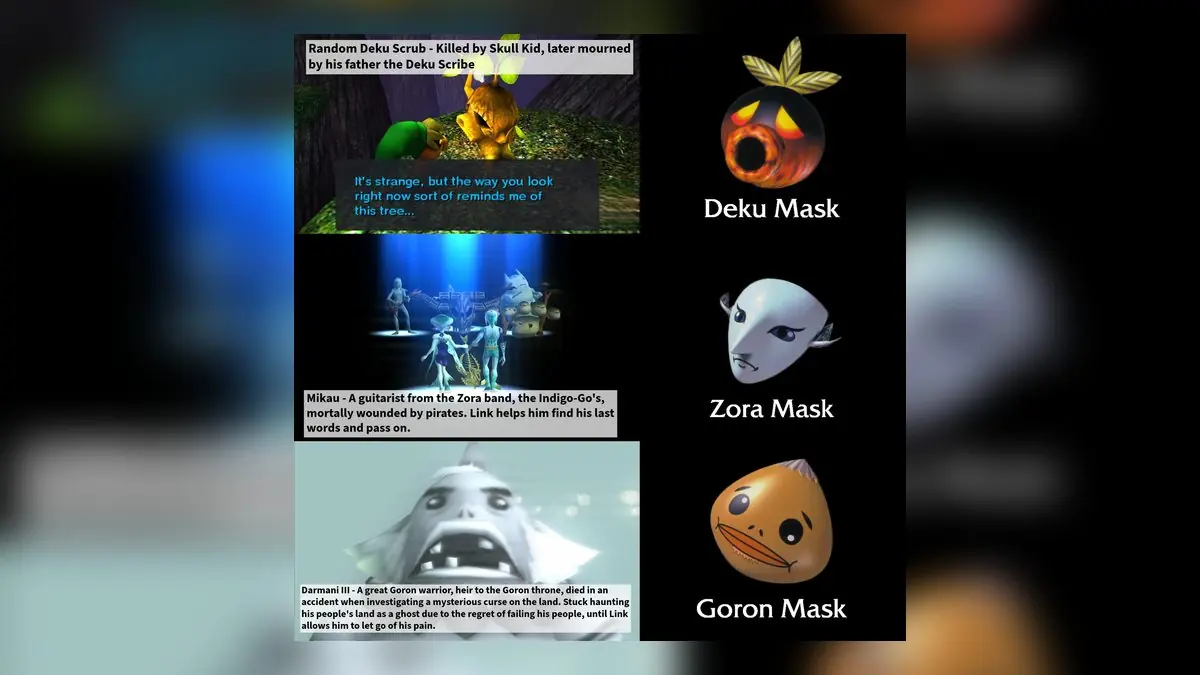
The internet has had a field day with Majora’s Mask theories over the years. Some players joke that Link is actually dead throughout the entire game. Others point out that every transformation mask comes from a deceased character. You’re literally wearing the faces of the dead. That’s metal as hell for a Nintendo game.
Fan artists love drawing nightmarish interpretations of the Happy Mask Salesman. His wide grin and twitchy movements scream “definitely not trustworthy.” The moon with its terrifying face has become an instant meme. It represents impending doom with a smile. That’s pure nightmare fuel.
Majora’s Mask proved Nintendo could tell sophisticated stories when they wanted to. It showed that family-friendly doesn’t have to mean simple or shallow. The game tackled heavy themes while maintaining the core Zelda gameplay loop. That balance is incredibly difficult to achieve.
The game’s influence can be seen throughout modern Nintendo titles. Breath of the Wild includes environmental storytelling about a kingdom that already ended. Tears of the Kingdom deals with corruption and transformation. Nintendo learned they could push boundaries without losing their identity.
Modern indie developers constantly reference Majora’s Mask when discussing narrative design. The time loop mechanic has been copied countless times. The way it handles death and rebirth as gameplay mechanics remains brilliant. It’s a masterclass in using game mechanics to reinforce themes.
The game’s legacy continues growing stronger each year. New players discover it through Nintendo Switch Online. They’re often shocked by how mature and complex it feels. Social media regularly lights up with people sharing their “holy crap this is dark” moments.
Nintendo seems more confident about exploring darker themes now. They’ve learned that their audience can handle complexity. Games like Xenoblade Chronicles and Fire Emblem regularly deal with war and death. Majora’s Mask showed them the way forward.
We’ll probably never see Nintendo go quite this dark again. The gaming landscape has changed too much. But Majora’s Mask remains a fascinating experiment. It’s a reminder that even the most wholesome companies can create something genuinely unsettling. Sometimes that’s exactly what we need.