
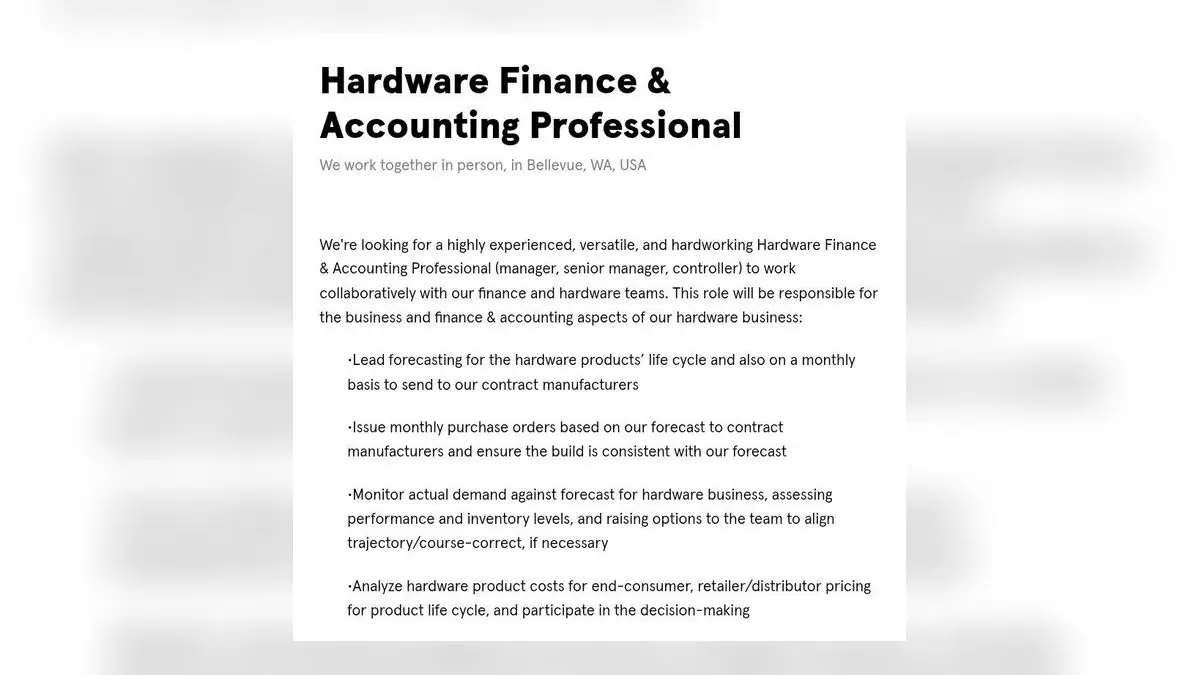
Picture this: Valve, the company that gave us Half-Life’s Gordon Freeman and then vanished into the shadows for years, is now quietly building what looks like a hardware empire. The latest clue? A job posting that sounds about as exciting as watching paint dry but actually reveals something huge.
“Valve published a new job opening for a Hardware Finance & Accounting Professional.” – u/gogodboss on r/Steam
This isn’t just any random corporate hire. When a company specifically creates a finance role dedicated to hardware, they’re not playing around. This feels like the moment in a sci-fi movie when the scrappy resistance realizes they need actual logistics to take on the Empire.
The Steam Deck launched as Valve’s boldest hardware bet since the Steam Controller (RIP). But while that controller felt like a cool prototype that escaped from a lab, the Steam Deck has legs. Real, revenue-generating, market-disrupting legs. Now it looks like Valve wants to turn that success into something bigger.
Think about what this role actually means. Someone’s going to be crunching numbers on manufacturing costs, supply chain management, and hardware profitability. That’s not the kind of position you create for a side project. That’s what you do when you’re planning to scale up massively or launch entirely new product lines.
The timing makes sense too. The Steam Deck has proven that portable PC gaming isn’t just a niche dream. It’s a legitimate market category that Nintendo and other companies are suddenly scrambling to compete in. Valve didn’t just create a product – they created a new battlefield in the console wars.
But here’s where it gets really interesting from a world-building perspective. Valve has always been the wild card in gaming. They’re like that brilliant inventor character in sci-fi stories who disappears into their workshop and emerges with something that changes everything. The Steam platform revolutionized PC gaming. Steam Deck is doing the same for portable gaming.
A dedicated hardware finance professional suggests Valve is thinking long-term strategy, not just riding the Steam Deck wave. This could mean Steam Deck 2 is already in serious development. Or maybe they’re working on something completely different – a VR headset that doesn’t cost as much as a used car, perhaps? A desktop gaming PC that competes directly with traditional consoles?
The sci-fi nerd in me can’t help but imagine Valve’s hardware roadmap like a tech tree in a 4X strategy game. Steam Deck was the first major unlock. Now they’re investing in the infrastructure to unlock whatever comes next. Every great sci-fi civilization needs solid economic foundations before they can build their Death Stars.
What’s fascinating is how this contrasts with Valve’s historical approach. Remember the Steam Machine initiative? That felt like throwing spaghetti at the wall to see what stuck. This finance hire suggests they’ve learned from those experiments and are now approaching hardware with the kind of serious business planning that actually wins markets.
The hardware landscape is shifting fast. Apple’s pushing M-series chips into everything. NVIDIA‘s making gaming laptops more powerful than ever. Intel and AMD are locked in an arms race. Meanwhile, cloud gaming services are trying to make dedicated hardware irrelevant entirely. Valve needs serious financial planning to navigate that complexity.
This job posting might seem mundane, but it’s actually a signal flare. It says Valve isn’t content to be just a software company that occasionally makes cool hardware. They want to be a hardware company that happens to also dominate software. That’s a much bigger ambition.
So what’s next? Steam Deck 2 seems almost guaranteed at this point. But I’m betting Valve has bigger plans. Maybe a proper Steam Machine revival now that they understand the market better. Maybe something completely unexpected that we won’t see coming until it’s announced.
One thing’s certain – when Valve starts hiring finance professionals specifically for hardware, they’re not just dabbling anymore. They’re building an empire, one carefully calculated spreadsheet at a time.