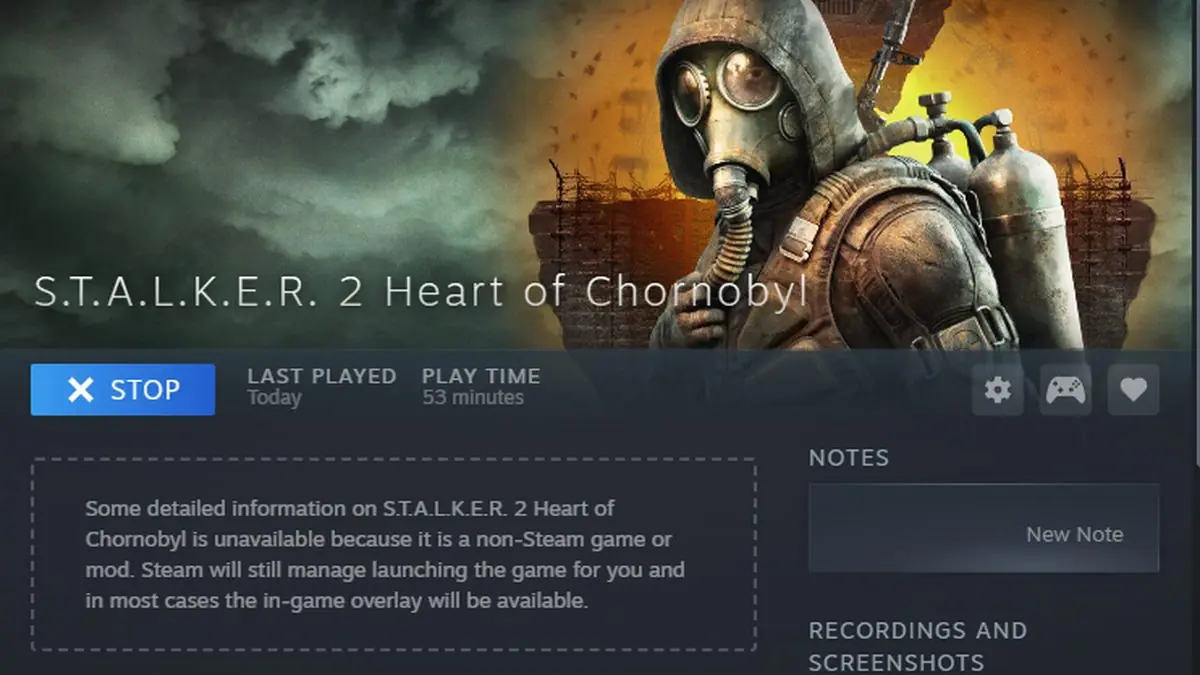
Steam just pulled off something that’s got gamers scratching their heads. A Reddit user discovered that Steam is now tracking playtime for games they didn’t even buy on the platform. We’re talking about external games added as “non-Steam games” – something that used to be just a shortcut feature.
The discovery came when someone added their GOG copy of STALKER 2 to their Steam library and noticed Steam was keeping track of how long they played. That’s new territory for Valve.
“non steam game tracking time” – u/ParamedicLocal8226 on r/Steam
This isn’t just a random bug or glitch. Steam has always let you add non-Steam games to your library for easy launching. But tracking playtime? That’s crossing into new territory. Before this, only games you actually bought on Steam got the full playtime tracking treatment.
The timing is interesting too. STALKER 2 launched on multiple platforms including Steam and GOG. Some players prefer GOG for the DRM-free experience but still want everything organized in their Steam library. Now they’re getting more Steam features than they bargained for.
This feels like Valve testing the waters for something bigger. Steam has always been more than just a store – it’s a social platform where friends compare playtime and achievements. By tracking external games, Steam could become the universal hub for all your gaming activity, regardless of where you bought the game.
Think about it from Valve’s perspective. They want to be your gaming home base. Even if you buy games elsewhere, they still want you opening Steam daily. Seeing your playtime across all games keeps you engaged with the platform. It’s smart business.
The implications go beyond just convenience though. This raises questions about data collection. What information is Steam gathering when you play non-Steam games? Are they tracking just time played, or something more detailed? Valve hasn’t made any official announcements about this change.
For gamers who like having everything in one place, this is actually pretty cool. Steam’s interface for tracking game time, achievements, and social features is solid. Having all that data in one spot, regardless of the store, could be genuinely useful.
But it also highlights how much control these platforms want over your gaming experience. Steam isn’t content being just another launcher anymore. They want to be the complete gaming ecosystem, even for games they didn’t sell you.
The feature seems to be rolling out quietly. Not everyone is seeing it yet, which suggests Valve might be testing it with select users or specific games. STALKER 2 could be a test case since it’s a high-profile recent release available across multiple platforms.
This also puts pressure on other platforms. Epic Games Store, GOG, and Microsoft Store all want to be your primary gaming hub. If Steam starts offering better cross-platform features, it gives them another edge in the platform wars.
The community response will be interesting to watch. Some players love having everything centralized in Steam. Others prefer keeping their different game libraries separate. Privacy-conscious gamers might not appreciate Steam tracking their activity in games purchased elsewhere.
What’s next? If this test goes well, expect Steam to expand playtime tracking to more non-Steam games. We might see other features follow – maybe achievement tracking or social features for external games. Steam could even start offering cloud saves for non-Steam titles.
Valve is clearly positioning Steam as more than just a storefront. They want to be the Windows of gaming – the platform you use regardless of where your games come from. This playtime tracking feature is just the beginning of that strategy.
Keep an eye on your own Steam library if you’ve added external games. You might start seeing playtime numbers appear for games you bought elsewhere. It’s a small change that could signal a big shift in how gaming platforms compete for your attention.