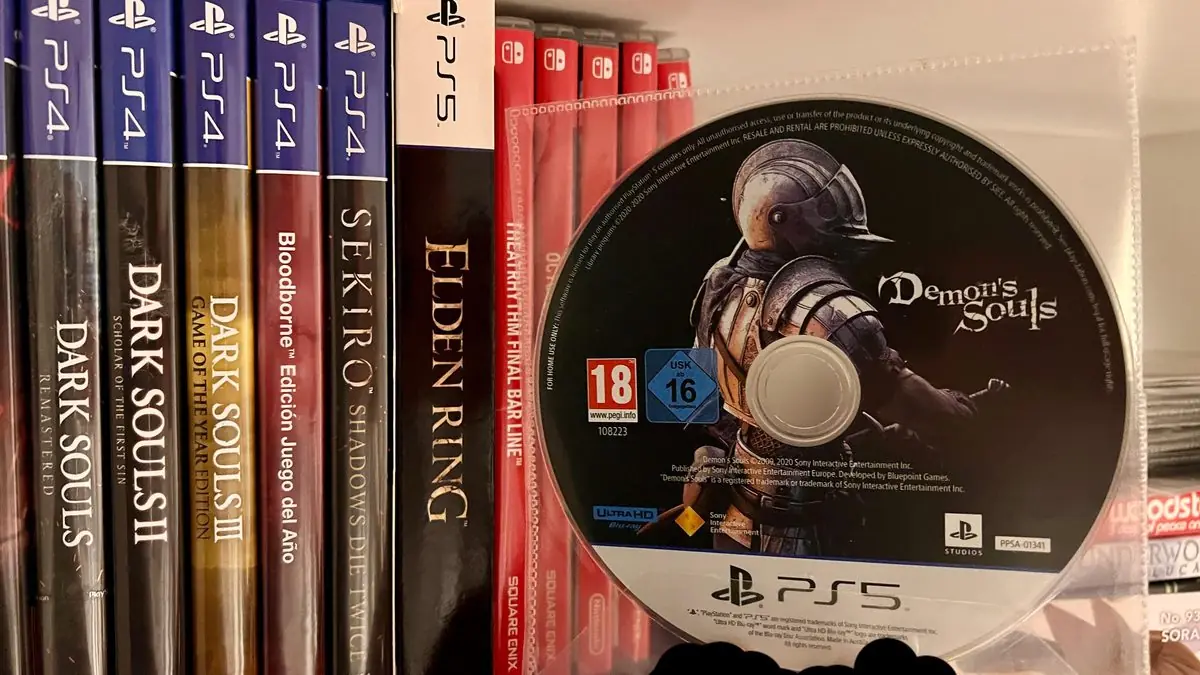
The ancient war between collectors and convenience-seekers has erupted once more. Like two titans clashing across a digital battlefield, the eternal struggle between physical and digital game ownership refuses to die. And this week, it found its newest champion in the form of a Souls series devotee.
The spark that ignited this latest skirmish came from a seemingly innocent post showcasing a beloved collection. But beneath the surface, it struck at the very heart of what it means to truly “own” our most treasured gaming experiences.
“That great feeling of having one of your fav sagas completely physical. I also have the OG Demon’s, Erdtree and Nightreign but only digitally.” — u/Elogano on r/gaming
The post perfectly captures the modern gamer’s dilemma. Here stands a player who understands both worlds — the satisfying weight of a physical case in hand, and the instant gratification of digital downloads. It’s a battle fought not with swords and sorcery, but with credit cards and shelf space.
Physical collectors have risen from the ashes stronger than ever. They speak in hushed, reverent tones about the ritual of opening a new game. The crack of cellophane. The fresh manual smell. The artwork you can actually hold. These aren’t just games to them — they’re artifacts of digital art, proof that their favorite worlds once existed in tangible form.
The physical army grows stronger with each store closure and streaming service shutdown. Every time a digital storefront vanishes into the void, taking purchased games with it, their ranks swell. They’ve seen the writing on the wall written in disappearing pixels.
But the digital revolution marches on with unstoppable force. Its soldiers preach a different gospel — one of instant access and infinite storage. Why wait for shipping when you can play at midnight? Why dust shelves when your library lives in the cloud? They’ve embraced the future with open arms, trading physical comfort for digital freedom.
The convenience factor hits like a critical strike. No more sold-out pre-orders. No more damaged packages. No more moving boxes full of games every time you change apartments. The digital defenders have a point — sometimes the easiest path really is the best one.
Yet somewhere between these extremes, a new breed of gamer has emerged. The hybrid collectors. They understand that some games demand the full physical treatment — collector’s editions with statues and soundtracks deserve shelf space. But for everything else? Digital works just fine.
This isn’t about right or wrong anymore. It’s about understanding that different games serve different purposes in our lives. That special edition of your favorite RPG might earn its place on the shelf. But that indie puzzle game you’ll play once? Maybe digital makes more sense.
The Souls series sits at the perfect intersection of this debate. These are games built for devotion, crafted for the kind of player who doesn’t just beat them — they master them. They’re art pieces disguised as video games, the kind of experiences that feel worthy of physical preservation.
But here’s the thing about this eternal conflict — it’s not really about storage methods or convenience. It’s about control. Physical owners sleep peacefully knowing their games can’t be yanked away by corporate decisions or server shutdowns. Digital adopters rest easy knowing they’ll never lose a disc or watch it scratch beyond repair.
The gaming industry watches this battle with keen interest. Publishers love digital’s higher profit margins and zero manufacturing costs. But they also understand the collector’s mindset drives special editions and merchandise sales. It’s a delicate balance between embracing the future and respecting the past.
As we march toward an increasingly connected future, this debate will only intensify. Cloud gaming promises to make even downloads seem old-fashioned. Subscription services offer vast libraries for monthly fees. NFTs threaten to complicate ownership in entirely new ways.
But perhaps that Reddit post holds the real wisdom. Maybe the future isn’t about choosing sides in this war. Maybe it’s about understanding when each approach serves us best. Physical for the games that matter most. Digital for everything else. A collection that breathes and adapts, just like the medium itself.
The battle between physical and digital will rage on, but the smartest collectors have already figured out the secret — sometimes the best strategy is refusing to pick just one side.