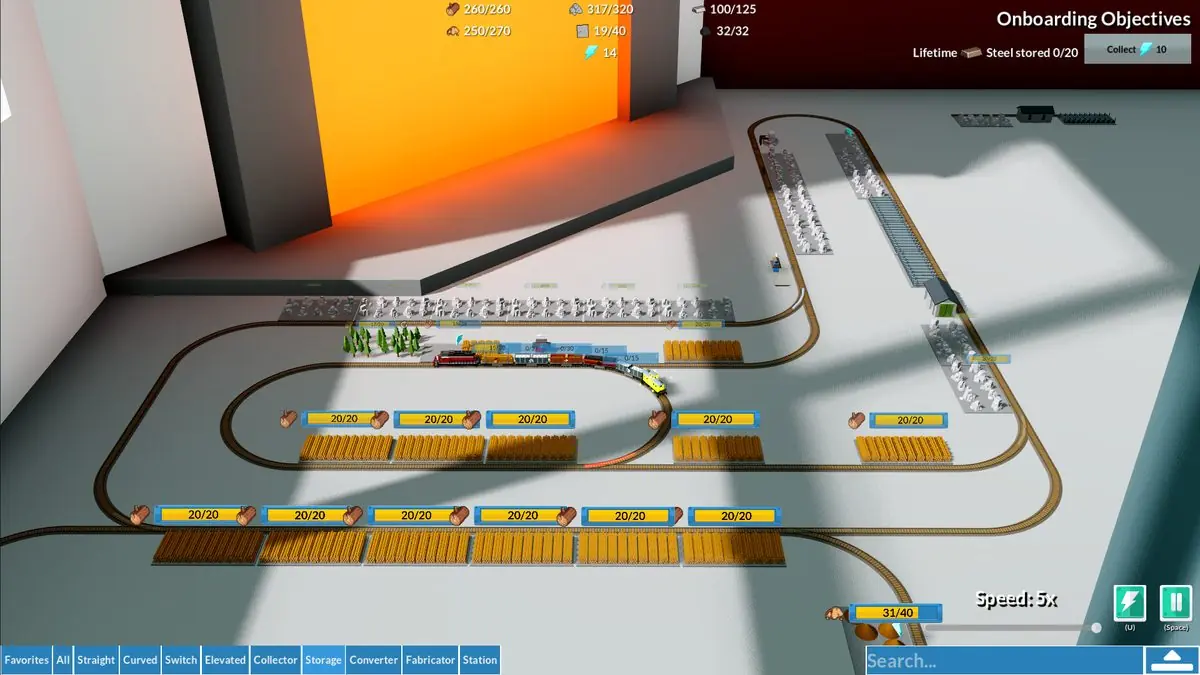
The whistle’s blown and Lazy Train Game has officially pulled into Steam station. After months of development, Gamewarden Games just dropped their indie train simulator with some serious upgrades that show they’ve been grinding behind the scenes.
This isn’t your typical train game release. Developer Nathan and his team went all-out for the Steam launch, packing in features that transform this from a simple simulator into a full-fledged community platform. The biggest play here is Steam Workshop support – players can now build and share custom scenarios with the entire community.
“Steam Workshop is now Available! You can both play and create custom scenarios in the Steam Workshop. The initial two are a snowy version of the canyon scenario and the second is the original demo scenario.” – Lazy Train Game on Steam
The achievement system brings 25 new challenges to the table. That’s solid replay value for an indie title. These aren’t throwaway achievements either – the developer specifically mentions they’re designed to “give some extra challenge and reward from the game.” Smart move. Achievement hunters love meaningful unlocks, and 25 is the sweet spot where it feels substantial without being overwhelming.
But here’s the real game-changer: they completely reworked the track placement system. No more accidental purchases of expensive tracks. The old system had players buying first, then placing – a recipe for costly mistakes. Now you purchase as you place. It’s a small change that fixes a major pain point.
“You just click on the widget to initiate placing them and the tracks are now purchased as they are placed! This solves a very annoying problem where you might buy a very expensive track, only to find out it was the wrong one.” – Lazy Train Game on Steam
The interface got a complete overhaul too. The tracks panel now features tabs and search functionality. The old dropdown system was confusing players – many didn’t even know filters and favorites existed. This is quality-of-life improvement done right.
Two brand new scenarios round out the package: Living Room and Future Platform. These join the existing lineup and show the range this game can handle – from cozy indoor setups to futuristic environments.
Steam Cloud support means your progress follows you anywhere. Plus, they’re testing waters with German, Spanish, and Russian language support. It’s marked as experimental, but it shows ambition to reach beyond English-speaking markets.
This release represents something bigger in the indie gaming space. Small developers are learning to leverage Steam’s ecosystem properly. Workshop support isn’t just a feature – it’s a community-building tool that extends a game’s lifespan indefinitely. When players can create and share content, they become invested stakeholders rather than passive consumers.
The achievement integration shows they understand modern gaming expectations. Players want goals, progression, and reasons to return. Twenty-five achievements hits that target perfectly.
The reworked purchasing system demonstrates they’ve been listening to player feedback. Too many indie developers ship and forget. Gamewarden Games clearly studied how players actually interact with their game and fixed real problems.
Steam Workshop integration is the long-term play here. User-generated content can transform a niche simulator into a thriving creative platform. Look at games like Cities: Skylines or Planet Coaster – their Workshop communities became the main draw.
For train simulation fans, this represents serious value. The base game provides solid mechanics, Workshop opens unlimited content possibilities, and achievements give structured goals. That’s a complete package.
The experimental language support signals international ambitions. If those translations work out, they could tap markets where train simulation has serious followings – especially Germany’s robust simulation gaming community.
Moving forward, success depends on Workshop adoption. The developer seeded it with two scenarios – a snowy canyon variant and the original demo level. Smart strategy. It gives creators starting points while showing the system’s flexibility.
Community response will determine this game’s trajectory. Strong Workshop engagement could build momentum for additional features and content updates. The foundation is solid – now it’s up to players to build something special on top of it.
Lazy Train Game just proved that indie developers can execute major feature rollouts professionally. Steam Workshop, achievements, cloud saves, and quality-of-life improvements – that’s a launch worth celebrating.