Double Fine has always been the studio that asks “what if?” in the wildest ways possible. Their latest experiment answers a question nobody knew they had: what happens when you mix the zen art of pottery with the chaos of a fighting game?
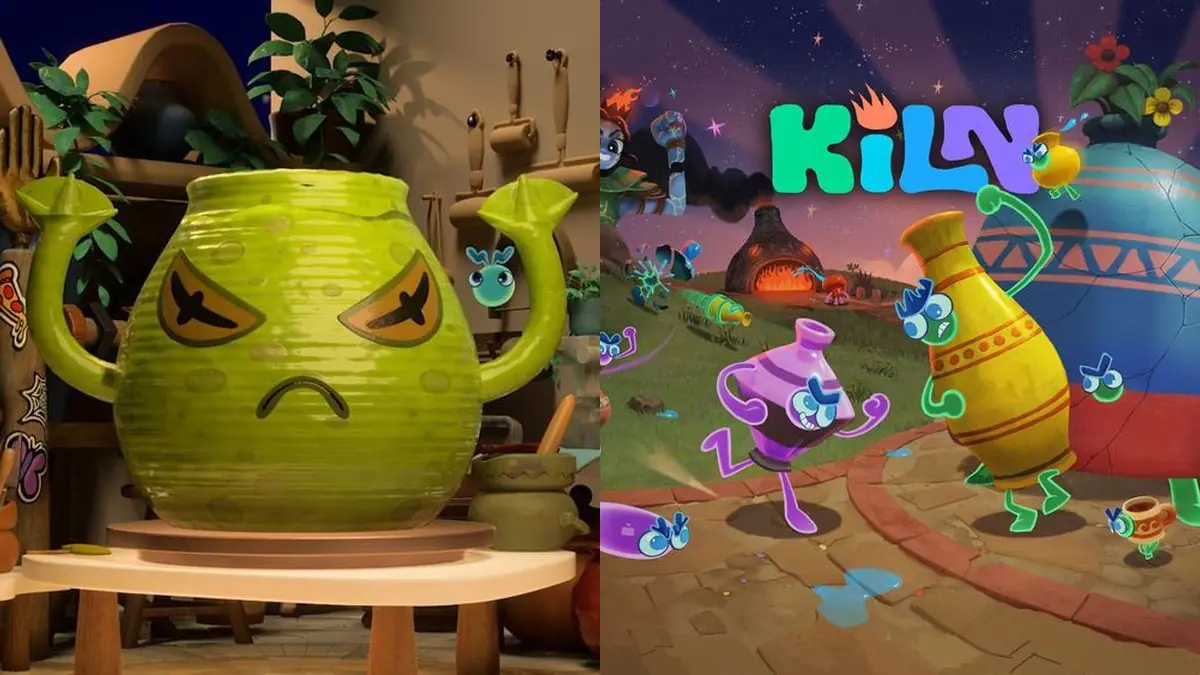
KILN is their answer. It’s a pottery brawler that sounds like someone’s fever dream after binge-watching The Great British Pottery Throw Down and Street Fighter tournaments back-to-back.
The game is already catching eyes in the streaming world. Content creator Jenna recently fired up her stream to showcase this unusual indie title.
“NOW STREAMING: pottery brawler KILN from DoubleFine!” – @thejenna.bsky.social
Her enthusiasm hints at something special brewing in Double Fine’s creative kiln. The fact that streamers are gravitating toward KILN suggests it’s more than just a quirky concept.
So what exactly is a pottery brawler? The details are still emerging. But knowing Double Fine’s track record, we’re probably looking at something that treats pottery as both art form and weapon. Think less about smashing pots and more about crafting them into tools of victory.
There’s something deeply satisfying about the idea of shaping clay with your hands before using that creation in combat. It’s the ultimate expression of “I made this, now I’m going to beat you with it.” The concept taps into something primal about creation and destruction.
Double Fine has never shied away from turning everyday activities into gaming gold. They gave us Psychonauts, where mental health became a platforming adventure. They delivered Brutal Legend, where heavy metal mythology became an action-strategy epic. Now they’re asking us to find the warrior spirit in wheel-throwing.
The studio’s approach to game design has always felt like performance art disguised as entertainment. Tim Schafer and his team don’t just make games. They craft experiences that challenge what interactive media can be. KILN fits perfectly into this philosophy.
Pottery itself carries deep cultural weight across human history. From ancient Greek amphorae to Japanese tea ceremonies, clay work represents patience and skill. It’s meditative. It requires focus and steady hands. These same qualities translate surprisingly well to fighting games, where timing and precision separate winners from losers.
The visual possibilities alone are exciting to imagine. Clay responds to touch in ways that few other materials can match in gaming. Watching virtual hands shape digital clay could be hypnotic. Then seeing those creations become tools of combat adds an entirely new layer of investment.
Double Fine’s indie sensibilities mean KILN won’t be chasing mainstream fighting game mechanics. This isn’t about frame data and competitive tiers. It’s about exploring what happens when you blend artistic expression with competitive gameplay. The studio excels at finding heart in unexpected places.
The streaming response suggests KILN has that special “you have to see this to believe it” quality that makes for great content. Games that defy easy categorization often become streaming darlings because they generate genuine surprise and curiosity.
There’s also something beautifully counter-cultural about making pottery cool again. In an era of hyperkinetic gaming experiences, KILN seems to suggest that slowing down to craft something beautiful can be just as engaging as rapid-fire action.
The game represents Double Fine’s continued commitment to creative risk-taking. While other studios chase proven formulas, they’re still asking weird questions and building weird answers. KILN proves that innovation doesn’t always mean adding more explosions or higher frame rates.
As streaming coverage expands and more players get their hands on KILN, we’ll learn whether this pottery experiment can capture hearts beyond its novelty factor. The early signs suggest something genuinely special is taking shape.
Double Fine has always understood that the best games don’t just entertain. They expand our ideas about what games can be. KILN looks like their latest attempt to reshape the medium itself, one clay vessel at a time.
The future of pottery brawling starts now. Whether KILN becomes a cult classic or mainstream breakthrough, it’s already succeeded in making us look at both pottery and fighting games in entirely new ways.