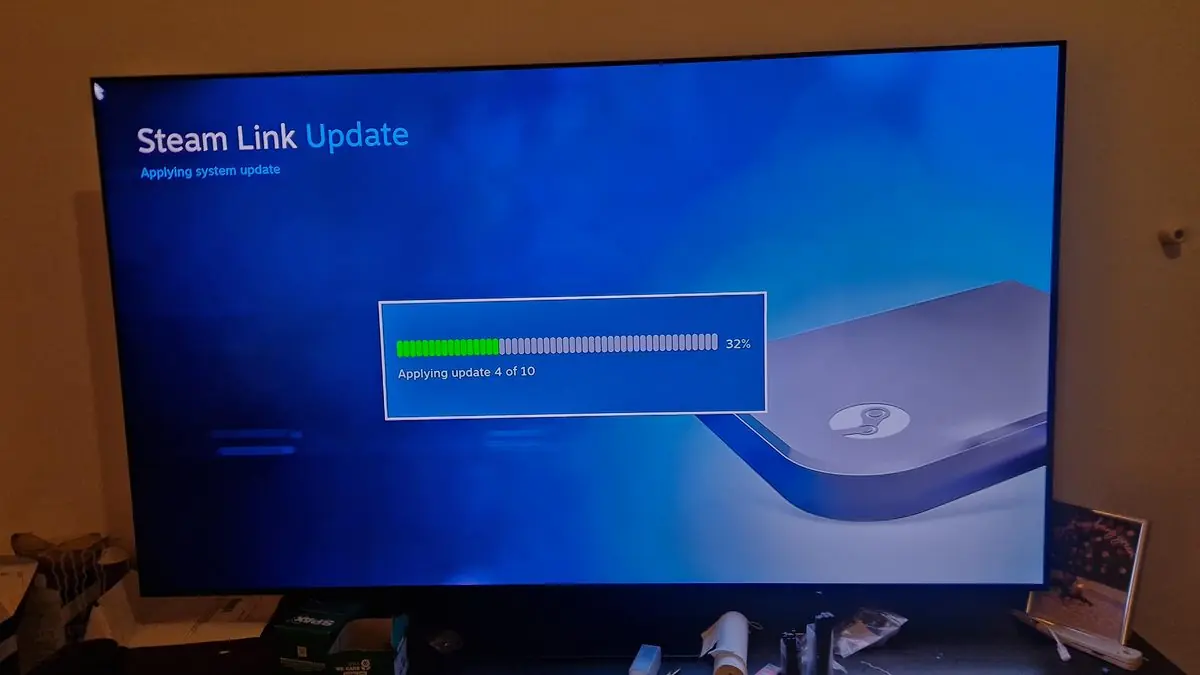
Here’s something that doesn’t happen every day in the hardware world. A gamer fired up their dusty Steam Link after years in storage, expecting to find a digital paperweight. Instead, they got a pleasant surprise that says a lot about how Valve handles discontinued products.
The Steam Link, for those who missed it, was Valve’s attempt at bringing PC gaming to your living room TV back in 2015. Think of it as a dedicated streaming box that let you play your Steam library remotely. Not exactly revolutionary by today’s standards, but it was solid tech for its time. Valve quietly discontinued it in 2018, shifting focus to software-based solutions and the Steam Deck.
Most companies would’ve pulled the plug on server support shortly after. That’s standard practice. Why keep paying to maintain infrastructure for hardware you’re not selling anymore? But Valve apparently didn’t get that memo.
“Apparently the OG Steam Link update servers are still online. Booted up my OG Steam Link for the first time in years today. Didn’t expect the Link to have an update available, let alone install one. I expected the servers to be taken offline by now” – u/matthijspc on r/Steam
That’s the kind of discovery that makes you double-check the date. We’re talking about hardware that’s been out of production for over seven years. Yet here it is, pulling down fresh updates like it’s 2016 all over again.
From a technical standpoint, this makes sense if you think about Valve’s infrastructure. The Steam Link wasn’t some standalone gadget – it was essentially a stripped-down Linux box running specialized streaming software. That software shares DNA with Steam’s current remote play features. Keeping those servers running probably costs Valve pennies compared to their overall infrastructure budget.
But here’s where it gets interesting from a business angle. Most hardware makers would’ve sunset this support ages ago. Look at how quickly smartphone makers drop update support, or how gaming peripheral companies abandon older models when new ones launch. Valve’s approach is refreshingly different.
This isn’t just about being nice to existing users (though that’s part of it). It’s about building long-term trust. When you buy Valve hardware, you’re not just buying a device – you’re buying into an ecosystem where your investment won’t suddenly become worthless overnight. That’s huge for consumer confidence.
The Steam Link situation also highlights something interesting about modern hardware lifecycles. Traditional thinking says discontinued equals dead. But when your “hardware” is really just a delivery mechanism for software services, the rules change. The Steam Link might be out of production, but its core function – streaming PC games – is more relevant than ever.
With cloud gaming taking off and remote play becoming standard, the Steam Link was arguably ahead of its time. Valve probably realized this and decided to keep the lights on rather than burn bridges with early adopters.
There’s also the practical side. Valve’s got thousands of Steam Deck users who benefit from the same streaming infrastructure. Maintaining Steam Link compatibility probably requires minimal extra effort while keeping a chunk of their user base happy.
This kind of long-term support is becoming rarer in the tech world. Companies are increasingly focused on pushing new hardware rather than maintaining old stuff. Valve’s approach stands out precisely because it’s so unusual.
For current Steam Link owners, this is obviously great news. Your hardware isn’t just still functional – it’s actively maintained. That’s more than you can say for most discontinued gaming gear.
Looking ahead, this sets interesting precedent for Valve’s other hardware. Steam Controllers, Index headsets, Steam Decks – if Valve maintains this philosophy, early adopters can feel more confident about their purchases. You’re not buying a device that’ll be abandoned the moment something newer comes along.
The broader gaming industry should take notes here. Consumer trust is valuable, especially in an era where digital purchases and online services dominate. Valve’s approach with the Steam Link shows how to handle product discontinuation without burning goodwill.
Of course, nothing lasts forever. Eventually, those servers will probably go dark. But for now, Steam Link owners can enjoy their unexpected bonus time. And the rest of us can appreciate a rare example of a tech company doing right by its users, even when there’s no obvious financial incentive to do so.
It’s a small thing in the grand scheme, but it’s exactly the kind of move that builds lasting customer loyalty. Valve gets it.