Picture this: it’s the year 2000, and SEGA just dropped the most ambitious gaming device you’ve never heard of. While most of us were plugging our Dreamcasts into whatever TV we could find, SEGA was quietly crafting something that looked like science fiction—a television that was secretly a gaming console.
The Dreamcast Divers 2000 CX-1 wasn’t just hardware. It was a love letter to a future that never quite arrived.
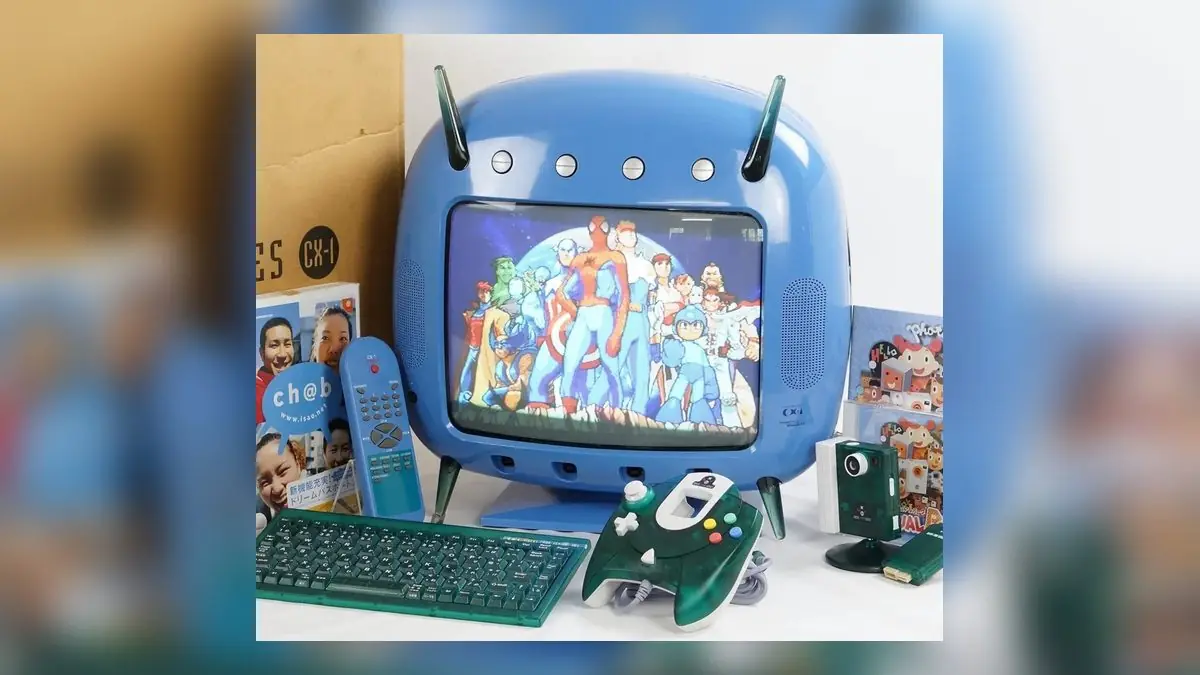
“SEGA Dreamcast Divers 2000 CX-1. A CRT TV with built-in Dreamcast, matching controller, keyboard, webcam, and microphone… Sold exclusively through online mail orders, it was set to be available for purchase by the end of May 2000. Pre-orders were initiated on Hitachi Maxell’s digital shopping site ‘D-MAX’ at a price of 88,888 yen, and a limited batch of 5,000 units was made available.” — u/BasicAccount01 on r/gaming
There’s something poetic about that price—88,888 yen. In Japanese culture, the number eight symbolizes prosperity and good fortune. SEGA wasn’t just selling a gaming device; they were selling a dream wrapped in lucky numbers.
But this wasn’t some half-hearted experiment. The CX-1 came with everything you needed to step into SEGA’s vision of connected gaming. That distinctive dark green controller wasn’t just a color choice—it was a statement. While Sony‘s DualShock was basic black and Nintendo stuck with pastels, SEGA chose a color that whispered “different.”
The real magic happened when you looked beyond gaming. This thing had a webcam before webcams were cool. It had a keyboard when most console players thought typing was for nerds. Most importantly, it had a built-in 33.6K modem that could take you online through DreamPassport—SEGA’s gateway to the early internet.
Think about what that meant in 2000. While most people were still figuring out dial-up on their PCs, SEGA was creating an all-in-one entertainment hub that could play Shenmue and check email from the same screen. It was like having a gaming PC, but it was actually a TV that happened to be a console that happened to be a computer.
The technical specs tell a story too. That SH4 200MHz CPU wasn’t just processing power—it was SEGA’s promise that the future of entertainment would be seamless. The PowerVR2 graphics engine that made Jet Set Radio look so smooth was living inside your television. Even the 64-channel ADPCM sound engine had personality, especially when paired with the system’s unique MIDI capabilities.
That MIDI support points to something special. Only one game supported it: Oto-ire Dreamcast Sequencer by Waka Seisakusho. This wasn’t just a game—it was a music creation tool that turned your TV into a recording studio. In an era when bedroom producers were just starting to emerge, SEGA was quietly enabling digital music creation from your living room.
The collaboration behind the CX-1 reads like a cyberpunk novel. Fuji Television Network and Smart-X weren’t just hardware partners—they were co-conspirators in reimagining what entertainment could be. When you bought a CX-1, you weren’t just getting SEGA’s technology. You were getting a piece of Japanese media companies trying to invent tomorrow.
Only 5,000 units. That number haunts gaming history. It’s small enough that finding one today feels like discovering buried treasure, but large enough that SEGA clearly believed in the vision. Those 5,000 people who ordered through D-MAX weren’t just early adopters—they were pioneers in a world that wouldn’t catch up for another decade.
The CX-1 represents everything beautiful and tragic about SEGA’s late ’90s and early 2000s era. They were always three steps ahead of what the market wanted, creating devices that felt like they’d traveled back from 2010 to land in living rooms that weren’t ready for them.
Today, when we’re streaming games to our smart TVs and using our phones as controllers, the CX-1 doesn’t look weird—it looks prophetic. SEGA saw the convergence coming long before anyone else, but they were speaking a language the industry wasn’t ready to understand.
What makes the CX-1 so compelling isn’t just its rarity or its ahead-of-its-time features. It’s what it represents: a moment when a gaming company looked at the future and decided to build it, even if no one else was asking for it. In a world of focus groups and market research, SEGA created something purely because they believed it should exist.
The Dreamcast Divers 2000 CX-1 is more than a footnote in gaming history. It’s a reminder that the most interesting chapters in our medium’s story are often written by the dreamers who dared to imagine what entertainment could become—even when the world wasn’t ready to dream alongside them.