Most hardware update software is about as exciting as watching paint dry. You click update, watch a progress bar, and hope nothing breaks. But Valve‘s Steam OS controller update process just proved that even the most mundane tech tasks can have personality.
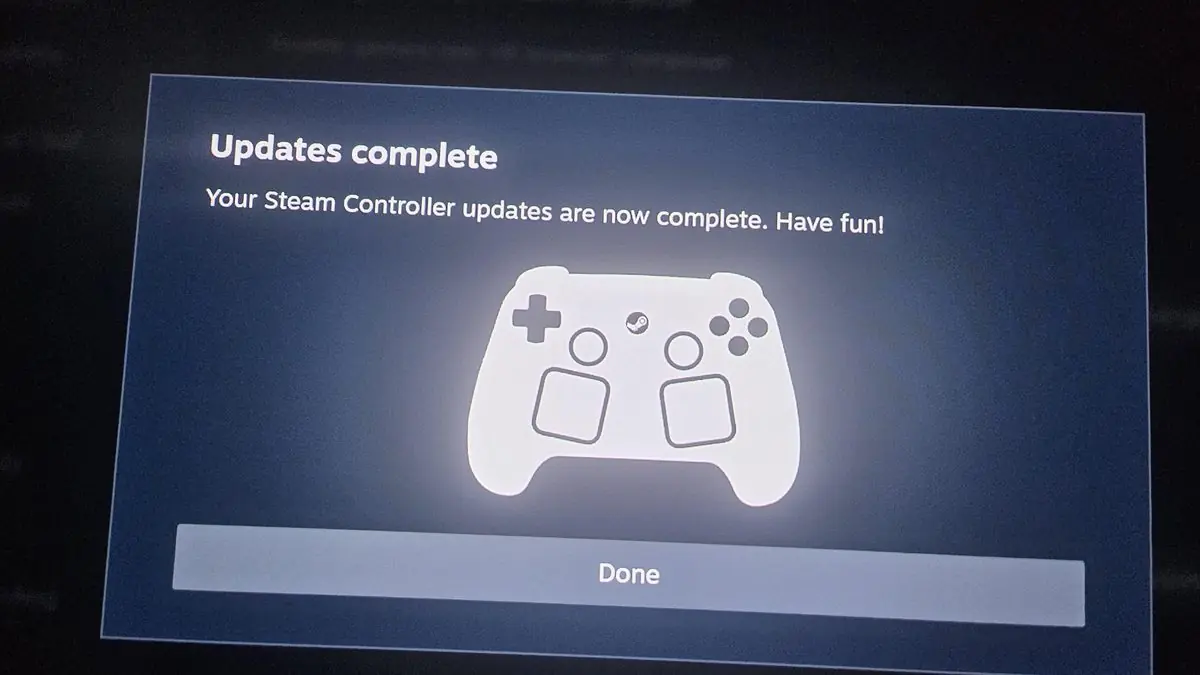
A Reddit user recently shared their experience updating a controller through Steam OS’s official software. What caught their attention wasn’t the technical process – it was a simple two-word message that appeared during the update: “Have fun!”
“My Controller is Updated. This is the official software when you get your controller and want to update via steam OS. I honestly felt the ‘Have fun!’ part.” – u/Scaredpad on r/Steam
That small touch resonated with the gaming community in a big way. The post gained serious traction, showing how starved we are for genuine human touches in our tech experiences.
This isn’t just feel-good fluff. It’s smart UX design. Think about every driver update, firmware flash, or software installation you’ve suffered through. Usually, you get sterile progress bars and cryptic error codes. Maybe a “Installation Complete” if you’re lucky.
Valve took a different approach. Instead of treating controller updates like some tedious maintenance task, they acknowledged what you’re actually doing – getting ready to game. The “Have fun!” message bridges that gap between the technical stuff and why you’re really here.
It’s the kind of detail that separates good hardware companies from great ones. Anyone can make a controller that works. The specs matter – polling rates, input lag, build quality. But Valve understands that hardware experience extends beyond benchmarks and technical specifications.
This philosophy runs through their entire hardware ecosystem. The Steam Deck’s boot animation, the way SteamOS handles game launching, even how the Steam Controller (RIP) had those distinctive touchpads – everything feels intentionally designed for gamers, not just “users.”
Compare that to most hardware manufacturers. Graphics drivers that feel like enterprise software. Router firmware that assumes you have a networking degree. Gaming peripherals with software that looks like it was designed by accountants.
The “Have fun!” message also highlights something deeper about Valve’s hardware strategy. They’re not trying to be the Apple of gaming hardware – all sleek minimalism and premium pricing. They’re building tools for people who actually play games.
That matters more than you might think. When you’re troubleshooting controller issues at 2 AM because your game isn’t recognizing inputs properly, a friendly message in the update software actually makes the experience less miserable.
It’s also smart business. Gaming hardware lives and dies on community perception. Reddit posts like this one generate way more positive brand sentiment than any marketing campaign. Word-of-mouth recommendations from actual users carry serious weight in the gaming community.
The technical side still matters, obviously. The Steam Controller had innovative features but struggled with adoption. The Steam Deck succeeded partly because Valve nailed the performance-per-dollar equation. But personality in the software experience helps everything else click.
Valve’s approach here reflects their broader understanding of PC gaming culture. We customize everything – our setups, our games, our software. We appreciate when companies acknowledge that we’re not just consuming products, we’re building experiences.
Other hardware makers should take notes. You don’t need massive UX overhauls or expensive animations. Sometimes the most effective touch is the simplest one. A “Have fun!” message costs nothing to implement but delivers real value to users.
This kind of attention to detail suggests good things for Valve’s future hardware projects. The rumored standalone VR headset, potential Steam Deck iterations, maybe even a return to controllers – all could benefit from this same philosophy.
As PC gaming hardware gets more complex and competitive, small touches like this become differentiators. Technical specs will always matter. But when the benchmarks are close, personality wins.
So next time you’re updating your Steam hardware, pay attention to those little messages. They’re not accidents – they’re Valve reminding you why you bought their gear in the first place.