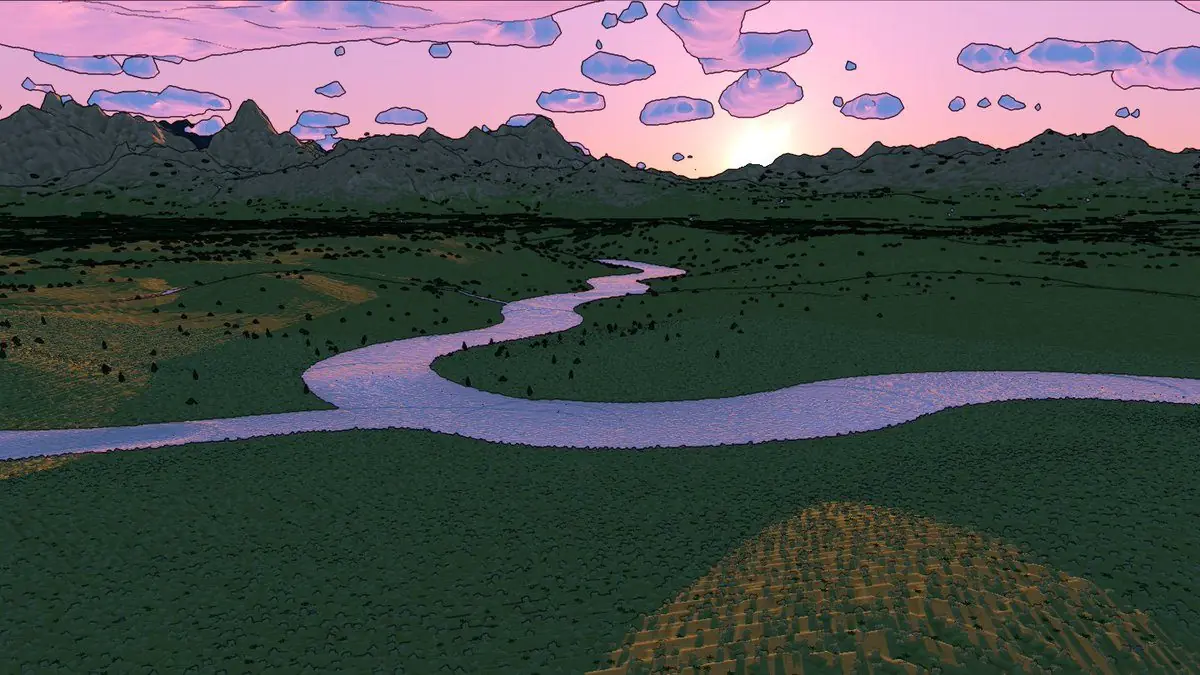
Sometimes the smallest changes make the biggest difference in how a game feels. Independent developer @lisyarus just shared a glimpse into one of those moments – transforming their game’s rivers from chunky hexagonal tiles into smooth, flowing curves.
The before-and-after images tell the whole story. What started as angular, geometric waterways now curves and bends like actual rivers. It’s the kind of polish that separates good indie games from great ones.
Developers sharing their work-in-progress updates always gets the community excited, and this river transformation is no exception. The post shows exactly the kind of iterative improvement that makes following indie development so rewarding.
“Working on making the rivers smooth instead of hard hexagons, I think I’m getting somewhere 👀” – @lisyarus
There’s something satisfying about watching a developer nail down these visual improvements. The hexagonal approach probably made sense early in development – it’s easier to code, fits cleanly into grid systems, and gets the job done. But rivers don’t flow in straight lines and sharp angles.
The gaming community loves this kind of transparency. Seeing the messy middle of development reminds us that every polished game we play went through dozens of these small but crucial upgrades.
Of course, graphics overhauls like this aren’t without their challenges. Changing from a hexagonal river system to smooth curves means rewriting how water interacts with the terrain. The pathfinding algorithms probably need updates too – units crossing rivers, ships navigating waterways, all of that has to work with the new system.
Then there’s performance to think about. Hexagonal tiles are computationally simple. Smooth curves require more complex math to render properly. On lower-end hardware, that could mean frame rate drops or longer loading times.
Some players might actually miss the geometric look. Hexagonal graphics have their own charm – they’re clean, readable, and give games a distinctive board game aesthetic. Not every change is universally loved, even when it’s objectively an improvement.
But that’s the beauty of indie development. Developers can take these creative risks because they’re not answering to a publisher’s focus group data.
This kind of visual upgrade highlights what makes indie game development special. Big studios have entire teams dedicated to water rendering – they’re working with million-dollar budgets and cutting-edge graphics engines. Solo developers like @lisyarus are solving the same problems with creativity and persistence.
We’re seeing more indie developers embrace this transparent development approach. Regular progress updates, work-in-progress screenshots, even sharing their failures and setbacks. It builds genuine connection with players who get invested in watching games grow from rough concepts to polished experiences.
The technical side is fascinating too. Modern game engines make procedural water generation much more accessible than it used to be. What once required a graphics programming degree can now be achieved with the right tutorials and enough patience to iterate.
River systems specifically present unique challenges. They need to look natural while still serving gameplay purposes. Players need to understand where they can cross, how fast the current flows, whether boats can navigate certain sections. The visual design has to communicate all of that information clearly.
Games like Civilization have been wrestling with hex-based water for years. Some embrace the geometric look as part of their board game heritage. Others, like @lisyarus, choose to prioritize visual realism and natural aesthetics.
There’s also something nostalgic about watching these incremental improvements. Anyone who grew up modding games or following early access development knows this feeling. Each update brings the developer’s vision a little closer to reality.
The river transformation probably took weeks of work for something most players will barely notice consciously. But that’s exactly the point – good graphics design is invisible until you see the before-and-after comparison.
This progress update gives us a window into the developer’s priorities too. They could be working on new features, balancing gameplay, or fixing bugs. Instead, they’re spending time making rivers look better. That suggests someone who really cares about the player experience.
Looking ahead, this river upgrade probably signals more visual polish coming to the game. Developers rarely stop at just one system when they’re on an improvement streak. If rivers are getting the smooth treatment, terrain textures, unit animations, and UI elements might be next.
The community reaction will be interesting to watch. These kinds of updates often spark discussions about graphics versus gameplay, stylized versus realistic art direction, and what actually matters in game development.
For now, we can appreciate seeing a developer’s craft in action. Turning hexagonal rivers into smooth curves might seem like a small change, but it represents the careful attention to detail that separates memorable indie games from the crowd.