
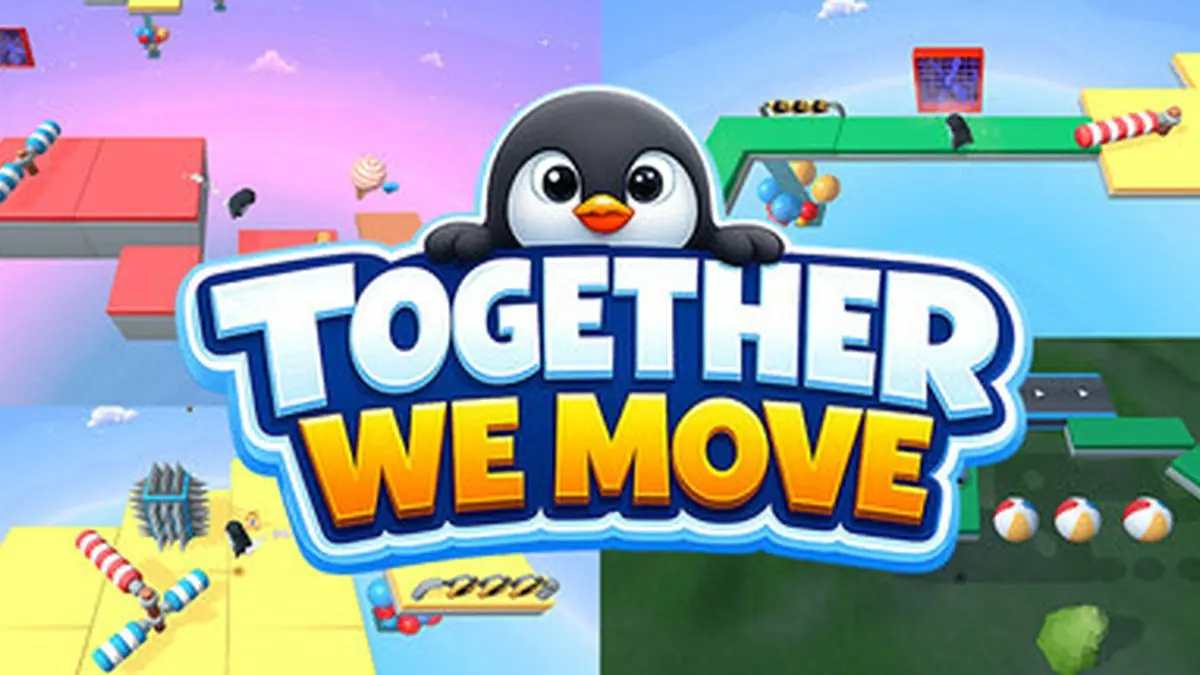
Hirodono just dropped something genuinely weird on Steam. Together We Move takes the basic concept of co-op gaming and completely flips it. Instead of each player controlling their own character, everyone shares control of one character. Each player gets assigned different movement keys. Want to jump? Better hope whoever has the jump button is paying attention.
“Together We Move Is Out Now! ONE CHARACTER. DIFFERENT KEYS. TOTAL CHAOS. The wait is over – Together We Move is officially OUT NOW on Steam! This is not a normal co-op game. In Together We Move, up to 5 players control the same character together, with each player owning a different key.” – Together We Move on Steam
The developer promises “friendship-testing platforming madness,” which honestly sounds about right. Picture this: you’re trying to navigate a tricky jump sequence, but Player 1 controls left movement, Player 2 has right, Player 3 owns the jump button, and Player 4 manages whatever other actions exist. Every single movement becomes a negotiation.
Meanwhile, this concept isn’t entirely without precedent. We’ve seen games experiment with shared control before, though rarely this directly. The indie scene has always been where developers test the boundaries of what multiplayer can be. Notable examples include Please Don’t Touch Anything’s collaborative button-pressing or Keep Talking and Nobody Explodes’ information asymmetry.
What makes Together We Move particularly interesting from a design perspective is how it forces genuine cooperation. Most co-op games allow for individual skill to compensate for team failures. If your partner struggles with platforming, you can often carry them through difficult sections. Here, that safety net disappears entirely. Everyone has to be present and coordinated, or nothing works.
The technical implementation raises questions too. How does the game handle input lag between players? What happens when someone disconnects mid-jump? These aren’t just design challenges – they’re fundamental problems that could make or break the entire experience. Hirodono hasn’t detailed their solutions, but the execution will determine whether this remains a novelty or becomes something players actually want to return to.
Historically, games with such rigid cooperation requirements tend to find niche audiences. They work brilliantly for dedicated friend groups willing to invest time in coordination, but struggle with broader appeal. The party game market has shown that controlled chaos can work – look at Overcooked or Moving Out – but those games still give each player agency over their own character.
Together We Move strips away that individual agency entirely. It’s a bold choice that could either create moments of pure collaborative joy or absolute frustration. The difference will likely come down to communication tools and how forgiving the platforming actually is.
The timing is notable too. As remote gaming continues evolving post-pandemic, developers are exploring new ways to create shared experiences. This arrives alongside other experimental co-op titles that challenge traditional multiplayer assumptions. The indie market has become increasingly willing to risk alienating some players to create truly unique experiences for others.
From a business perspective, Together We Move faces an interesting marketing challenge. How do you convince players to try something that inherently requires multiple people and perfect coordination? The viral potential is obvious – failed attempts will generate plenty of clip-worthy moments. But sustained engagement depends on whether the core mechanics remain entertaining after the initial novelty wears off.
What happens next depends largely on how streamers and content creators respond. Games like this live or die based on their shareability. If Together We Move can generate enough hilarious failure compilations while still providing genuine satisfaction when teams succeed, it might carve out a sustainable niche.
For now, Hirodono has created something that stands out in an increasingly crowded indie market. Whether Together We Move becomes a lasting addition to party game collections or a brief curiosity remains to be seen. The concept is solid enough that other developers will likely watch its reception closely.