Is Fortnite Crew losing its grip on players? One Reddit post is sparking major conversations about subscription fatigue in gaming.
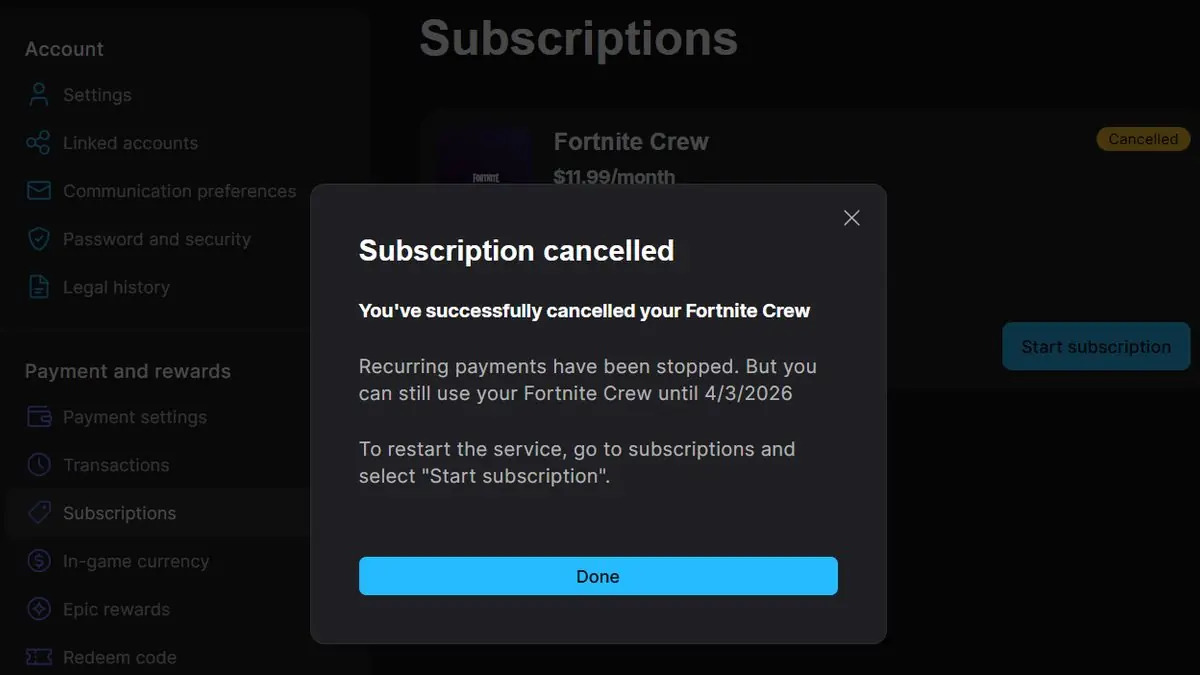
A player just announced they’re ditching their Fortnite Crew subscription after months of accumulating V-Bucks. Their plan? Cash out those 5200 V-Bucks and grab Resident Evil instead. And honestly? It’s giving main character energy.
“So long, Crew. That’s it, that’s the post. My final 5200 vbucks will be cashed out and going toward Resident Evil, but it’s been a good run. 1000 vbucks accumulating, extra pass vbucks giving me incentive to buy something here and there every so often, what a time it was.” — u/Crimsonclaw111 on r/FortNiteBR
This isn’t just one person being dramatic. The Crew subscription model that seemed genius a few years back is starting to feel different. Players are questioning if that monthly $12 is actually worth it when they could just buy full games instead.
Think about it — $12 every month adds up fast. That’s $144 a year just for Fortnite perks. You could grab multiple AAA games for that price. Or in this case, classic horror experiences that don’t need constant wallet access.
The psychology behind Crew subscriptions is pretty wild when you break it down. Epic designed it to keep you engaged through small rewards. You get your 1000 V-Bucks monthly, plus battle pass access, and sometimes exclusive skins. It creates this cycle where you’re always getting something, so canceling feels like missing out.
But here’s the thing — subscription fatigue is real across gaming right now. Xbox Game Pass, PlayStation Plus, Nintendo Switch Online, EA Play, Ubisoft+. Everyone wants monthly money from your wallet. Players are starting to pick and choose more carefully.
This Reddit user perfectly captured something many gamers are feeling. They acknowledged the good times — how those accumulating V-Bucks created purchase incentives, how the system worked as intended. But they also recognized when enough was enough.
The shift toward traditional game purchases is lowkey making a comeback. Instead of endless monthly fees, players want ownership again. They want games they can replay years later without worrying about subscription status or server shutdowns.
Resident Evil represents something different from Fortnite’s constant-content model. It’s complete, it’s yours forever, and it doesn’t ask for more money every month. That’s appealing when subscription costs are hitting different in 2026.
Fortnite’s still massive, obviously. But these conversations about Crew value are happening more often. Players are doing the math and realizing they could experience entire game libraries for what they’re spending on one title’s subscription.
The battle royale genre itself has evolved too. Competition is fiercer, and players have more options than ever. Sticking with one game’s subscription feels less necessary when you could explore different experiences.
Epic probably isn’t panicking over individual Crew cancellations. But if this becomes a trend, they might need to rethink the value proposition. Maybe better exclusive content, maybe different pricing tiers, maybe more flexibility.
What’s really interesting is how this player framed their decision. No anger, no drama — just a calm recognition that their gaming priorities had shifted. That’s probably scarier for Epic than rage-quitting players.
The gaming industry built these subscription models assuming infinite growth and retention. But player behavior changes. Wallets get tighter. Priorities shift toward ownership and variety over continuous engagement with single titles.
So what’s next for Fortnite Crew and similar subscriptions? They’ll need to prove value beyond just convenience. Monthly V-Bucks and battle pass access might not cut it anymore when players can grab complete games for similar prices.
The conversation this Reddit post started won’t disappear quickly. Other players are probably looking at their own subscriptions and asking similar questions. Is this monthly fee actually worth it? What else could I buy instead?
Fortnite will adapt — Epic always does. But this moment feels like a turning point where players are reclaiming control over their gaming spending. And honestly? That’s probably healthy for everyone involved.