Picture this: you walk into a game store in some cyberpunk future, and the physical games cost more than their digital twins. Well, that future just landed in 2026, courtesy of Nintendo and their latest Splatoon Raiders experiment.
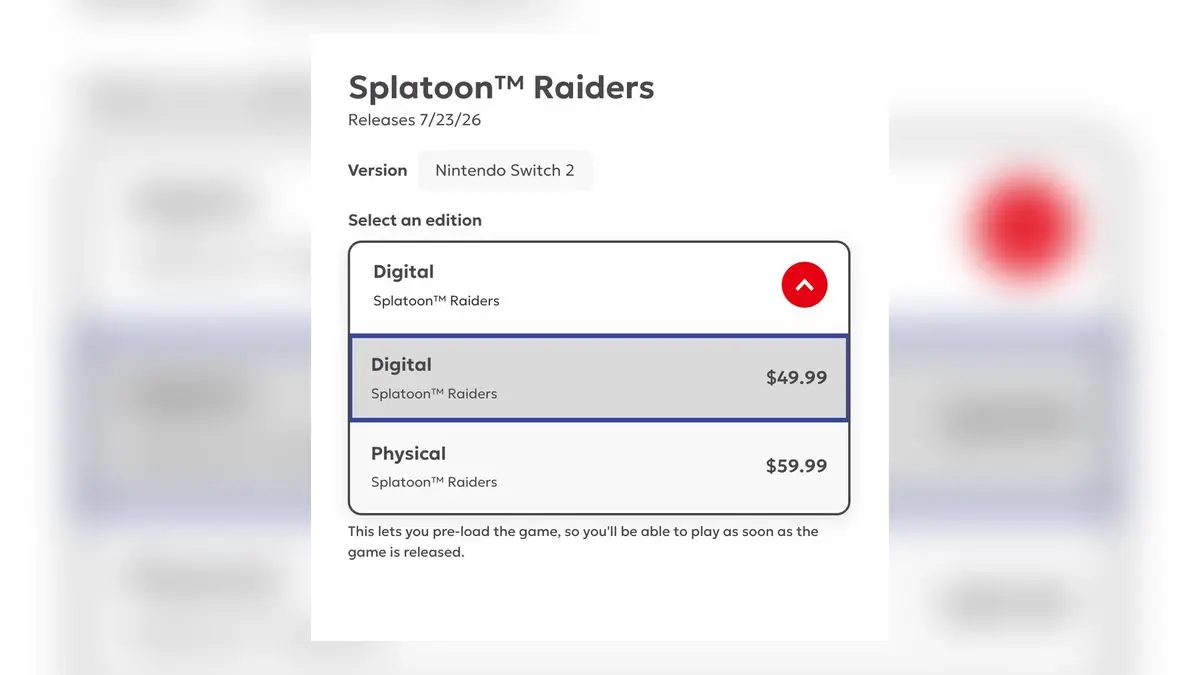
The House of Mario just pulled a move that feels like something straight out of a Philip K. Dick novel – they’re charging $60 for the physical version of Splatoon Raiders and $50 for the digital copy. It’s like they looked at decades of gaming retail logic and said “let’s flip this whole thing upside down.”
“Nintendo’s pricing experiment continues. Splatoon Raiders, out in July, is $60 physical; $50 digital” – @stephentotilo.bsky.social
This isn’t Nintendo’s first rodeo with unconventional pricing. They’ve been testing different strategies across their catalog, but Splatoon Raiders represents their boldest move yet. It’s like they’re running a real-time economics experiment on the entire gaming industry.
The logic here is actually pretty fascinating from a sci-fi economics perspective. Physical cartridges cost money to manufacture, ship, and store. Digital copies? Pure data beams straight to your console. Nintendo’s basically saying “hey, if you want that tangible piece of plastic and circuits, you’re gonna pay for the privilege.”
This could be the beginning of a massive shift in how we think about game ownership. Remember when physical copies were cheaper because stores needed to move inventory? Those days might be going the way of the dodo. We’re looking at a future where physical games become premium collectibles rather than the default option.
For collectors and physical media enthusiasts, this feels like a punch to the gut. There’s something almost dystopian about charging extra for the “authentic” experience of owning a real cartridge. It’s like if books suddenly cost more than e-books – oh wait, that’s already happening in some cases.
But here’s where it gets really interesting from a world-building perspective. Nintendo might be accidentally creating a two-tier gaming society. Digital natives who are fine with cloud-based ownership on one side, and physical purists who pay premium prices for that old-school cartridge experience on the other.
The timing couldn’t be more perfect either. With cloud gaming services expanding and digital storefronts becoming more sophisticated, Nintendo’s basically asking gamers to vote with their wallets. Do you value convenience and savings, or do you want that physical connection to your games?
This pricing strategy could ripple across the entire industry like a shockwave through subspace. If Nintendo can make this work with Splatoon Raiders, expect other publishers to start experimenting too. Sony, Microsoft, and third-party developers are probably watching this experiment very closely.
Think about the long-term implications here. We could be looking at a future where physical games become luxury items, like vinyl records in the music industry. Premium packaging, special editions, collector’s items – while the masses migrate to digital-only purchasing.
The really wild part is how this might affect game preservation. If physical copies become expensive collectibles, will fewer people buy them? Could this actually hurt long-term game preservation efforts? It’s like Nintendo’s creating a paradox where the most permanent form of game storage becomes the least accessible.
From a pure business perspective, this is brilliant. Nintendo gets higher margins on digital sales (no retailer cut, no manufacturing costs) while still capturing premium dollars from collectors who absolutely must have that physical cartridge.
Splatoon Raiders launches in July 2026, and it’s going to serve as the ultimate test case for this pricing model. If players embrace it, we might be looking at the new normal for game pricing. If it flops, Nintendo might retreat back to traditional pricing structures.
But knowing Nintendo, they’re probably already three steps ahead, planning how this fits into their broader ecosystem strategy. This isn’t just about one game – it’s about reshaping consumer expectations for an entire generation of gamers.
The future of gaming retail is happening right now, and it looks nothing like what we expected. Welcome to the new reality where bytes cost less than cartridges.