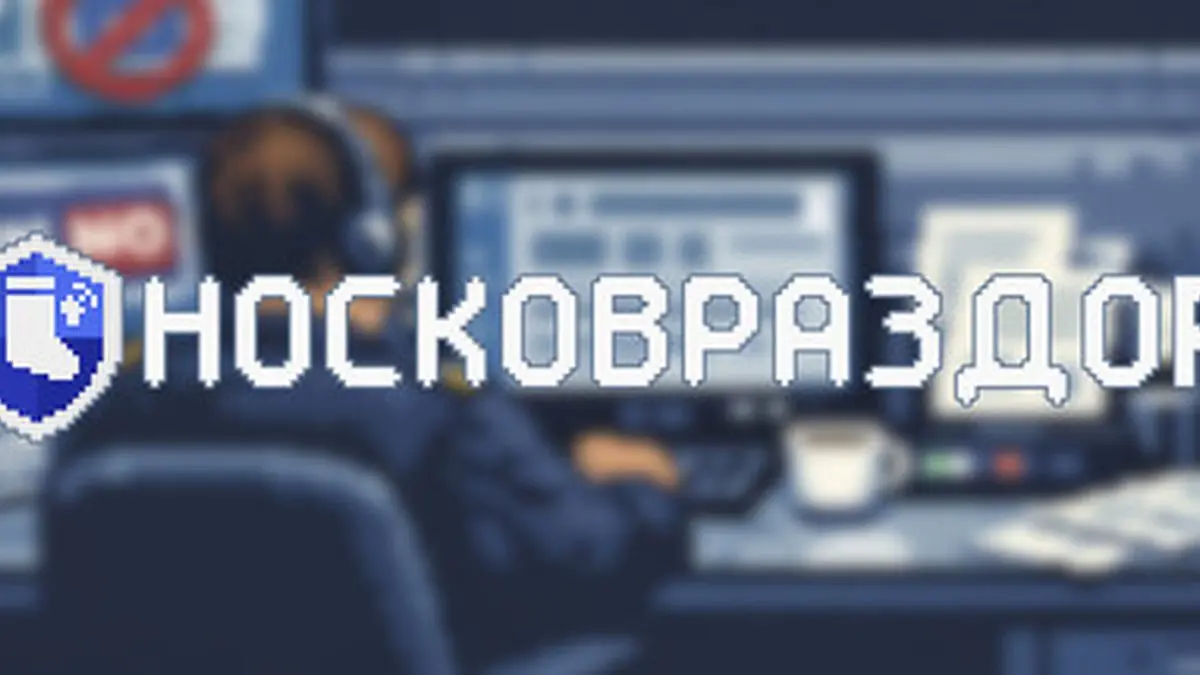
A new Steam release is making waves for all the wrong reasons. ‘Носковраздор’ puts you in the shoes of a network operator tasked with blocking digital services and restricting internet access. It’s not your typical city builder or farming sim.
The game’s premise is as straightforward as it is controversial. You’re an unnamed operator in what the developer calls a “digital department” where your job is systematically blocking services that are deemed “too convenient” for users. Think Papers Please, but instead of checking documents at a border, you’re cutting off people’s access to apps and websites.
“В ‘Носковраздоре’ вы станете безымянным оператором системы сетевого усмирения и лично доведёте число заблокированных сервисов до значений, от которых в приличном обществе людям быстро станет не по себе.” — @BamBooK919
The developer’s announcement roughly translates to players becoming operators of a “network pacification system” who will personally bring blocked services to numbers that would make people in decent society uncomfortable. That’s about as blunt as it gets.
The gameplay mechanics appear focused on strategic restriction rather than building or creation. You’re essentially playing as the person behind service outages and access limitations. It’s a simulation that puts administrative control at the center of the experience.
What makes this release particularly interesting is its timing and origin. Russian developers have been increasingly vocal about internet restrictions in their country. This game seems to be either commentary on or simulation of real-world digital policies that have affected millions of users.
The technical execution appears solid from early reports. The interface is clean and functional, which makes sense given the administrative theme. There’s no flashy graphics or complex combat systems here. The challenge comes from managing restrictions efficiently while dealing with the consequences of your decisions.
Some players might find the subject matter too heavy or politically charged for entertainment. Others see it as an important piece of interactive commentary on digital rights and government overreach. The game doesn’t appear to take a clear stance either way, leaving interpretation up to the player.
The simulation genre has always been a vehicle for exploring real-world systems and problems. From city planning to pandemic response, these games let us experiment with complex scenarios in a controlled environment. ‘Носковраздор’ extends that tradition into digital policy territory.
What’s particularly noteworthy is how the developer presents the mechanics without obvious moral judgment. You’re given tools and objectives, but the game lets you draw your own conclusions about the ethics of digital restriction. That’s a bold design choice that respects player intelligence.
The Steam release opens up the game to a global audience who might not have considered how internet restrictions work in practice. It’s educational in a way that academic discussions about digital rights often aren’t. You get to see the administrative side of policies that affect millions of users daily.
This type of politically-aware simulation gaming is becoming more common. Developers are increasingly willing to tackle controversial subjects through interactive media. It’s a trend that pushes the medium beyond pure entertainment into social commentary territory.
Looking ahead, ‘Носковраздор’ could spark important conversations about digital freedom and government control over online services. Whether you agree with its premise or not, the game forces players to think about how internet restrictions actually get implemented and enforced.
The bigger question is whether other developers will follow suit with similarly provocative simulation games. If this release finds an audience, we might see more titles exploring complex political and social issues through gameplay mechanics rather than just narrative.