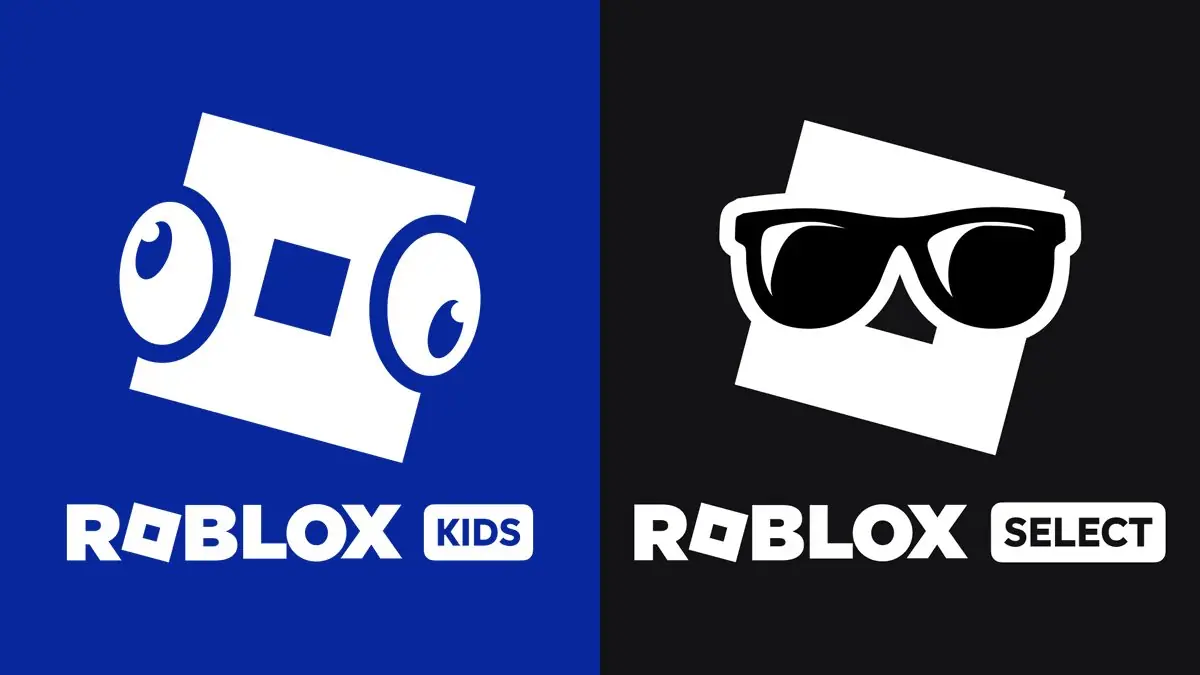
Roblox just announced something that’s lowkey been a long time coming. The platform is splitting into three separate age-based tiers starting June 2026, and honestly? It’s giving responsible platform vibes for once.
The new system creates distinct experiences: Roblox Kids for under 9s, Roblox Select for 9-15 year olds, and standard Roblox for 16+. Each tier comes with different features, communication settings, and content access that actually makes sense for those age groups.
“Roblox is releasing Roblox Kids (under 9), Roblox Select (9-15), and the standard Roblox (16+). This will roll out in early June and change how parental control works on that platform.” — @Roblox_RTC
The changes are pretty comprehensive. Roblox Kids gets the most restrictive setup with communication turned off by default and a blue background to make it visually distinct. Parents can enable chat if they want, but it’s limited to trusted friends and other users under 13. No party chat at all.
Roblox Select splits into two sub-groups. Kids 9-12 can see chat but can’t use it unless parents give permission. If they do enable it, chat works with users under 16 and trusted friends only. The 13-15 group gets chat enabled by default, including voice chat options, and can talk with users aged 9-17.
Standard Roblox for 16+ keeps most current features but still tracks friends, screen time, and spending until users hit 18. Chat stays on by default unless your region blocks it.
What’s actually smart here is how content gets filtered differently for each tier. Younger kids only see “Minimal” or “Mild” content labels. The middle tier adds “Moderate” content. Adults get everything except “Restricted” content. No more accidentally stumbling into inappropriate stuff.
The automatic age transitions are clutch too. No awkward manual switches or staying stuck in the wrong tier. Hit 9? You’re moving to Select. Turn 16? Welcome to the big leagues. It just happens.
But let’s be real about why this is happening. Roblox has been under serious pressure about child safety for years. The platform has millions of kids, and some seriously questionable content has slipped through their moderation systems. This feels like their “we’re finally taking this seriously” moment.
The parental approval system for restricted games is interesting. Kids can’t access certain experiences by default, but parents can approve specific games that would normally be off-limits. It puts the control back in parents’ hands instead of relying on algorithmic filtering alone.
Some people might think this is overkill. Like, do we really need three separate platforms? But honestly, a 7-year-old and a 17-year-old probably shouldn’t be having the same online experience anyway. The age ranges make sense when you think about developmental stages and what’s appropriate for different groups.
The visual treatments for each tier are smart too. That blue background for Kids makes it immediately obvious which platform someone’s using. No confusion about what features are available or what content they can access.
This could actually set a precedent for other platforms. How many times have we seen inappropriate content slip through on platforms that mix all ages together? Maybe age-based tiers are the future for any platform with significant youth audiences.
The timing in early June gives Roblox a few months to work out any bugs before the summer gaming surge. Smart move to roll this out before peak usage periods when millions of kids are online all day.
What’s next depends on how smoothly this launches. If the age verification works properly and the content filtering actually catches inappropriate stuff, other platforms might copy this model. If it’s buggy or restrictive, expect some serious backlash from the community.
Parents will probably love the increased control and transparency. Kids might be less thrilled about the restrictions, especially the communication limits. But honestly? A safer platform is worth some inconvenience.
The big test comes in June when this actually goes live. Will the age verification be accurate? Can the content filtering handle edge cases? Will parents actually use these new controls? Those answers will determine if this is a game-changer or just another corporate safety theater moment.
For now though, it’s refreshing to see a major platform actually acknowledge that different ages need different online experiences. About time.