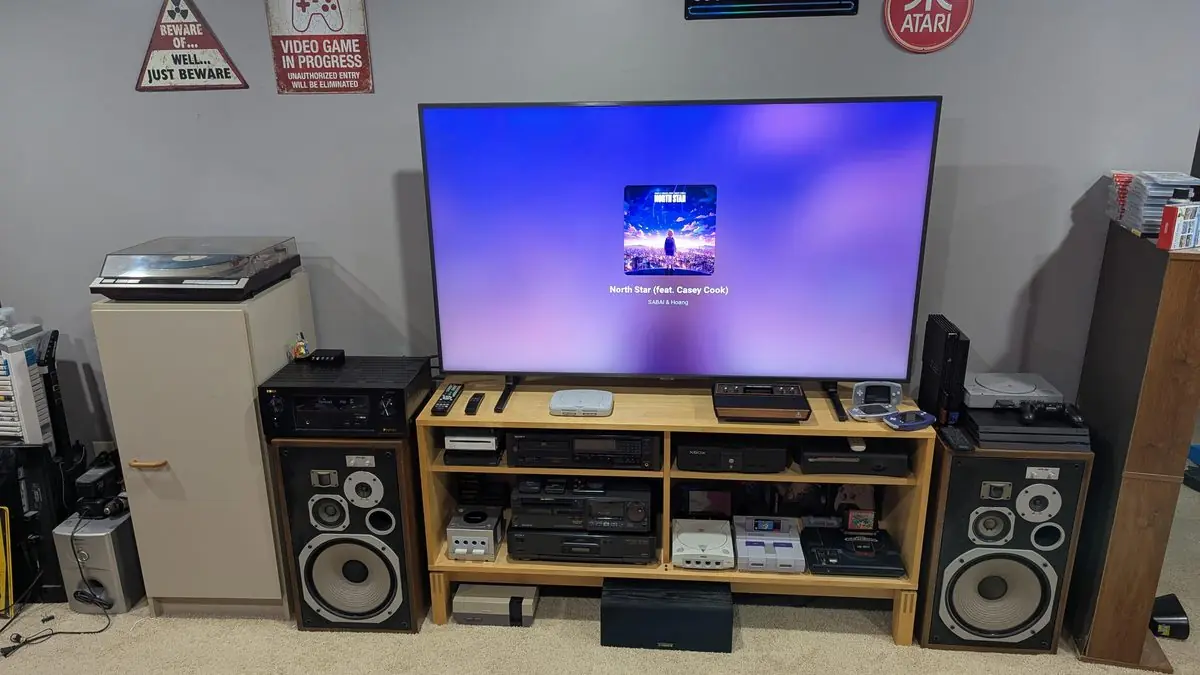
Building the perfect gaming setup isn’t just about throwing consoles on a shelf and calling it done. One gamer’s entertainment center proves that combining retro hardware with vintage Hi-Fi equipment creates a technical puzzle that’s as satisfying to solve as any boss fight.
The setup that’s got people talking showcases the kind of curated approach that serious collectors appreciate. Instead of cramming every system possible into one space, this build focuses on creating something that actually works.
“This is the best my entertainment stand has ever looked. Got some old Hi-Fi from my dad and decided it had been a mess for too long! Setup includes Vinyl, Hi-8, and Betamax functionality. Only consoles missing are PS3 and 5, any modern Xboxes, and an N64 and Sega Saturn. I still need to actually connect a lot of them but I’m still working out the logistics of that” — u/Superseaslug on r/gaming
What makes this setup interesting from a technical standpoint isn’t just the gear on display. It’s the acknowledgment that looks are only half the battle. The real challenge lies in the connectivity logistics that most people don’t think about until they’re staring at a rat’s nest of cables.
The Hi-Fi integration is where things get spicy. Vintage audio equipment often runs different impedances and signal levels than modern gaming hardware. You’re looking at potential ground loop issues, signal degradation, and the fun challenge of matching output levels between a 1980s receiver and a modern console. Most people would just grab a cheap audio switcher and call it good, but that’s missing the point entirely.
The console selection tells its own story. Having gaps like the PS3 and PS5 isn’t necessarily a bad thing. The PS3’s notorious backwards compatibility issues and the PS5’s current pricing make them tough additions to any budget-conscious setup. Same goes for the missing N64 and Sega Saturn. Those systems require specific considerations for proper display on modern TVs, especially if you want to avoid the blurry mess that composite video creates.
Betamax and Hi-8 functionality adds another layer of complexity that most setups skip entirely. These formats require dedicated hardware that’s getting harder to maintain. But for someone building a true multimedia center, having that capability makes sense. It’s about creating a complete experience, not just gaming.
The cable management reality check is refreshing. Most showcase setups you see online are either completely non-functional or have all the cables hidden behind the scenes. Actually connecting multiple retro consoles means dealing with RF switches, composite video limitations, and the eternal struggle of getting clean audio from systems that were designed for TV speakers.
From a value perspective, this approach makes sense. Instead of chasing every console release, focusing on a curated collection lets you invest in quality accessories and proper connectivity solutions. A good upscaler, proper cables, and reliable switchers cost more than most people expect, but they make the difference between a setup that looks good and one that actually performs.
The missing modern systems highlight an interesting trend in gaming collections. Many collectors are focusing on either retro or current-gen, but not both. The technical requirements are completely different. Modern consoles want 4K HDMI inputs and low-latency displays. Retro systems need careful upscaling and often benefit from CRT displays for authentic response times.
Building a setup like this in 2026 means navigating a market where original hardware prices keep climbing while aftermarket solutions get better and more affordable. FPGA-based consoles and optical drive emulators (ODEs) offer ways to experience classic games without the reliability headaches of 30-year-old electronics.
The real question for anyone attempting a similar build is whether to prioritize authenticity or convenience. Original hardware with period-correct accessories delivers the true experience but comes with maintenance requirements and compatibility challenges. Modern alternatives like MiSTer or dedicated retro consoles sacrifice some authenticity for reliability and convenience.
We’re likely to see more setups like this as the retro gaming community matures. The focus is shifting from collecting everything to building something that actually works well. That means better integration between old and new hardware, more sophisticated switching solutions, and a better understanding of signal chain management.
Expect to see more hybrid setups combining classic hardware with modern quality-of-life improvements. HDMI mods for retro consoles, wireless controller adapters, and better upscaling solutions are making it easier to build something that looks period-correct but functions with modern conveniences. This setup shows that the best approach might be taking your time and building something sustainable rather than rushing to fill every shelf.