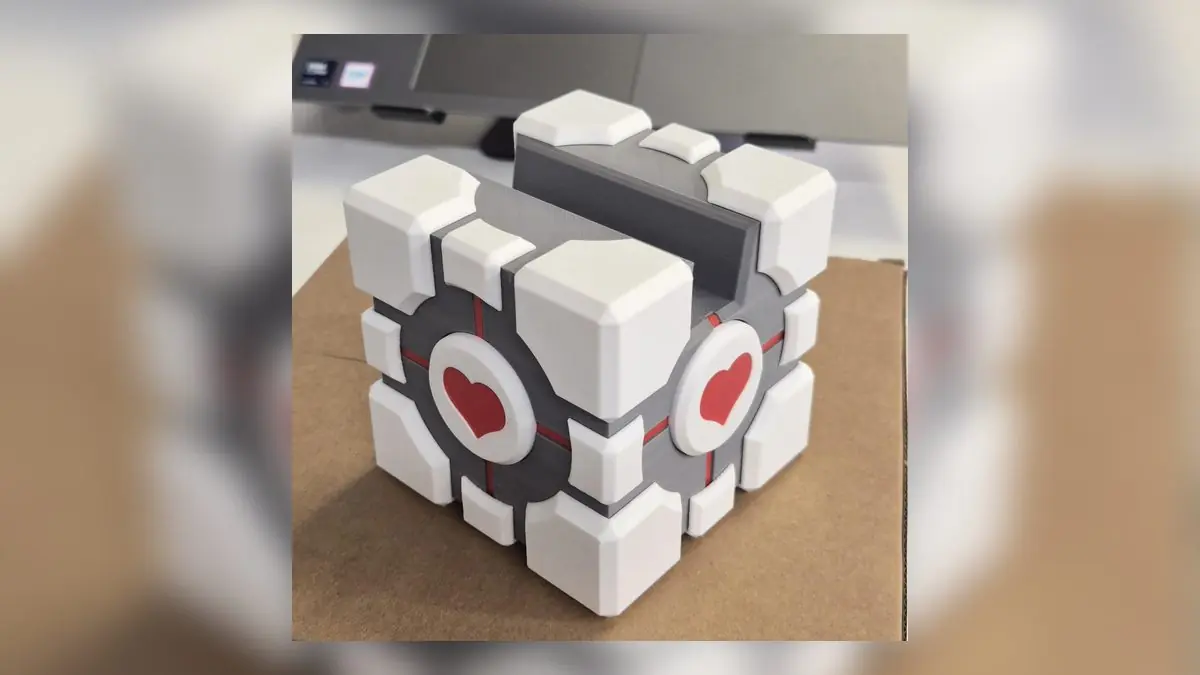
The Steam controller might be discontinued but that doesn’t stop dedicated fans from finding creative ways to store their gear. One Portal enthusiast just dropped a 3D printed companion cube design that doubles as the perfect controller stand.
“Got my steam controller holder ready” – u/AgileOwl5769 on r/Steam
This isn’t your typical gaming accessory knockoff. The creator engineered a snap-together design that requires zero glue or fasteners. That’s smart engineering right there. Most 3D printed gaming accessories rely on adhesives or screws that can fail over time.
The Portal companion cube aesthetic hits different when it’s actually functional. Instead of just sitting on your shelf collecting dust this thing earns its keep. The hollow cube design cradles the Steam controller perfectly while maintaining those iconic weighted companion cube proportions.
What makes this design particularly clever is the material efficiency. 3D printing solid objects burns through filament fast. A hollow cube with strategic internal supports uses maybe 30-40% less material while maintaining structural integrity. That translates to faster print times and lower cost per unit.
The timing couldn’t be better for Steam controller owners looking for storage solutions. Valve discontinued the hardware back in 2019 but plenty of users still swear by the trackpads and haptic feedback. Finding official accessories is basically impossible now. Community-made solutions like this fill that gap.
3D printing has become the go-to solution for niche gaming accessories. When manufacturers won’t make it someone with a printer will. The barrier to entry keeps dropping too. Decent FDM printers start around $200 now. PLA filament costs maybe $20 per kilogram. You could print dozens of these controller holders for the cost of one official gaming accessory.
The creator plans to share the STL files on Makerworld next week. That’s Bambu Lab’s community platform for 3D printing designs. Free downloads mean anyone with a printer can make their own companion cube holder. The design will likely get remixed for other controllers too.
Portal’s companion cube remains one of gaming’s most recognizable props. It’s basically a perfect cube with hearts and corners – simple enough for beginner 3D modelers to recreate. The emotional attachment players have to the cube makes it ideal for functional designs like this.
Expect to see variations for Xbox and PlayStation controllers soon. The basic cube structure can accommodate different controller shapes with minor adjustments. Someone will probably make a weighted version too. The original companion cube was supposedly filled with concrete or similar material.
This type of community innovation highlights why open-source hardware designs matter. When official support ends the community steps in. Steam controller users get functional accessories. 3D printing enthusiasts get new projects to tackle. Everyone wins.
The snap-together assembly approach suggests the creator actually thought about user experience. Most people don’t want to break out superglue just to build a controller stand. Tool-free assembly means you can take it apart for travel or modifications later.
3D printed gaming accessories have come a long way from the rough prototypes of five years ago. Modern slicers and printers can achieve surface finishes that rival injection-molded parts. This companion cube holder probably looks and feels more premium than you’d expect.
The Makerworld release should include multiple file formats and print settings optimized for different printer types. Bambu Lab’s platform typically includes material recommendations and layer height suggestions. That makes it easier for newcomers to get good results on their first attempt.
For Steam controller owners this represents practical nostalgia at its finest. You get a functional storage solution wrapped in Portal theming. The cube reference works whether you played the original or just appreciate clever game design.
Keep an eye on Makerworld next week for the file release. If you don’t have a 3D printer local libraries and maker spaces often offer printing services. Print time will probably run 4-6 hours depending on infill settings and layer height.