
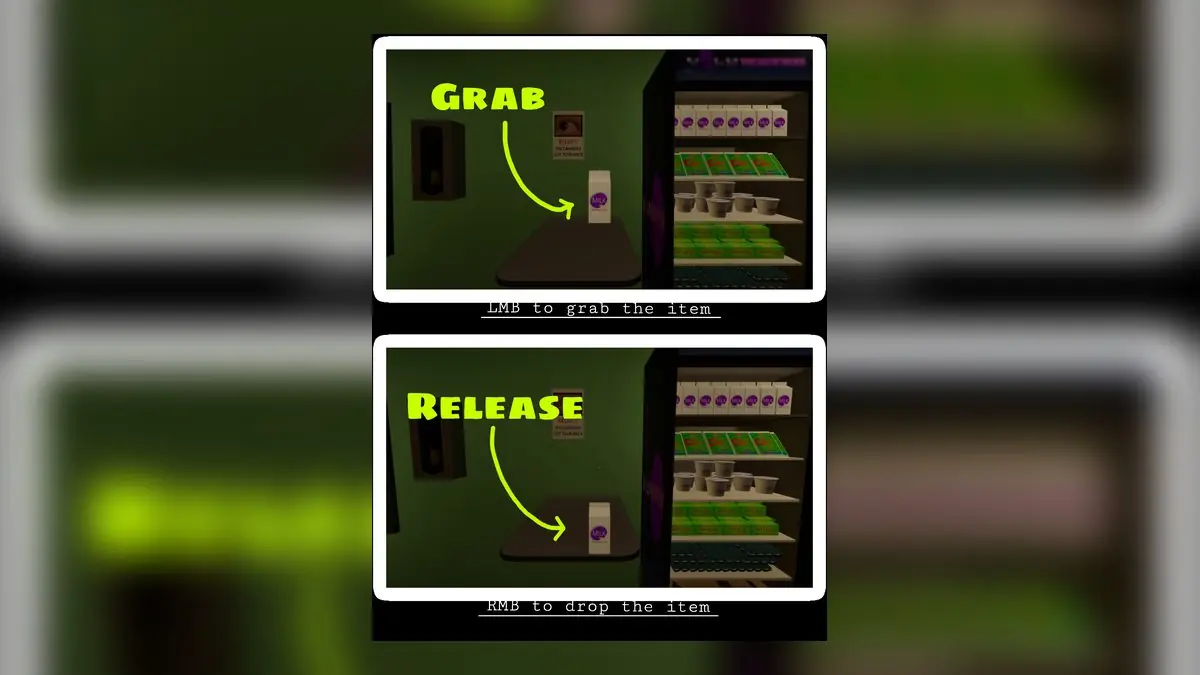
MoonNight Shift just dropped an update that sounds boring on paper but hits different when you actually think about it. The Individual Item Pickup Update v1.0 does exactly what it says – lets you grab items one by one instead of whatever clunky system they had before.
It’s simple. Left mouse button grabs stuff. Right mouse button drops it. Done.
But here’s the thing – this kind of update separates developers who actually play their own games from those who just ship and forget. Most studios would call this “minor polish” and save it for some massive content drop six months later. Not Cattonic’s.
“Individual Item Pickup Update v1.0: You can now pick up items individually – Left Mouse Button to GRAB the item – Right Mouse Button to RELEASE/ DROP the item” – MoonNight Shift on Steam
They even included a visual example because they know half the player base won’t read patch notes anyway. Smart.
Look, inventory management isn’t sexy. It’s not going to make highlight reels or streaming clips. But anyone who’s played a survival game or RPG knows the pain of accidentally grabbing the wrong item or fumbling around trying to drop something specific. Those moments break immersion faster than bad voice acting.
This update fixes that. No more “select all” disasters. No more dropping your entire inventory when you meant to drop one thing. Just clean, precise control over what you pick up and when.
The fact that MoonNight Shift is getting this level of attention to detail says something about where indie development is heading. While AAA studios are busy monetizing every breath their characters take, smaller developers are actually improving the parts of games that matter.
Item pickup might seem trivial until you’re in a tense situation trying to grab specific loot while something’s chasing you. Then suddenly those extra clicks and confirmations become the difference between success and frustration. Cattonic’s gets this.
This isn’t revolutionary technology. It’s just good design implemented properly. The kind of thing that should be standard but somehow isn’t. Every survival game, every RPG, every title with any kind of inventory system should have this level of control built in from day one.
But they don’t. Because most developers are either too rushed to implement proper systems or too disconnected from actual gameplay to notice these friction points. MoonNight Shift taking time to add this feature shows they’re paying attention to how their game actually feels to play.
The visual example they included demonstrates another smart choice. Instead of just listing the controls in text, they show you exactly how it works. No confusion, no interpretation needed. This is how you communicate with players without treating them like idiots or assuming they’ll figure everything out themselves.
It’s also worth noting this comes as Update v1.0 – meaning they’ve been working on polish and refinement rather than just adding more stuff. That’s increasingly rare in an industry obsessed with content drops and feature creep. Sometimes the best updates are the ones that make existing systems work better.
This kind of attention to fundamentals is what builds player trust. When developers show they care about the small things, players know they’ll handle the big things properly too. It’s the difference between a game that feels crafted and one that feels assembled.
The timing is interesting too. While major releases are dealing with launch disasters and community backlash, smaller titles like MoonNight Shift are quietly improving their player experience. No drama, no promises – just better functionality delivered without fanfare.
Moving forward, this sets a standard other indie developers should follow. If you’re going to ask players to interact with objects in your game, give them precise control over how that interaction works. Don’t make them fight your interface to do basic tasks.
MoonNight Shift’s individual item pickup update won’t make headlines or break sales records. But it’ll make the game better to play, and that’s exactly what updates should do. Sometimes the most important improvements are the ones you barely notice – until you try to play without them.