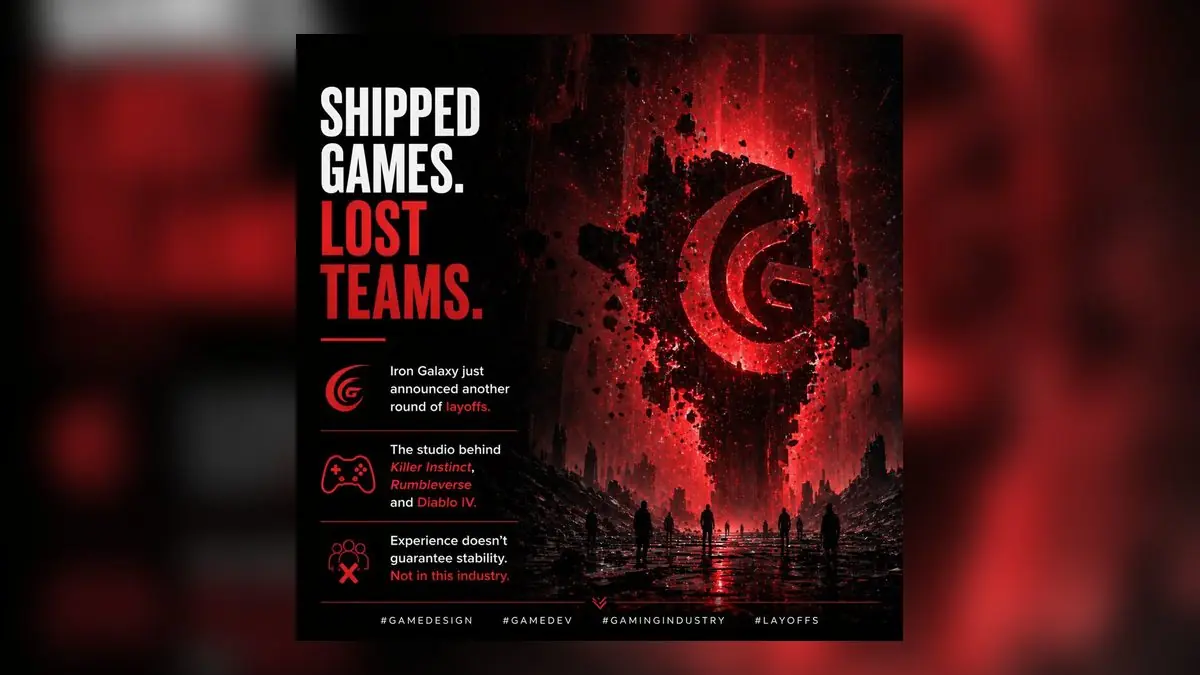
Iron Galaxy Studios, the team behind some of gaming’s most crucial behind-the-scenes work, just delivered news that echoes through every corner of the industry. Another round of layoffs hit the studio, and this time the message feels different.
This isn’t just another studio closure story. Iron Galaxy has been the quiet hero of gaming for years. They’re the ones who take your favorite console exclusive and make it work on PC. They polish the rough edges when big publishers need a steady hand. Their portfolio reads like a greatest hits collection of modern gaming.
The announcement carries weight because of who it’s coming from. These aren’t newcomers struggling to find their footing. Iron Galaxy has proven they can ship. They’ve delivered time and again. Yet here they are, making the same painful cuts we’ve seen across the industry.
One industry observer captured the shift perfectly:
“Iron Galaxy just announced another round of layoffs. This is a studio that’s worked on everything from AAA ports to major franchises. Shipping games isn’t the hard part anymore. Sustaining teams is.” – @Idle_Sword
That observation hits at something deeper than quarterly reports or market conditions. The gaming industry has mastered the art of creating incredible experiences. We’ve figured out how to build worlds that feel real. We’ve learned to craft stories that rival any medium. The technical hurdles that once seemed impossible now feel routine.
But keeping the people who make these miracles happen? That’s the puzzle nobody has solved.
Iron Galaxy’s story reflects a broader industry narrative that’s been unfolding for months. Studios that seemed untouchable have made cuts. Teams with proven track records find themselves scattered. The human cost of an industry that moves at breakneck speed is becoming impossible to ignore.
The irony cuts deep when you consider what Iron Galaxy does best. They’re the studio you call when something needs to work perfectly across different platforms. They understand systems. They know how to make complex things function smoothly. Yet even they can’t crack the code of sustainable employment in modern gaming.
This isn’t about one studio’s business decisions. It’s about an industry grappling with its own success. Gaming has grown beyond anyone’s wildest predictions. Revenue streams that didn’t exist a decade ago now drive entire companies. Live service games generate billions. Mobile gaming reaches audiences previous generations couldn’t imagine.
Yet somehow, in the middle of this unprecedented growth, we’re watching talented developers lose their jobs with increasing frequency.
The shift from shipping to sustaining represents more than just business strategy. It’s about recognizing that games are made by people, not machines. That the knowledge walking out the door with each layoff might be irreplaceable. That building great teams takes years, but destroying them takes minutes.
Iron Galaxy’s situation also highlights the unique position of service studios. They don’t own the big franchises. They don’t set the marketing budgets. They’re the skilled craftspeople who make other people’s visions reality. When budgets tighten, service work often gets cut first.
The human stories behind these layoffs matter more than the business justifications. These are people who chose gaming because they wanted to create something meaningful. They learned specialized skills. They built careers around bringing joy to millions of players. Now they’re updating resumes and wondering if their next project will last long enough to see completion.
The industry’s relationship with its workforce has become its biggest narrative challenge. We can build infinite worlds, but we struggle to build sustainable careers. We can create characters that feel alive, but we can’t seem to create work environments that keep talented people thriving.
Looking ahead, the Iron Galaxy layoffs might mark a turning point in how we talk about industry stability. The conversation is shifting from celebrating rapid growth to questioning whether that growth serves the people making it possible.
Other studios are watching this unfold. Publishers are taking notes. The next generation of developers is asking harder questions about what a career in gaming actually looks like.
The challenge ahead isn’t technical. It’s human. Can an industry built on creativity and innovation figure out how to value the people who make it all possible? Iron Galaxy’s story suggests we’re still searching for that answer.