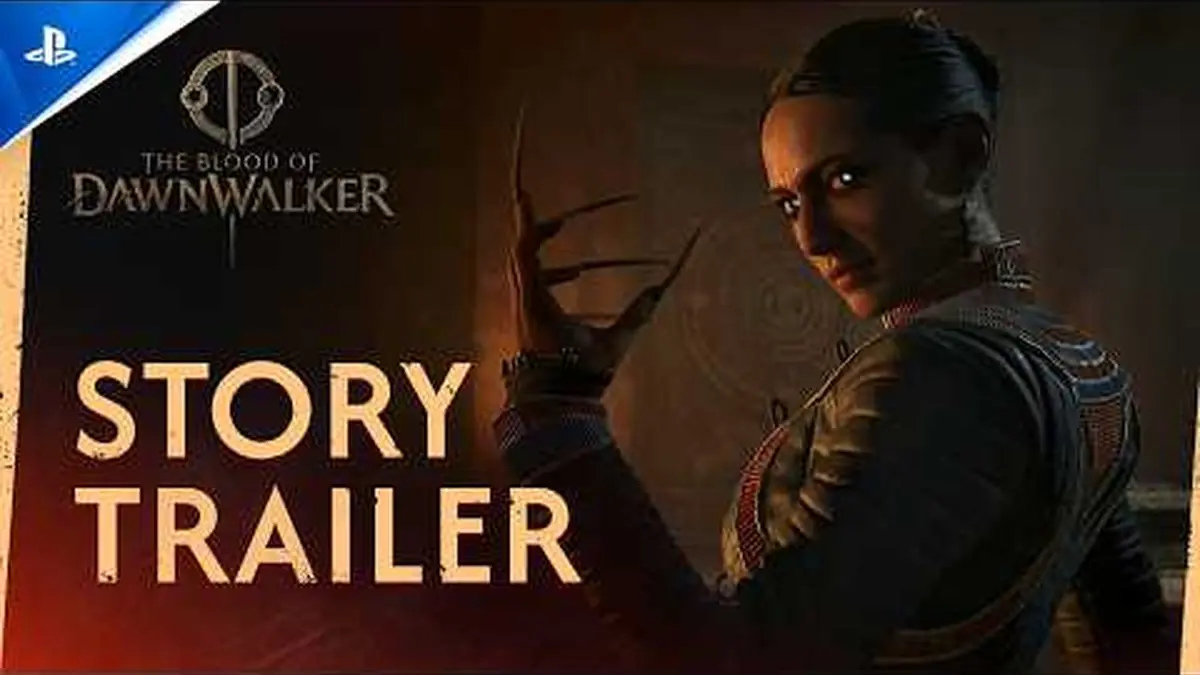
Rebel Wolves has locked down a September 3 release date for The Blood of Dawnwalker on PS5. The vampire RPG marks the studio’s debut project, bringing together over 160 developers – many of whom previously worked on The Witcher 3 at CD Projekt RED.
The timing feels deliberate. September traditionally serves as gaming’s soft relaunch after the summer drought, and Rebel Wolves clearly wants to establish their presence before the holiday rush. Meanwhile, the extended live demo shown at their Warsaw studio represents the first major gameplay reveal since Gamescom 2025.
The Blood of Dawnwalker drops players into 14th century Europe as Coen, a man cursed with vampirism while trying to save his family. The setup reads like classic dark fantasy, but the execution introduces a notable twist. Players have exactly 30 days and nights to rescue Coen’s captured family from vampire lord Brencis.
This isn’t just narrative flavor. Every major action advances the clock. Side quests cost time. Certain dialogue choices eat precious hours. Even learning specific abilities has a visible time cost. For a massive open world filled with caves, settlements, and hidden paths, this creates genuine tension.
CEO and game director Konrad Tomaszkiewicz emphasizes they tested extensively to avoid punishing exploration. The team aims for that sweet spot where urgency builds without paralyzing players. Creative Director Mateusz Tomaszkiewicz confirms most content remains accessible within the time limit, and running out of days doesn’t trigger immediate game over.
The mechanics echo Majora’s Mask’s time loop brilliance, but applied to open-world design philosophy that’s dominated the last decade. Where most RPGs encourage exhaustive completion, Dawnwalker forces meaningful choices. Do you spend three days mastering a combat skill, or rush toward your objective? It’s resource management disguised as narrative urgency.
Notably, this approach could reshape how studios think about player engagement. The industry has long struggled with completion rates – most players never finish RPGs that stretch beyond 40 hours. A built-in deadline naturally creates focus and momentum.
Rebel Wolves’ pedigree adds serious weight to these ambitions. The studio formed in 2020 around key Witcher 3 veterans, including both Tomaszkiewicz brothers who served as directors on CD Projekt’s masterpiece. Their track record suggests they understand how to balance ambitious mechanics with player accessibility.
The timing also positions Dawnwalker strategically within the vampire gaming renaissance. Bloodlines 2 has faced repeated delays, leaving room for a fresh take on undead RPGs. Meanwhile, the medieval setting sidesteps the urban vampire tropes that dominated previous generations.
The 14th century backdrop provides rich historical context. This era saw the Black Death ravaging Europe, creating perfect conditions for supernatural horror. The game’s blood tax concept – vampiric protection in exchange for human tribute – feels grounded in period politics while maintaining fantastical elements.
Rebel Wolves clearly learned from CD Projekt’s Cyberpunk 2077 launch troubles. Focusing on single-platform release (PS5) allows concentrated optimization efforts. The September date provides buffer time after typical summer crunch periods, suggesting more measured development pacing.
The demo’s reception among press suggests the technical execution matches the ambitious design. After years of vampire games that felt either too action-heavy or too simulation-focused, Dawnwalker appears to strike a middle ground that emphasizes player choice within meaningful constraints.
This represents exactly the kind of mid-budget innovation the industry needs. Major publishers increasingly focus on established franchises or massive live service projects. Studios like Rebel Wolves can explore riskier concepts with smaller teams and tighter scope.
Come September, we’ll discover whether this particular blend of time pressure and vampire politics resonates with players. The early signs suggest Rebel Wolves has crafted something genuinely distinctive in an increasingly crowded RPG landscape. That 30-day countdown isn’t just a game mechanic – it’s become the project’s defining promise.