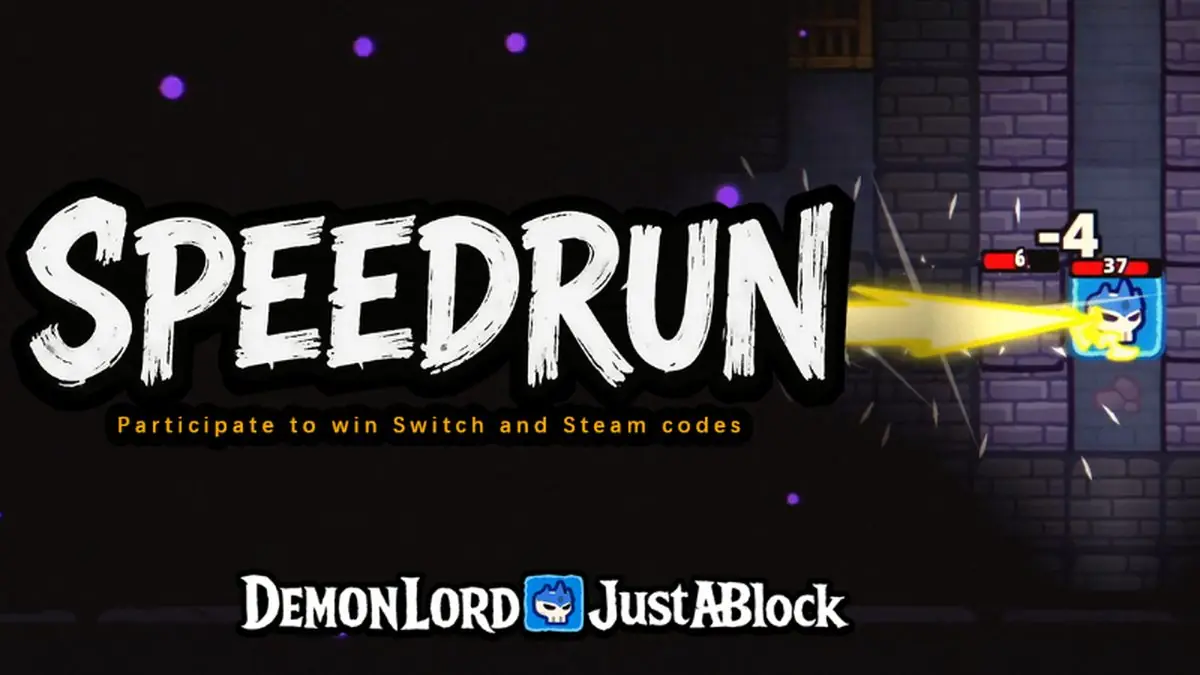
The race is officially on. An indie developer just threw down the gauntlet with a speedrun challenge that’s got serious prizes on the line. We’re talking Nintendo Switch codes, Steam gift cards, and bragging rights that’ll last longer than your favorite gaming chair.
“My Lords, who is the fastest head to clear the game? During the event period, players who complete the speedrun challenge and submit a full recording will have a chance to win rewards!” – Demon Lord: Just a Block on Steam
This isn’t your typical indie game promotion. The developer behind Demon Lord: Just a Block is putting real money where their mouth is. Think of it like March Madness, but instead of brackets, you’ve got speedrunners going head-to-head against the clock.
The challenge rules are straightforward but demanding. You need to blitz through the entire game starting from the lobby and push all the way to the Daevrak’s Heart chapter. No shortcuts, no easy mode. Standard Lord difficulty or higher is the minimum entry fee. It’s like asking runners to qualify for the Olympics, but for gamers with lightning-fast reflexes.
The recording requirements read like a referee’s playbook. Your video needs 480p resolution minimum, 30 FPS, and full in-game audio. You can’t just hit record whenever you feel like it either. The footage has to start from the initial lobby, continue for at least five seconds after you clear the final boss, and show your run history afterward. They’re not messing around with verification.
Now let’s talk prize money. The top 50 speedrunners each snag a Nintendo Switch version code for the game. That’s already a solid reward for making the cut. But here’s where it gets spicy. The top 10 finishers also pocket a $50 Steam gift card on top of that Switch code. And if you’re good enough to crack the top three? You’re looking at an additional $100 Steam card. That’s $150 in Steam money for the podium finishers.
Do the math and you’ve got $250 in Steam cards plus 50 Switch codes up for grabs. For an indie game, that’s a serious investment in building community hype. Most smaller developers can barely afford to send out review copies, let alone drop this kind of cash on a contest.
This whole setup shows how much the speedrunning scene has evolved. What started as a niche hobby for the most dedicated players has become a legitimate marketing strategy. Developers know that speedrunners don’t just play games, they dissect them. They find routes, exploit mechanics, and create content that keeps games alive long after launch.
The timing here is smart too. By requiring players to actually learn the game inside and out, the developer is building a core group of experts who’ll become content creators and community leaders. These aren’t casual players who’ll drop the game after a week. These are the grinders who’ll be posting tutorials, sharing strategies, and keeping the game relevant on streaming platforms.
It’s also worth noting the global approach. You can submit videos to YouTube, TikTok, X, or even Bilibili. That’s not just smart marketing, it’s recognizing that speedrunning communities exist everywhere. The developer isn’t limiting themselves to Western platforms or English-speaking audiences.
The June 6 deadline gives players just over a month to master their runs. That’s enough time to learn the game but not so long that the hype dies down. Smart tournament organizers know you need that sweet spot where players feel challenged but not overwhelmed.
Here’s what to watch for: the meta development. Right now, nobody knows the optimal routes or strategies. Over the next few weeks, you’ll see runners experimenting, sharing discoveries, and gradually pushing times lower. The first sub-30-minute run might seem impossible today but could be standard by deadline day.
If you’re thinking about jumping in, start grinding now. The early bird gets the worm in speedrunning. Players who master the game mechanics first usually maintain their advantage even as the competition heats up. Plus, with 50 Switch codes available, you don’t need world-record pace to walk away with something.
This contest could set a precedent for how indie developers approach community building. Instead of hoping for organic viral moments, they’re creating structured competitions that reward skill and dedication. That’s the kind of developer-community relationship that builds lasting franchises, not just quick sales spikes.