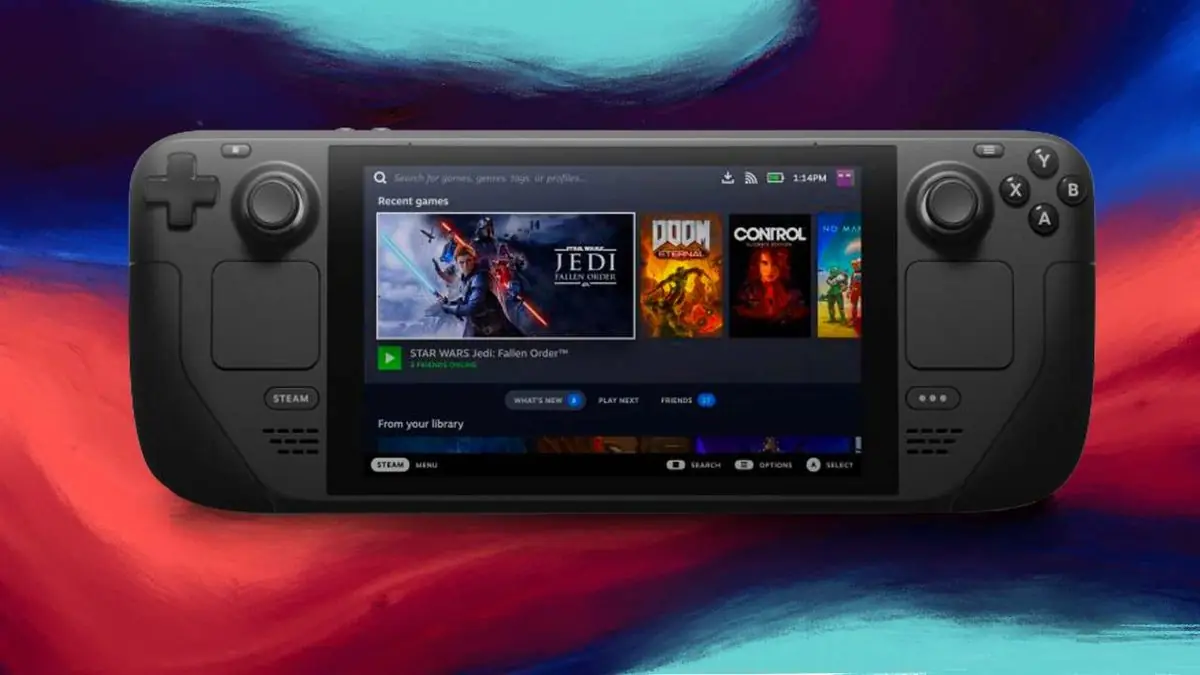
Valve just dropped some big news for handheld gaming fans. The company officially confirmed it’s working on Steam Deck 2. But here’s the catch – there’s still no release date in sight.
This isn’t some random leak or rumor mill speculation. Valve straight-up told the community they’re “hard at work” on the next-generation device. For hardware enthusiasts who’ve been tracking every Steam Deck update since launch, this is the confirmation we’ve been waiting for.
The original Steam Deck absolutely ripped when it launched. Sure, it had some rough edges at first. But Valve kept pushing updates and improvements. Now it’s a legitimate gaming powerhouse that can handle AAA titles on the go.
The community reaction has been pretty much what you’d expect. Excitement mixed with impatience about the timeline.
“Valve Says It’s ‘Hard at Work’ on Steam Deck 2, but There’s Still No Release Window” – u/ATonOfBricksFellOnMe on r/Steam
Reddit threads are already filling up with spec wishlist discussions. People want better battery life. Faster processors. Maybe a higher resolution screen. The usual hardware upgrade cycle stuff.
But here’s where it gets interesting from a tech perspective. Valve isn’t rushing this thing to market. They’re taking their time to get it right. That’s actually smart given how competitive the handheld space has become.
Of course, not everyone is thrilled about the lack of concrete timeline. Some folks bought the current Steam Deck expecting a longer product cycle. Others are holding off on purchases now that they know a successor is coming.
The timing question is legitimate. Do you buy the current model or wait? It’s the classic tech dilemma that hardware reviewers deal with constantly.
From a technical standpoint, Valve has some serious decisions ahead. The current Steam Deck uses AMD‘s custom APU based on RDNA 2 architecture. For Steam Deck 2, they’ll likely want to jump to newer silicon. AMD’s RDNA 3 or even RDNA 4 could provide significant performance gains while maintaining battery efficiency.
Then there’s the display question. The current 800p screen works fine for the form factor. But users are definitely interested in higher resolutions. A 1080p or even 1200p panel could be game-changing. Though you’d need more GPU horsepower to drive those extra pixels smoothly.
RAM is another obvious upgrade target. The current 16GB LPDDR5 setup handles modern games well. But 32GB would future-proof the device better. Storage speed improvements through faster NVMe controllers could also boost loading times significantly.
The handheld gaming market isn’t waiting for Valve either. Asus ROG Ally, Lenovo Legion Go, and other competitors keep pushing boundaries. Steam Deck 2 needs to stay ahead of this curve to maintain market leadership.
Valve’s approach here makes sense though. They’re not just throwing faster chips in the same chassis. They’re probably rethinking the entire user experience. SteamOS improvements, better cooling solutions, refined ergonomics – all that matters as much as raw specs.
The original Steam Deck proved portable PC gaming could work mainstream. Steam Deck 2 needs to prove it can compete with dedicated gaming handhelds and tablets long-term.
Price positioning will be crucial too. The current model starts at $399 for the base configuration. Steam Deck 2 will likely cost more due to newer components. But Valve can’t price themselves out of the mainstream market they worked so hard to capture.
So what should current Steam Deck owners expect? Valve historically supports their hardware for years. The original Steam Controller got updates long after its peak popularity. Steam Deck will probably follow the same pattern.
As for timeline speculation, don’t expect Steam Deck 2 anytime soon. Valve saying they’re “hard at work” suggests early development stages. We’re probably looking at 2027 at the earliest. Maybe 2028 if they want to wait for next-generation AMD or Intel silicon.
For now, the current Steam Deck remains the best value in portable PC gaming. It handles everything from indie games to Cyberpunk 2077 surprisingly well. If you’ve been waiting to jump in, the lack of Steam Deck 2 timeline makes this a safe purchase window.
Just don’t expect Valve to rush the sequel to market. When Steam Deck 2 finally arrives, it’ll need to justify the wait with meaningful improvements across the board.