Sometimes the simplest questions unlock the deepest rabbit holes. That’s exactly what happened when gaming content creator GamewithDave dropped what seemed like an innocent post about console history. One image, one question, and suddenly thousands of gamers are time-traveling back to their childhood living rooms.
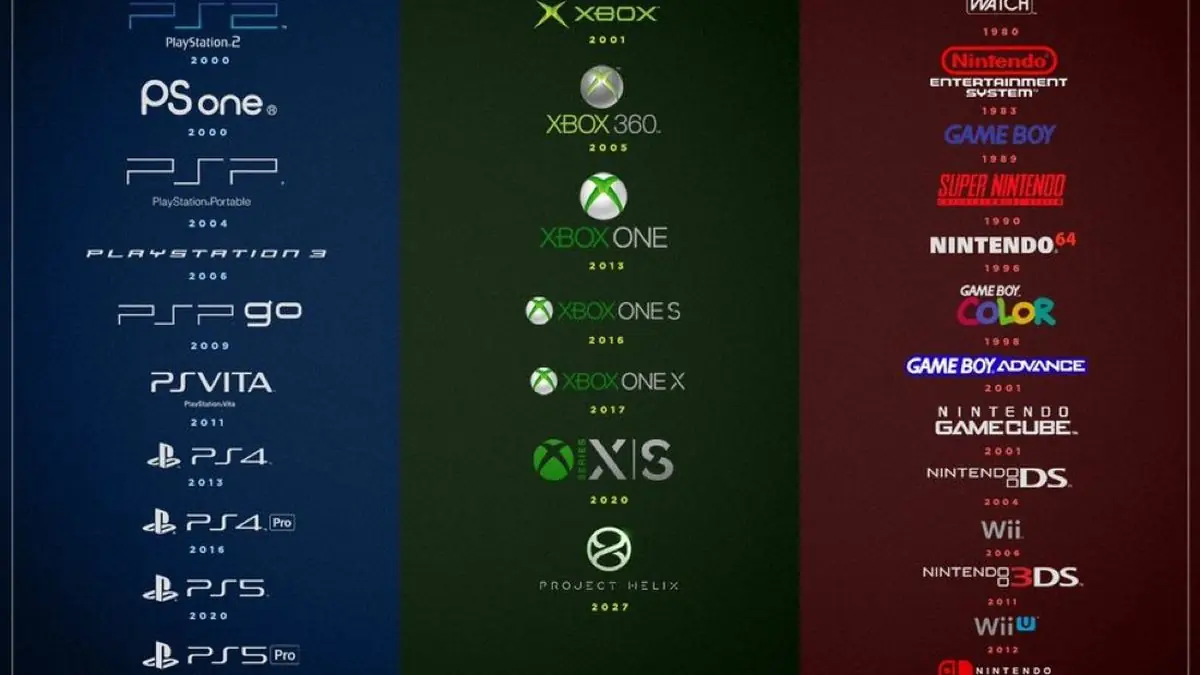
The post that started it all was beautifully simple:
“Gaming history in one image… What was your first console?” – @GamewithDave
What followed was like watching the gaming equivalent of a generational family reunion. Players from every era started sharing their origin stories, and the responses paint a fascinating picture of how gaming has evolved from niche hobby to cultural phenomenon.
The replies read like a chronological journey through sci-fi becoming reality. You’ve got the Atari 2600 veterans who remember when games looked like abstract art and sounded like R2-D2 having a breakdown. Then came the NES generation, who witnessed the great video game renaissance after the crash of ’83. These folks lived through gaming’s equivalent of the fall and rise of the galactic empire.
But here’s where it gets really interesting. The generational splits aren’t just about nostalgia – they reveal completely different relationships with technology. The Atari crowd had to use their imagination to fill in what the graphics couldn’t show. They were basically playing interactive science fiction novels where a few pixels became entire worlds in their minds.
Meanwhile, the PlayStation and Xbox generations grew up in gaming’s golden age of storytelling. These players experienced cinematic narratives that rival actual sci-fi films. We’re talking about the difference between reading Foundation and watching Interstellar. Same themes, completely different experiences.
The Nintendo kids occupy this weird middle ground. They got both the imagination-heavy classics and the story-driven epics. It’s like they lived through gaming’s transition from pulp sci-fi magazines to big-budget space operas.
What’s fascinating is how each generation defends their first console like it’s their home planet. The loyalty runs deeper than just brand preference – it’s about the moment they realized games could transport them to other worlds. That first console represents their personal gateway to digital universes.
The thread also highlights something the gaming industry sometimes forgets: accessibility matters. Several older players mentioned getting their first console years after launch because their families couldn’t afford it right away. These delayed gaming origins create interesting anomalies – like someone whose “first console” was technically retro even when they got it.
This hits different in 2026, where gaming has become as mainstream as movies or music. Today’s kids are growing up with gaming as a given, not a luxury. They’ll never experience that moment of convincing parents that this “computer game thing” isn’t just a fad.
The economic angle reveals another layer of gaming evolution. Early consoles were serious investments – like buying a piece of the future. Families made decisions about which system to get based on limited information and hefty price tags. Now we’re in an era where you can game on everything from phones to VR headsets to streaming services.
Looking at the replies, you can trace the entire arc of gaming technology. From systems that needed you to imagine most of the experience to modern consoles that render worlds so detailed they feel like visiting actual planets. We’ve gone from Pong to games that look like they were ripped straight from Blade Runner or Halo cinematics.
The nostalgia factor here isn’t just about the games – it’s about the context. These first consoles represent moments in time when families gathered around TVs, when gaming was still novel enough to amaze parents and grandparents. They’re time capsules from an era when playing video games felt genuinely futuristic.
This thread also shows how gaming has become our collective mythology. Just like sci-fi fans debate Star Wars versus Star Trek, gamers debate console generations with the same passion. These aren’t just machines – they’re the vessels that carried entire generations into digital frontiers.
The retro gaming market has exploded because of exactly this kind of nostalgia. People want to revisit their first digital worlds, and companies are happy to oblige with remasters, retro collections, and even miniature versions of classic consoles.
As we look ahead, this conversation raises interesting questions about what today’s VR and cloud gaming kids will remember as their “first console.” Will they even have a single defining device, or will their gaming origin stories be spread across multiple platforms and experiences?
GamewithDave probably didn’t expect to trigger such a deep dive into gaming anthropology. But sometimes the best conversations start with the simplest questions. In this case: what piece of future tech first showed you that other worlds were possible?