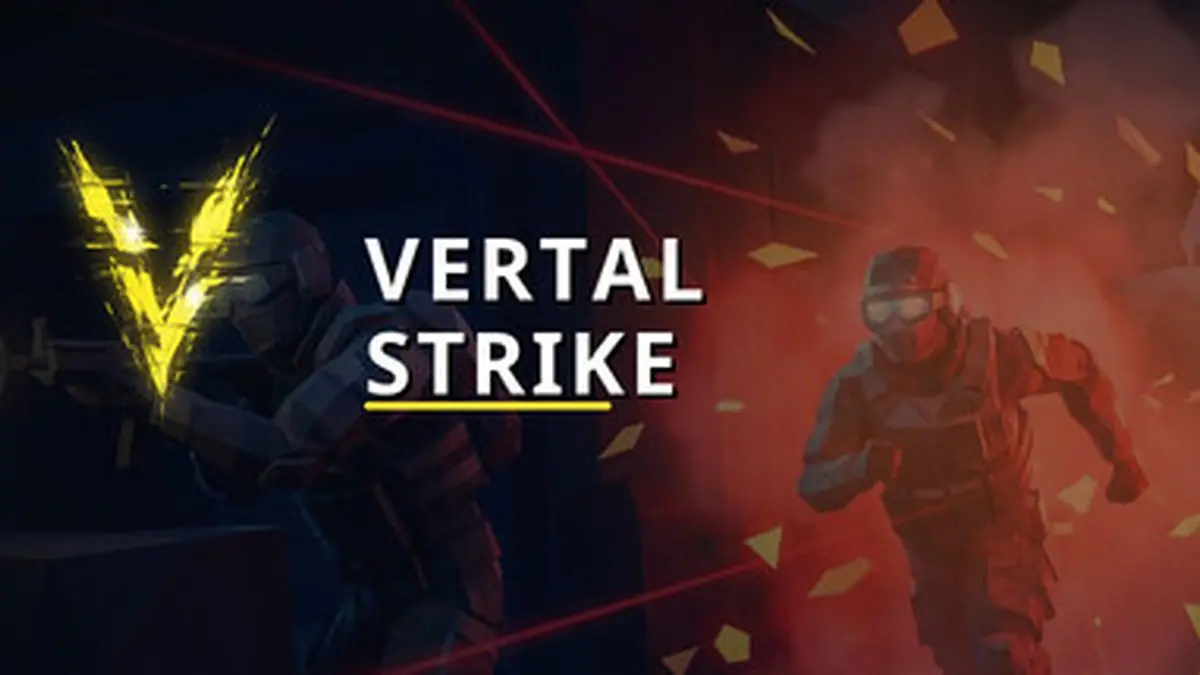
The indie game landscape just got another compelling entry, and this one comes with a story worth telling. VertalStrike, a fast-paced low-poly FPS from Drozd Studios, has officially launched on Steam as a complete experience rather than jumping into the increasingly crowded Early Access pool.
What makes this launch particularly noteworthy is the development approach behind it. This project represents the kind of focused, single-developer effort that’s becoming rarer in an industry increasingly dominated by large teams and extended development cycles.
“VertalStrike is Now Officially Released. We are proud to officially announce that VertalStrike is now fully released on Steam and available to play. After an intense period of development, testing, and constant iteration, the game is no longer in a ‘Coming Soon’ state. This is not an Early Access launch. This is the full release of the game as a complete experience, and players can jump in and play right now.” — VertalStrike on Steam
The developer’s emphasis on delivering a complete experience at launch runs counter to current industry trends. Meanwhile, most indie FPS projects either launch into Early Access or spend years in development limbo. Drozd Studios took a different path, committing to intensive iteration before opening the doors to players.
VertalStrike positions itself as a deliberately streamlined experience. The game focuses on responsive gameplay and clean visuals rather than feature creep or overwhelming complexity. This approach reflects a deeper understanding of what makes FPS games work at their core — something that’s easy to lose sight of when development teams get caught up in adding layers of systems.
The technical achievement here shouldn’t be understated. Building an FPS from scratch as a solo developer means handling everything from netcode to weapon balancing to map design. Each of these disciplines typically requires specialized knowledge, yet somehow Drozd Studios managed to deliver a cohesive package.
Notably, the game’s modest wishlist numbers tell their own story. During its 17-day Coming Soon phase, VertalStrike gathered around 100 wishlists. In an era where successful indie games often need thousands of wishlists to gain traction, these numbers might seem small. However, they represent something more valuable than raw metrics — genuine early interest from players who discovered the game organically.
“During the 17 days when VertalStrike was in the Coming Soon phase, the game gathered around 100 wishlists. While that number may seem small in the context of large releases, it represents real people who showed interest early on. That support played an important role in reaching this point.” — VertalStrike on Steam
This honest acknowledgment of scale speaks to a developer who understands their position in the market. Rather than inflating expectations or making grand claims, Drozd Studios is building from a foundation of realistic assessment and genuine appreciation for their early supporters.
The broader context makes this launch even more interesting. The FPS genre has seen a renaissance in recent years, with games like ULTRAKILL and DUSK proving that there’s still appetite for focused, skill-based shooters. VertalStrike enters this space with its own take on the formula — low-poly aesthetics combined with emphasis on immediate, satisfying gameplay.
What sets this apart from many indie FPS attempts is the developer’s clear vision of what they’re building. Too many projects in this space try to be everything to everyone, resulting in diluted experiences that satisfy no one. VertalStrike’s focus on “straightforward but skill-based combat” suggests a developer who understands the genre’s fundamentals.
The post-launch roadmap also demonstrates mature planning. Rather than promising sweeping changes or major feature additions, the developer mentions “future updates, improvements, and additional content” — language that suggests incremental refinement rather than scope creep.
This approach mirrors successful indie FPS launches of the past few years. Games that have found lasting audiences typically start with solid foundations and build outward, rather than launching with ambitious but unfinished systems.
Meanwhile, the solo development aspect adds another layer of intrigue. In an industry where even small indie teams often struggle with coordination and vision alignment, having a single creative voice can be a significant advantage. Every design decision flows through one person’s understanding of the game they’re trying to create.
Looking ahead, VertalStrike’s success will likely depend on how effectively it can find its audience within the competitive FPS landscape. The game launches into a market that includes everything from massive battle royales to retro-inspired arena shooters. Finding the right niche will be crucial.
The developer’s commitment to ongoing development suggests they’re in this for the long haul rather than treating launch as a finish line. In the current indie game environment, that kind of sustained effort often makes the difference between games that fade quickly and those that build lasting communities.
For other solo developers watching this launch, VertalStrike represents a case study in focused execution over ambitious scope. Sometimes the most impressive achievement isn’t building the biggest game, but rather building the right game and seeing it through to completion.