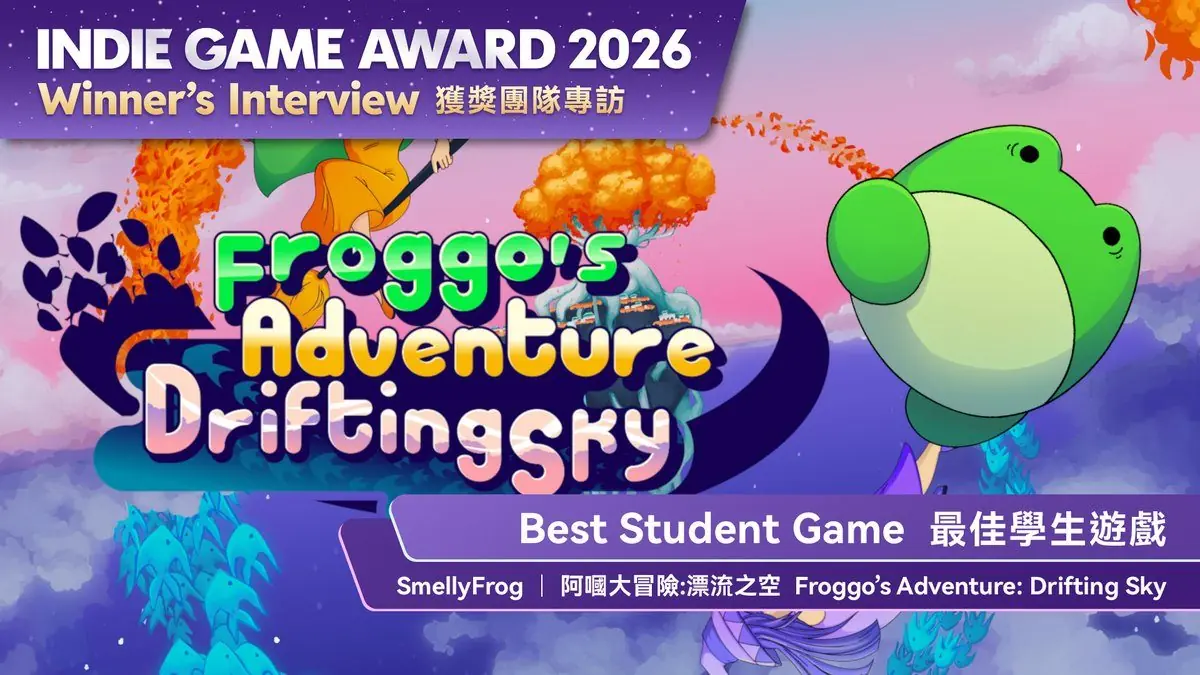
Sometimes the best games come from the simplest ideas executed perfectly. That’s exactly what happened at Taipei Game Show 2026, where a student developer named Shane took home the Best Student Game award with Froggo’s Adventure: Drifting Sky — a pixel art adventure that turns tongue mechanics into pure chaos.
The concept sounds absurd on paper. You play as a frog who zips around eating enemies, then spits them back out as weapons. But judging by the reception at TGS, this thing absolutely rips. The judges clearly saw something special in Shane’s approach to combat mechanics that most developers wouldn’t even think to try.
“Best Student Game winner @daSmellyfrog is hopping into the interview with his adorable pixel adventure -Froggo’s Adventure: Drifting Sky! 🐸Meet Froggo, a frog who zips his tongue, gobbles up enemies, and spits them right back as weapons. As chaotic and charming as he looks.” — @TaipeiGameShow
The official announcement from Taipei Game Show gives us a glimpse into what makes this game tick. Shane sat down for a full interview covering pixel art techniques, music composition, and level design philosophy. For a student project, the production values seem surprisingly polished.
What’s interesting is how the core mechanic creates this feedback loop that most action games miss. Instead of just having a basic attack button, every enemy becomes potential ammunition. That’s smart design — it forces players to think about positioning and timing in a completely different way. You’re not just avoiding enemies, you’re literally consuming the threat and turning it into your advantage.
The pixel art style fits perfectly with this chaotic energy. Modern indie games often go for hyper-detailed sprites or smooth vector graphics, but there’s something about chunky pixels that makes the tongue-slinging action feel more impactful. Each gobbled enemy probably has satisfying crunch animations that sell the mechanic.
Level design becomes crucial when your main weapon depends on enemy placement. Shane had to balance giving players enough targets to consume while making sure the difficulty curve doesn’t break. Too many enemies and it becomes trivial. Too few and you’re stuck with basic movement. Getting that balance right as a student developer shows real understanding of game feel.
The music and audio design probably do heavy lifting here too. Tongue mechanics need strong audio feedback — that satisfying slurp when you grab an enemy, the chunky impact when you spit them out. These details separate amateur projects from award winners.
What makes this win particularly impressive is the competition level at TGS. Student game categories usually see dozens of submissions from game design programs across Asia. Standing out means having both technical execution and creative vision that goes beyond just copying popular mechanics.
The “chaotic and charming” description in the announcement tells you everything about the game’s personality. It’s not trying to be the next Dark Souls or follow some trending genre formula. Shane found a weird idea and committed to making it work perfectly within its own logic.
This kind of experimental design is exactly what student competitions should celebrate. Professional game development often gets stuck in safe patterns because millions of dollars are on the line. Students have the freedom to try completely ridiculous concepts and sometimes discover gold.
The pixel art choice also makes practical sense for a student project. High-resolution assets take massive time investment and professional tools. Pixel art lets solo developers create consistent visual styles without needing industry-level art teams. Shane clearly understood the constraints and worked within them intelligently.
Froggo’s Adventure joining the ranks of student game winners puts it in good company. Previous TGS student winners have gone on to become full commercial releases or launched successful indie studios. The recognition opens doors that wouldn’t exist otherwise.
The interview Shane did with TGS should provide deeper insights into the development process. Understanding how a student balances creative vision with technical limitations gives other developers a roadmap for their own projects. These behind-the-scenes looks often reveal clever solutions that the finished game doesn’t show.
For Shane (@daSmellyfrog), this award probably means everything. Student developers pour months into these competition entries with no guarantee of recognition. Having industry professionals validate your work at this level sets up serious momentum for whatever comes next.
The timing couldn’t be better either. Indie games are having a moment right now, with platforms like Steam and itch.io giving developers direct access to audiences. A Best Student Game award from a major show like TGS carries real weight when approaching publishers or applying for development grants.
Whether Froggo’s Adventure becomes a full commercial release or stays a beloved student project, it’s already succeeded at the most important thing — proving that weird ideas executed well can compete with anything. Sometimes the best games are the ones that make you wonder why nobody thought of eating enemies and spitting them out before.