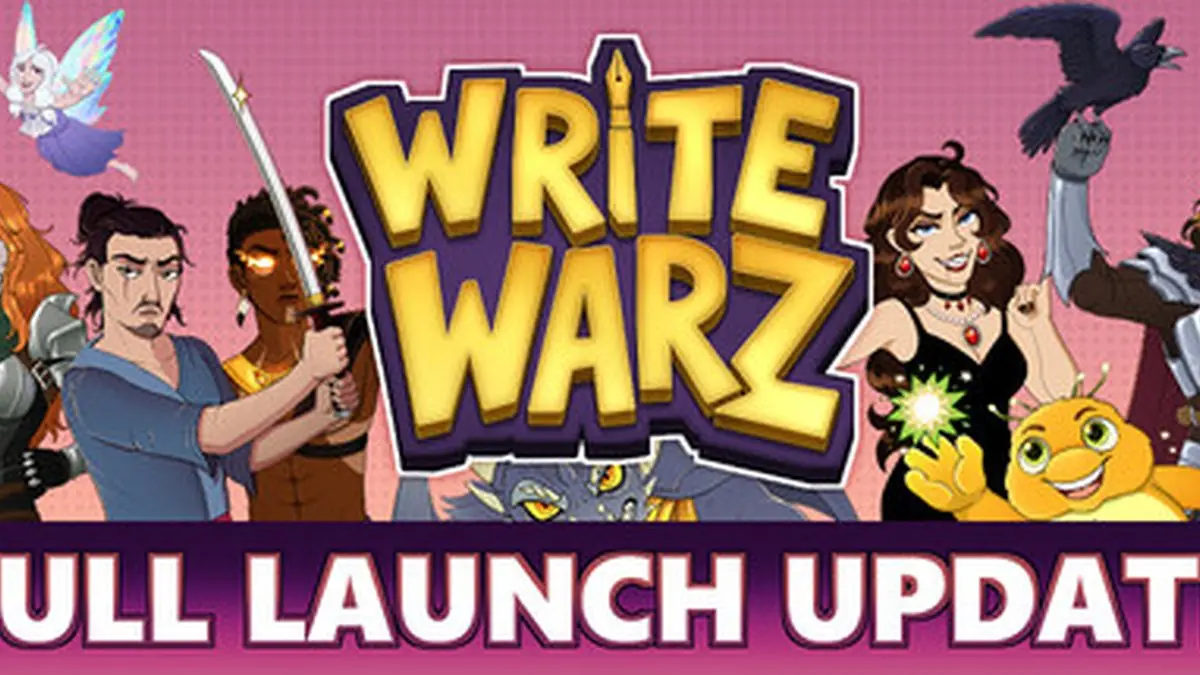
In an industry where free-to-play models reign supreme and microtransactions fuel empires, Write Warz 3.0 just pulled the most counterintuitive move imaginable. Boltz Entertainment’s indie darling has graduated from Early Access with a complete about-face on monetization, transforming from a free-to-play experience into a premium purchase that includes everything upfront. It’s like watching someone burn their bridges while building new ones simultaneously.
The announcement arrived with the quiet confidence of a studio that knows exactly what story they want to tell. No fanfare, no marketing blitz—just a straightforward declaration that everything has changed.
“Write Warz 3.0 is here! It’s our full release out of Early Access. As part of this launch, Write Warz is no longer free-to-play, and we’ve removed the marketplace: one purchase includes every theme and cosmetic, forever. The biggest new feature is Mobile (Beta): only one person needs to own the game on Steam to host, and everyone else can join from a mobile browser device at writewarz.tv to write and vote.” — Write Warz 3.0 on Steam
There’s something almost nostalgic about this approach—a return to the days when buying a game meant owning the complete experience. No battle passes, no premium currencies, no psychological tricks designed to extract maximum lifetime value. Just one price, one purchase, everything unlocked. It reads like a love letter to an era when games were products rather than services.
But this isn’t just nostalgia driving the decision. The mobile beta feature reveals a deeper understanding of how community gaming actually works. The asymmetrical ownership model—where only the host needs to own the game while others can join freely through browsers—suggests that Boltz Entertainment has been watching how their community actually plays together. It’s social gaming infrastructure that acknowledges the reality of friend groups where not everyone has the same budget or commitment level.
The cross-platform element adds another layer to this narrative. Write Warz has always been about collaborative storytelling, and breaking down the barriers between Steam and mobile doesn’t just expand the player base—it fundamentally changes the social dynamics of the game. Suddenly, the person hosting a game night doesn’t need to worry about who has which platform or whether everyone can afford to buy in.
This move comes at a fascinating moment in gaming history. While major studios double down on live service models and endless content treadmills, smaller developers are increasingly experimenting with alternative approaches. Some are returning to premium pricing, others are exploring subscription models, and a few brave souls are even trying completely ad-supported experiences. Boltz Entertainment’s choice feels particularly bold because it requires genuine confidence in the content they’ve created.
Removing the marketplace entirely sends a clear message about priorities. Instead of designing systems to encourage ongoing spending, they’re betting that players will value the completeness of the experience over the dopamine hits of incremental unlocks. It’s a philosophy that treats players as customers rather than revenue streams—refreshing in an industry that often blurs that distinction.
The timing of this transition also speaks to the maturity of the Early Access process. Write Warz didn’t just add features and call it done—they fundamentally reimagined their relationship with their community. The free-to-play model served its purpose during development, allowing for broader testing and feedback, but the full release represents a new chapter in the game’s story.
Of course, this strategy carries significant risk. The free-to-play model exists because it works—it lowers barriers to entry and can generate substantial revenue from engaged players. By switching to premium pricing, Boltz Entertainment is betting that their existing community values what they’ve built enough to pay upfront, and that new players will discover the game through word-of-mouth rather than impulse downloads.
The browser-based mobile access could be the key to making this transition work. It preserves the low barrier to entry for secondary players while monetizing the core experience through the primary purchaser. It’s a hybrid approach that acknowledges both the realities of modern gaming economics and the social nature of the Write Warz experience.
Looking ahead, Write Warz 3.0’s success or failure could influence how other indie developers approach monetization during their own Early Access journeys. If players embrace this return to premium pricing with complete content inclusion, it might encourage more developers to resist the siren call of endless monetization schemes. The mobile beta will be particularly worth watching—if it successfully expands the community without cannibalizing sales, it could become a template for other collaborative gaming experiences.
Boltz Entertainment has chosen to tell a different story about what games can be and how they can sustain themselves. Whether players will embrace this narrative remains to be seen, but the audacity of the attempt deserves recognition. In a landscape of endless sequels and iterative updates, sometimes the most revolutionary act is simply saying “this is complete.”