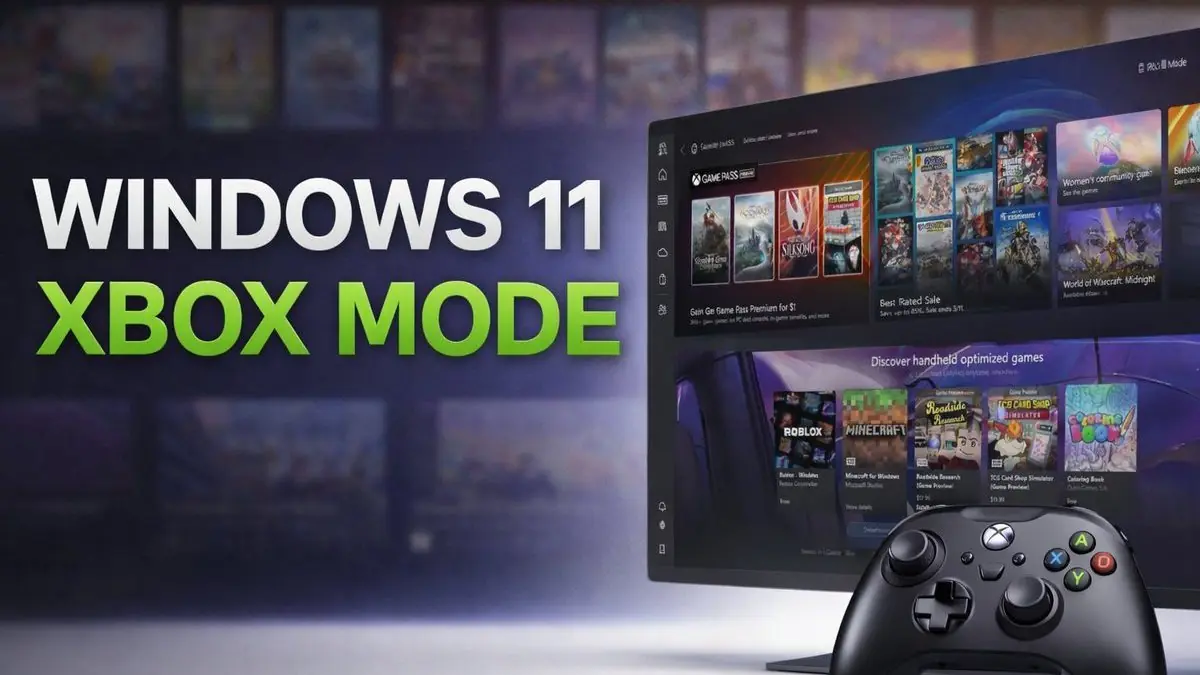
Imagine if your gaming PC could transform into a sleek console interface faster than you can say “engage hyperdrive.” That sci-fi dream is about to become reality this April when Microsoft drops Xbox Mode for Windows 11.
This isn’t just another Windows update — it’s like Microsoft took the best parts of console gaming and beamed them straight into your PC. Think of it as Windows finally getting its own version of the TARDIS: same machine on the outside, completely different experience on the inside.
The gaming community is already buzzing about this console-PC hybrid future. Early reactions show people are genuinely excited about what this could mean for handheld gaming.
“Windows 11 is getting an Xbox Mode. Your PC can boot into a full-screen console interface instead of the normal desktop. Once enabled, Windows launches into a controller-first gaming dashboard. You can: • browse your game library • open Game Pass • access the Xbox Store • launch games with a controller • use cloud gaming • switch back to the Windows desktop anytime Microsoft says it also reduces background processes and can free up around 1–2 GB of RAM while gaming. It’s designed especially for handheld PCs like ROG Ally and Legion Go. Rollout begins April 2026.” — @Techjunkie_Aman
The performance boost alone has people excited. Freeing up 1-2GB of RAM while gaming? That’s like having a warp drive for your frame rates. For handheld PC owners, this could be the difference between smooth 60fps gaming and watching their device chug through demanding titles.
But not everyone’s ready to board this hype train just yet. Some PC purists are worried about Microsoft pushing more Xbox integration into Windows. There’s always that lingering fear that Windows might become too console-like and lose the flexibility that makes PC gaming special.
Others are questioning whether this is really necessary when Steam Big Picture mode already exists. Why do we need another overlay when Valve’s been doing controller-friendly interfaces since 2012? It feels a bit like watching two space fleets compete for the same territory.
Then there’s the elephant in the room: privacy and data collection. Any time Microsoft adds new features, especially Xbox-related ones, people start wondering what information is getting beamed back to Redmond. Fair concerns in our cyberpunk reality where data is the new currency.
The memes are already writing themselves. “Windows 11: Now with 50% more Xbox and 100% more confusion about what operating system you’re actually running.” Some folks are joking that this is Microsoft’s way of slowly turning every PC into an Xbox without anyone noticing.
There’s also the inevitable “my grandma won’t know how to switch back to desktop mode” jokes. Because nothing says progress like accidentally trapping senior citizens in gaming mode.
But here’s the bigger picture that gets my sci-fi sensors tingling: this feels like the beginning of something much larger. We’re watching the boundaries between PC and console blur faster than hyperspace jumps in Star Wars.
This move puts Microsoft in direct competition with Valve’s Steam Deck approach, but from the opposite direction. While Valve built a handheld that runs PC games, Microsoft is making PCs behave more like handhelds. It’s like watching two different alien civilizations develop similar technology through completely different evolutionary paths.
The timing is perfect too. Handheld PCs are having their moment right now. Devices like the ROG Ally and Legion Go are proving there’s real demand for powerful portable gaming that isn’t limited to Nintendo’s ecosystem. Xbox Mode could be the secret sauce that makes these devices feel less like awkward laptop-gaming hybrids and more like natural console experiences.
This also signals Microsoft’s long-term vision for gaming everywhere. They’re not just building an OS feature — they’re constructing the foundation for a unified gaming ecosystem that works seamlessly across all their devices. It’s giving me serious Star Trek vibes, where technology just works regardless of what device you’re using.
So what happens next in this unfolding space opera? April 2026 is when the rollout begins, but don’t expect everyone to get it immediately. Microsoft loves their staged deployments, so early adopters will probably see it first.
The real test will be whether third-party handheld manufacturers embrace this or stick with their own custom interfaces. My prediction? Within two years, Xbox Mode becomes the standard way most people use handheld PCs.
We might also see this expand beyond handhelds. Living room gaming PCs, arcade cabinets, and even VR setups could benefit from a dedicated gaming mode that strips away desktop distractions.
The future of PC gaming is looking more console-like every day, and honestly? That might not be such a bad thing. Sometimes the best innovations come from blending the best of different worlds — like if the USS Enterprise had a baby with a gaming rig.