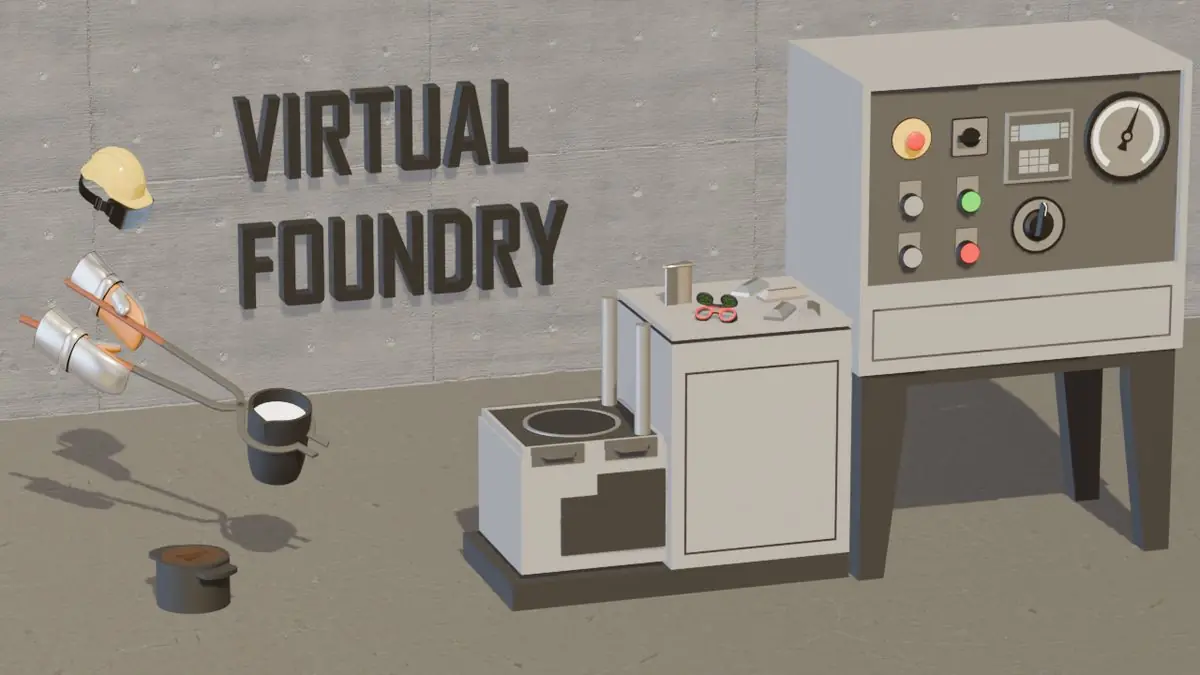
What happens when a college engineering project gets so good it becomes a real Steam game? That’s exactly what happened with Virtual Foundry, a VR experience that just hit PC VR headsets this week.
Developer mArek dropped some pretty cool news about their project’s journey from classroom to commercial release:
“I’m excited to announce that Virtual Foundry is now available on Steam! Originally developed as my engineering thesis, ‘Virtual Reality as a Didactic Tool for Presenting the Casting Process,’ this PCVR experience lets you explore the key stages of metal casting in an interactive virtual environment. Step into a virtual foundry, learn the process, and experience industrial technology in a new, immersive way.” — @mArek
So what exactly is Virtual Foundry? It’s a VR simulation that teaches you how metal casting works in real foundries. You know those massive industrial facilities where they pour molten metal into molds to make everything from car parts to sculptures? This game lets you experience that whole process without the danger of actual molten metal.
The VR experience walks you through each stage of casting. You’ll learn how to prepare molds, understand different types of metals, and see how temperature and timing affect the final product. It’s like having a master craftsperson guide you through a real foundry, but you can mess up without burning anything down.
What makes this story really interesting is how it started. mArek didn’t set out to make a commercial game. They were working on their engineering thesis about using VR as a teaching tool. The original title was “Virtual Reality as a Didactic Tool for Presenting the Casting Process” — pretty academic, right?
But somewhere along the way, this thesis project got so polished and useful that it made sense to put it on Steam. That’s not something you see every day. Most student projects stay in the classroom or maybe get shown at a conference. This one made the jump to actual commercial release.
This fits into a bigger trend we’re seeing in VR right now. Educational VR is getting really good, especially for hands-on skills that are hard to teach in regular classrooms. Medical students are doing virtual surgeries. Architecture students are walking through buildings before they’re built. Now engineering students can learn foundry work without needing access to an actual foundry.
The timing makes sense too. VR headsets are getting cheaper and more common. Schools are starting to invest in VR labs. And there’s growing demand for skilled workers in manufacturing and engineering. A tool that can teach foundry basics could actually help fill some real job gaps.
What’s really cool about Virtual Foundry is how it represents the indie VR scene right now. Small developers are finding these niche applications that big studios wouldn’t bother with. A major publisher probably wouldn’t make a metal casting simulator. But for an indie developer with engineering background? It’s perfect.
The educational gaming market is exploding too. Parents and teachers want games that actually teach useful skills. Traditional educational software can be pretty boring. But VR? That’s engaging in a way textbooks never will be.
For anyone curious about industrial processes or considering a career in engineering, Virtual Foundry could be a great starting point. You get to experience what foundry work feels like without committing to a whole degree program. That hands-on preview could help students decide if they want to pursue manufacturing or materials engineering.
The fact that this started as academic research makes it extra credible. mArek wasn’t just guessing about how to teach casting — they were actually studying the best ways to do it. That research foundation probably makes Virtual Foundry more effective than a random simulation would be.
Looking ahead, this could be just the beginning. If Virtual Foundry does well, we might see more academic VR projects make the jump to commercial release. There are probably dozens of thesis projects sitting in university labs that could become useful educational games.
Virtual Foundry is available now on Steam for PCVR headsets. It’s a pretty specific niche, but for anyone interested in manufacturing, engineering education, or just cool industrial processes, it looks like a solid way to learn something new while having fun with VR tech.