
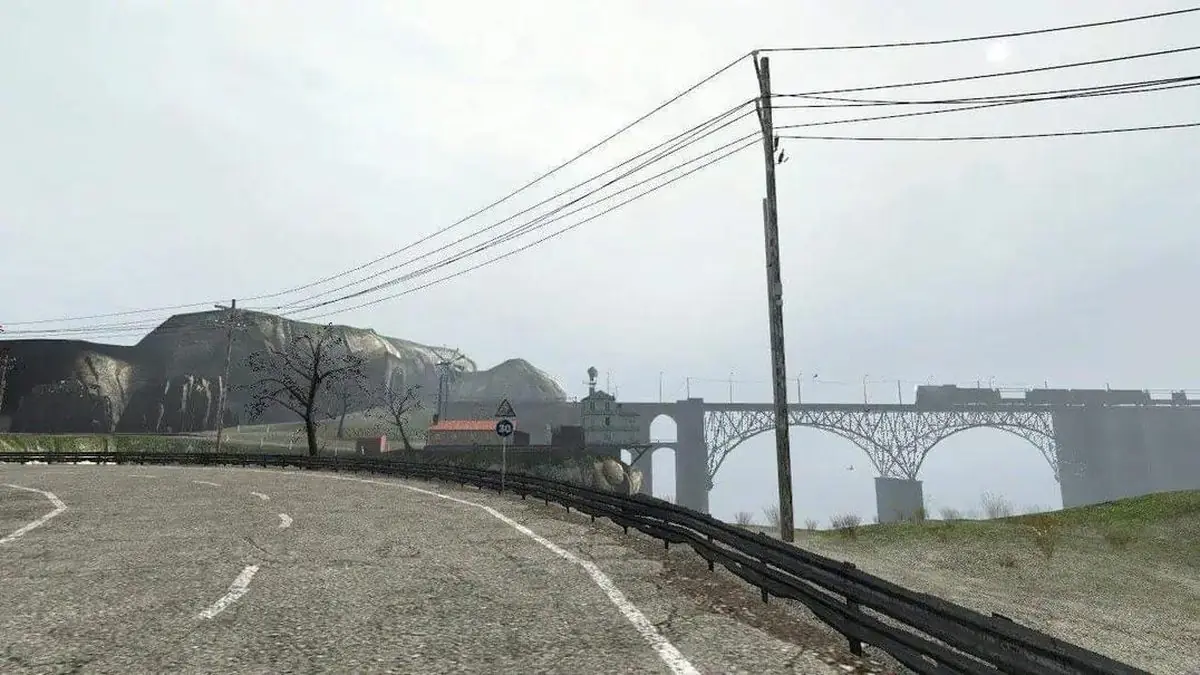
Have you ever walked through City 17 in Half-Life 2 and felt like something was just… off? Or explored the empty halls of Aperture Science in Portal and got goosebumps even when nothing scary was happening? You’re not alone. A recent discussion in the gaming community has put words to what many of us have felt for years — Valve games have this weird, liminal quality that gets under our skin.
Advertisement
“Valve games always had a liminal feel to it. Maybe that’s why games made in Source Engine feel so eerie” — u/MurkyUnit3180 on r/gaming
This observation has struck a chord with players who’ve been trying to figure out why Valve’s worlds feel so uniquely unsettling. The term “liminal” refers to spaces that feel like they’re between two states — empty airports at 3 AM, school hallways during summer break, or office buildings on weekends. These are places that should be full of people but aren’t, creating an eerie sense of displacement.
Valve has mastered this feeling across nearly every game they’ve made. Think about it — we’ve all spent hours in these worlds, but they consistently make us feel like we’re somewhere we’re not supposed to be.
The Source Engine itself plays a huge role in creating this atmosphere. The way it handles lighting creates these harsh contrasts between bright and dark areas. Shadows fall in weird ways, and everything has this slightly plastic, artificial sheen that makes familiar objects feel foreign. The sound design amplifies this too — footsteps echo differently than they should, and there’s always this subtle ambient hum that puts us on edge.
Half-Life 2’s City 17 is probably the best example of this liminal feeling. It’s a city that was clearly built for millions of people, but the Combine has turned it into this hollow shell. We walk through playgrounds with no children, apartment buildings with no families, and train stations with no travelers. The architecture suggests life, but the reality is emptiness.
Portal takes this concept even further. Aperture Science feels like a place where thousands of people once worked, but now we’re alone with GLaDOS in these sterile test chambers. The facility stretches on forever, filled with offices and break rooms that no one will ever use again. It’s corporate liminal space at its most pure — designed for productivity but stripped of humanity.
Even Counter-Strike maps tap into this feeling. Think about Dust2 or Office — these are places where people should live or work, but they’re frozen in time as battlegrounds. The maps feel lived-in but abandoned, like everyone just vanished moments before we arrived.
The psychology behind why these spaces affect us so deeply is fascinating. Humans are wired to expect certain things from certain environments. When we see a school, we expect to hear kids laughing. When we see a city street, we expect traffic and pedestrians. Valve’s games constantly subvert these expectations, creating what psychologists call “cognitive dissonance.”
This dissonance makes us feel alert and slightly anxious, even when nothing threatening is happening. Our brains know something’s wrong, but we can’t put our finger on what. It’s the same feeling you get when you’re the only person in a usually busy place — technically safe, but emotionally unsettling.
Valve’s genius lies in how they use this psychological trick to enhance their storytelling. The empty, liminal environments don’t just look cool — they make us feel the weight of whatever catastrophe has befallen these worlds. We understand the scale of loss not through exposition, but through the absence of life in spaces designed for it.
Other developers have tried to recreate this feeling, but few have nailed it like Valve. It’s not just about making empty spaces — it’s about creating spaces that feel like they should be full but aren’t. The difference between a naturally empty place and a liminally empty place is huge.
The impact of Valve’s liminal design philosophy can be seen throughout modern gaming. Horror games especially have borrowed this approach, using familiar-but-wrong environments to create unease. Games like The Stanley Parable and Backrooms-inspired titles have taken the concept and run with it.
As we look ahead, it’s clear that Valve’s influence on atmospheric design will continue. With more developers understanding the psychological impact of liminal spaces, we’re likely to see even more games that use this technique to create memorable, unsettling experiences.
Whether Valve was intentionally designing liminal spaces or just stumbled onto this formula, they’ve created something special. Their games don’t just tell stories — they make us feel them through the very environments we explore. And that’s probably why, even years later, we still get that familiar chill when we boot up a Source Engine game.