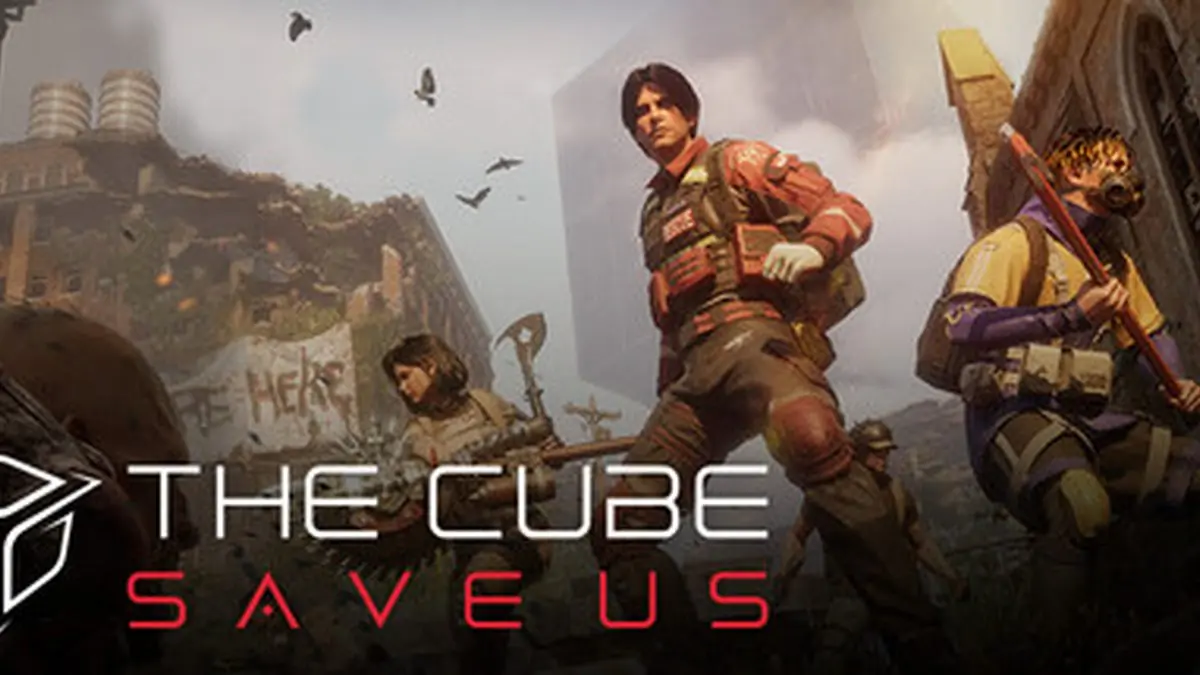
THE CUBE, SAVE US just dropped on Steam Early Access yesterday, and it’s already stirring up debate with one of the most aggressive reset systems we’ve seen in a survival game. While most games let you keep grinding forever, this one straight-up deletes your progress every season. That’s either brilliant or bonkers — maybe both.
The game launched March 17th as a completely free experience, which immediately caught attention in a space dominated by $30-60 survival titles. No upfront cost, no hidden fees for the base game. That’s solid value right out the gate, especially for an Early Access title that’s still finding its footing.
“THE CUBE, SAVE US will be operated on a seasonal basis. The game will initially launch with a Pre-Season, followed by a new season where certain content will be reset.” — THE CUBE, SAVE US on Steam
But here’s where things get interesting from a design perspective. Every season, the game nukes your character stats, inventory, currency, skills, rankings, and even your crafting queue. That’s a complete character wipe — think Escape from Tarkov’s wipe cycles, but more comprehensive. It’s a hard reset that forces everyone back to square one.
The retention logic is actually pretty smart though. You keep all cosmetics, special skills, premium items, and social features. Essentially, anything that shows off your experience or investment stays put. It’s like keeping your achievements and skins while losing your save file — psychologically designed to make the reset sting less while maintaining long-term engagement hooks.
From a competitive balance standpoint, this system has merit. No more day-one players sitting on massive stockpiles while newcomers scramble for scraps. Every season becomes a fresh race where knowledge and skill matter more than time invested. That’s appealing for players who hate the “rich get richer” problem that plagues persistent survival games.
The community reaction has been mixed, which you’d expect with such a polarizing mechanic. Some players love the idea of regular fresh starts and even playing fields. Others see it as disrespectful to their time investment — why grind for hundreds of hours if it all disappears?
Technically, the seasonal model makes sense for Early Access. It gives developers regular opportunities to rebalance systems, test new mechanics, and iterate on core gameplay without legacy issues. Each season essentially becomes a controlled experiment with a clean data set.
The free-to-play approach also signals confidence in the core gameplay loop. If the survival mechanics are strong enough to keep players engaged through multiple resets, that’s a good sign for long-term viability. The alternative — charging upfront for a game that deletes your progress — would be a much harder sell.
What’s unclear is how the monetization will work long-term. The game mentions Gold Bars, Fashion Tokens, and Premium Membership as persistent currencies. That suggests cosmetics and convenience features will drive revenue, which is standard for F2P survival games but can get predatory if not handled carefully.
The “overcome the Cube’s wrath” tagline hints at PvE-focused gameplay, though survival games rarely stay pure PvE for long. The seasonal structure would actually work well for rotating between different game modes or rule sets — imagine PvP seasons alternating with cooperative ones.
One smart move: launching with a Pre-Season gives players time to experience the core systems before the real reset cycle begins. It’s basically an extended beta test disguised as early content. Players can learn the ropes without the pressure of a ticking clock.
The timing is interesting too. Survival games are having another moment, with established titles like Rust and ARK still pulling strong numbers while newcomers like Enshrouded and Palworld prove there’s appetite for fresh takes on the formula. THE CUBE, SAVE US is betting that seasonal structure can be its differentiator.
For Early Access, the seasonal approach could actually accelerate development. Regular content drops and system overhauls give players reasons to return while providing developers with consistent feedback cycles. It’s more structured than the typical “we’ll update when we update” Early Access model.
The real test will be whether the core survival loop is compelling enough to survive its own reset system. Great gameplay can overcome almost any controversial mechanic — just ask Tarkov players who eagerly await each wipe. But if the baseline experience isn’t solid, no amount of fresh starts will save it.
Expect the first real season to launch within the next few months as the Pre-Season winds down. That’ll be the moment of truth for whether this bold reset experiment pays off or becomes a cautionary tale about messing with player psychology.