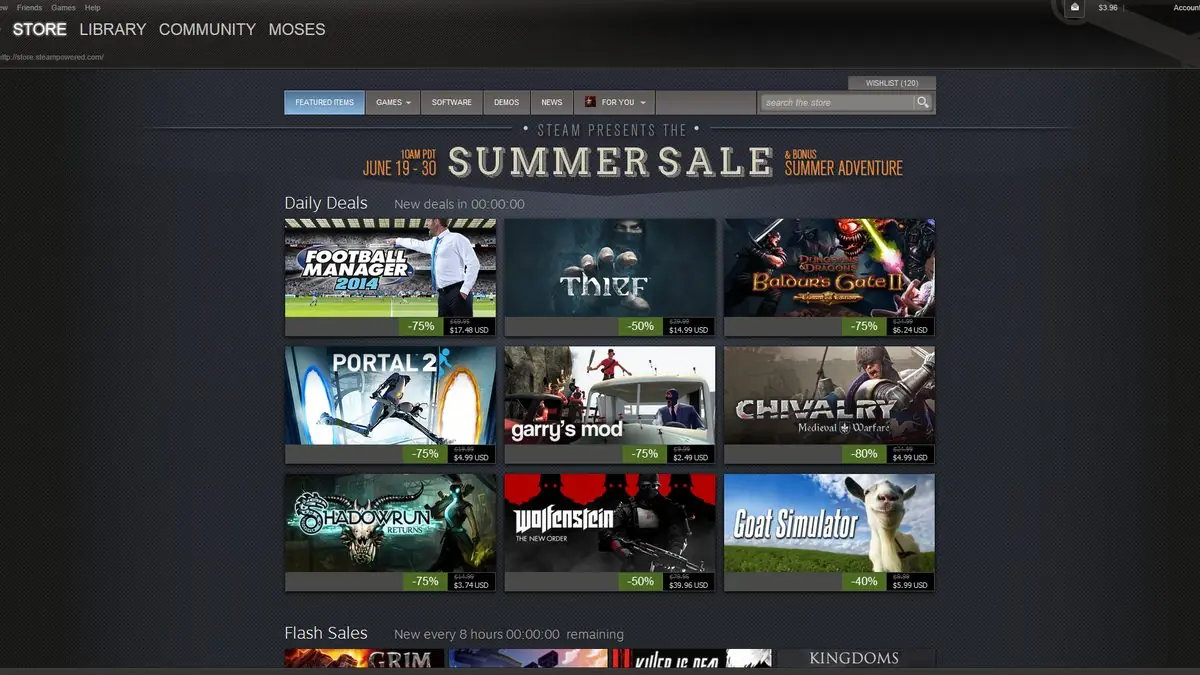
Sometimes a single screenshot can transport an entire gaming community back in time. That’s exactly what happened when a Reddit user shared an old capture showing the final countdown of the Steam Summer Sale 2014.
The image hit r/Steam like a time machine, instantly flooding gamers with memories of what many consider the golden age of Steam sales. Back when flash sales ruled the day and every few hours brought new surprises that had you constantly checking your phone.
“Found an old screenshot of the final seconds of the Steam Summer Sale 2014” — u/Quantization on r/Steam
For anyone who wasn’t around in 2014, Steam sales used to be completely different beasts. They weren’t just two-week events with static discounts like today. They were chaotic, unpredictable adventures that kept gamers glued to their screens.
Flash sales would pop up every 8 hours with massive discounts that lasted only a few hours. Community choice votes let players pick which games got extra discounts. Daily deals rotated constantly. You literally couldn’t just buy a game and walk away — you had to watch and wait to see if it might get even cheaper.
The screenshot shows that familiar Steam interface from 2014, complete with the countdown timer that used to stress everyone out. Those final seconds weren’t just the end of a sale — they were the end of weeks of strategic shopping, wishlist watching, and wallet crying.
Gamers in the comments are sharing their own memories of those wild Steam sale days. Some remember setting alarms for flash sales. Others talk about the community voting system where you’d earn trading cards for participating. Many mention how they used to budget differently, saving money specifically for these events because you never knew what surprise deals might drop.
The 2014 sale was particularly special because it introduced the Summer Adventure map, a meta-game where you could explore different areas and unlock badges. It wasn’t just about buying games — it was about participating in a community event that felt bigger than shopping.
Back then, Steam sales were cultural moments. Reddit would light up with deal alerts. Gaming forums buzzed with recommendations. Friends would text each other about flash sales ending in 30 minutes. The FOMO was real, but so was the excitement.
Today’s Steam sales are definitely more user-friendly. You can buy a game on day one of a sale and know you’re getting the best price. No more stress about missing flash sales or community votes not going your way. But something was lost in making them simpler.
The nostalgia isn’t just about the deals — it’s about the community experience. Steam sales used to bring gamers together in a way that modern sales don’t quite capture. Everyone was on the same rollercoaster of excitement, disappointment, and wallet anxiety.
Part of what makes this screenshot so powerful is how it captures a specific moment in gaming history. 2014 was peak indie game boom, early access was still new and exciting, and Steam’s catalog was big enough to feel endless but small enough that you could still discover gems through sales.
The gaming landscape has changed dramatically since 2014. We have Game Pass, Epic’s weekly free games, Humble Bundle’s evolution, and dozens of other digital stores. Steam sales don’t feel as special when you can find good deals year-round on multiple platforms.
But maybe that’s okay. Gaming has become more accessible, and players don’t have to stress about perfect timing to get good deals. Still, there’s something to be said for those chaotic, community-driven events that made Steam sales feel like gaming holidays.
For newer PC gamers who missed the 2014 era, this screenshot offers a glimpse into gaming history. It shows how digital distribution used to work and why older gamers get weirdly emotional about Steam sale changes.
The fact that this simple screenshot can generate so much discussion proves how important these shared gaming experiences are. We don’t just remember the games we bought — we remember the experience of buying them.
Steam sales today are still great for your wallet, but they’ll probably never recapture that specific magic of the 2014 era. The gaming world has moved on, platforms have evolved, and maybe that’s for the better.
But every once in a while, a screenshot like this reminds us of when buying video games felt like participating in something bigger than ourselves. When a sale countdown could unite thousands of gamers in shared anticipation and mild panic.
Those were good times, even if our wallets might disagree.