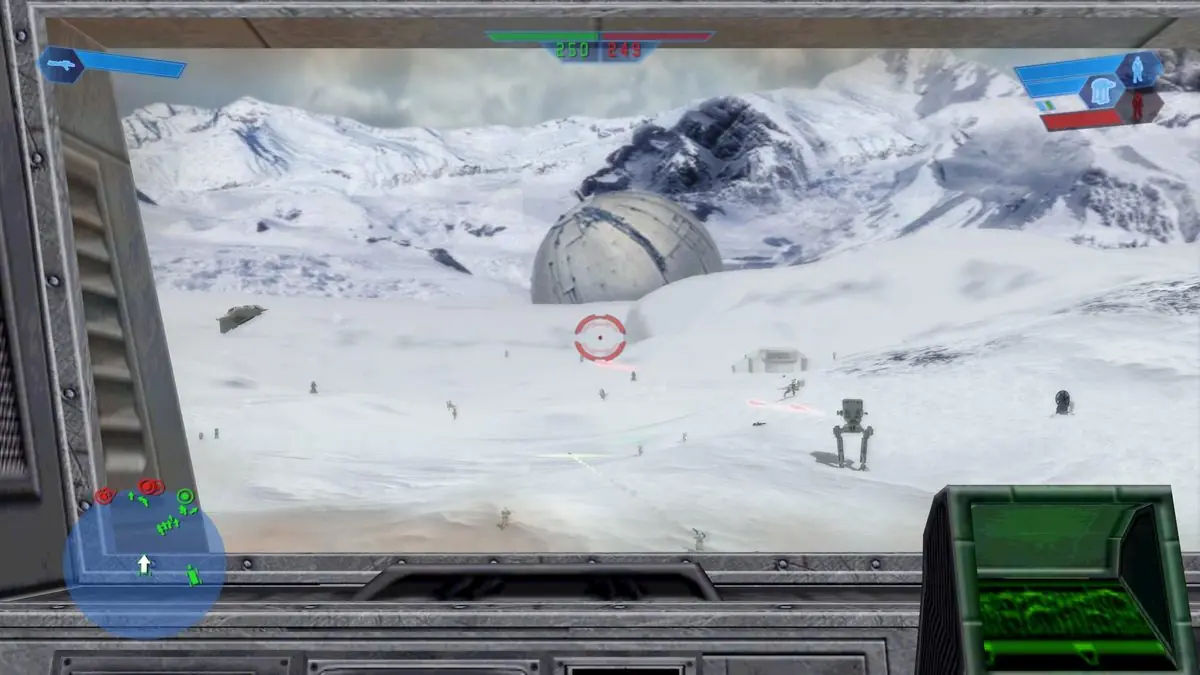
Sometimes the smallest details create the biggest memories. In the vast galaxy of Star Wars gaming, where epic battles and lightsaber duels grab the headlines, it’s often the quiet moments that stick with us longest. The gentle hum of a starship’s engine. The satisfying snap-hiss of an igniting lightsaber. Or in this case, the towering perspective from inside an AT-AT’s cockpit, watching the world shrink beneath massive mechanical feet.
A recent Reddit post struck a chord with Star Wars fans, reminding us all of a feature that quietly disappeared between games. The original Star Wars Battlefront offered something magical that its sequel couldn’t quite recapture.
“Being in the cockpit in first-person view of the AT-AT in Star Wars battlefront 1 is one of my fondest childhood memories, as great as the sequel was, I was disappointed they removed those perspective views from vehicles.” — u/DanintheVortex on r/gaming
There’s something deeply personal about this sentiment that goes beyond mere gameplay mechanics. The first-person cockpit view in AT-AT vehicles wasn’t just a camera angle – it was a storytelling device. It transformed players from external observers into Imperial pilots, complete with the claustrophobic intimacy of peering through reinforced viewports while commanding one of the galaxy’s most feared war machines.
EA DICE’s original Battlefront understood something crucial about the Star Wars experience. The films themselves are built on intimate moments within vast machinery – think Luke cramped in his X-wing cockpit during the Death Star assault, or the focused tension inside Vader’s TIE Advanced. These enclosed spaces create emotional connection in an otherwise overwhelming universe.
Battlefront 2 certainly improved on its predecessor in many ways. Better progression systems, more content, expanded multiplayer options. But in streamlining the experience, something intangible was lost. The sequel favored broader accessibility over intimate immersion, trading those personal cockpit moments for more standardized vehicle controls.
This isn’t unique to Star Wars games. The gaming industry often grapples with the tension between innovation and preservation. Developers face impossible choices: keep beloved features that might feel dated, or modernize everything and risk alienating longtime fans. Sometimes the features that seem least important to developers are the ones players treasure most.
The AT-AT cockpit view represents something deeper about how we experience virtual worlds. It’s not about the technical implementation or even the tactical advantages. It’s about feeling like you’re really there, breathing recycled air in a walking fortress, experiencing the Empire from the inside out. These moments of embodied perspective create the emotional anchors that transform good games into cherished memories.
Modern game design often prioritizes efficiency and broad appeal, but there’s value in the inefficient moments too. The quiet spaces between action beats. The details that serve narrative over mechanics. The features that make a small number of players feel deeply connected rather than making everyone feel moderately entertained.
The Star Wars universe has always excelled at these intimate moments within epic scope. From the Millennium Falcon’s cramped corridors to the Death Star’s reactor room, the most memorable spaces feel lived-in and personal. When games capture this same sensibility, they tap into something primal about what makes Star Wars feel real.
Other franchises have learned similar lessons. The recent success of games like Microsoft Flight Simulator shows there’s still appetite for experiences that prioritize atmosphere over action. Players will spend hours simply existing in virtual spaces that feel authentic, even when nothing dramatically exciting happens.
The gaming community’s response to posts like this one reveals a hunger for these kinds of immersive details. Comments sections fill with similar stories – players sharing their own memories of small features that created lasting impact. Each story reinforces the idea that emotional connection often lives in the margins of game design.
Looking ahead, the Star Wars gaming landscape continues evolving. With multiple developers now working on franchise titles, there’s hope that future entries might recapture some of these intimate touches alongside modern improvements. The key is remembering that technical advancement doesn’t have to mean emotional regression.
Perhaps the next Star Wars Battlefront – whenever that might be – will remember that sometimes the view from inside matters as much as the battle outside. In a galaxy far, far away, the smallest windows can offer the biggest glimpses into what makes an experience truly unforgettable.