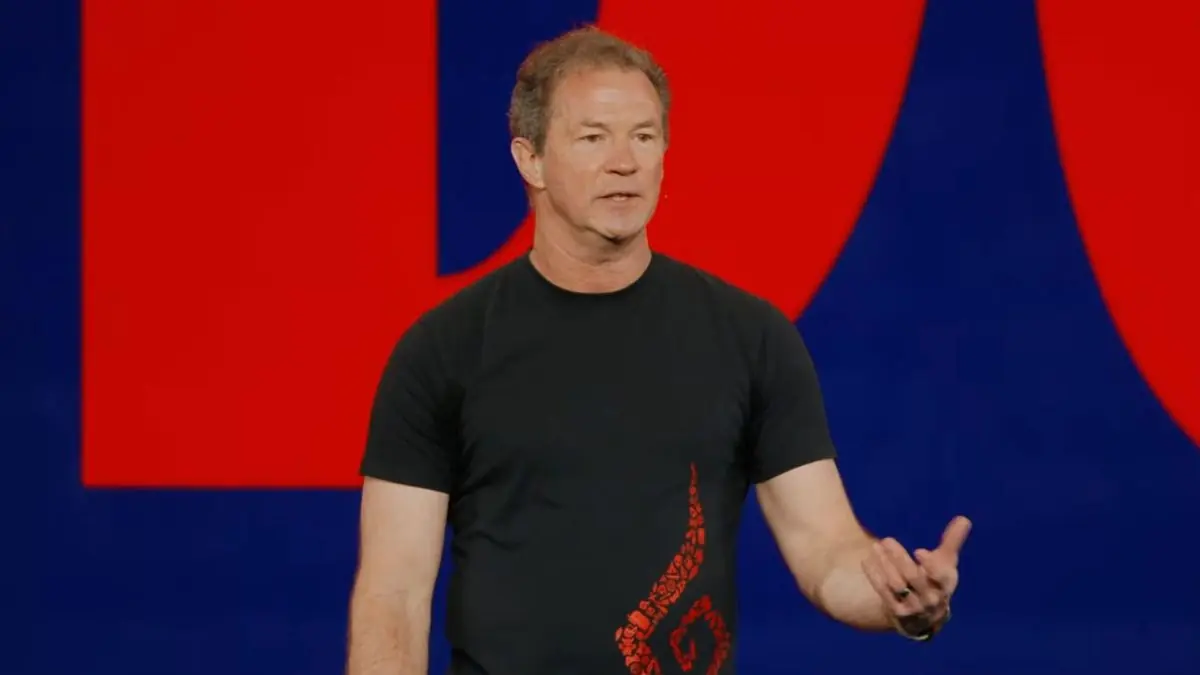
When a Blizzard legend takes the stage to deliver hard truths, you listen. Rob Pardo just dropped the most important keynote at GDC 2026, and it wasn’t about the next big engine or AI breakthrough. It was about something way more fundamental: treating people like humans instead of disposable assets.
Pardo, the mastermind behind World of Warcraft and Diablo, closed out this year’s Game Developers Conference with a message that hit harder than a critical strike. He looked straight at the industry’s power players and said what we’ve all been thinking: stop the damn layoffs.
“Blizzard vet Rob Pardo closed this year’s GDC keynote by urging executives to cool it with the layoffs: ‘The game team is more valuable than the game itself'” — @Turbostrider27
That quote right there? That’s not just corporate speak. That’s someone who built gaming empires talking about the real foundation of this industry. And honestly, it feels like watching Obi-Wan Kenobi tell the Empire they’re doing it all wrong.
Pardo knows what he’s talking about. This is the guy who helped create the most successful MMO in history. He was at Blizzard during their golden age, when they weren’t just making games — they were building worlds that defined a generation. StarCraft, Warcraft, Diablo. These weren’t just products. They were universes that millions of people called home.
But here’s the thing that makes his message so powerful: he’s speaking from experience. Pardo has seen what happens when you prioritize the wrong things. He’s watched studios rise and fall, seen talented teams scattered to the winds, and witnessed the human cost of treating creativity like a spreadsheet.
The timing couldn’t be more perfect — or more necessary. The gaming industry in 2026 has been bleeding talent like a busted coolant system on a starship. We’ve seen wave after wave of layoffs hitting everyone from indie studios to AAA giants. It’s like watching the Death Star blow up planets, except the planets are people’s careers and the Death Star is quarterly profit reports.
What makes Pardo’s stance so refreshing is that he’s not just pointing out the problem — he’s offering a different philosophy. When he says “the game team is more valuable than the game itself,” he’s talking about something bigger than just keeping people employed. He’s talking about understanding where real value comes from.
Think about it like this: games aren’t just code and art assets. They’re crystallized creativity from human minds. Every great game you’ve ever played exists because someone had a vision, someone else figured out how to make it work, and a whole team of people poured their souls into making it real. Strip away the team, and you’re left with nothing but empty assets.
It’s like trying to rebuild the Enterprise without the original crew. Sure, you might have the blueprints and the technology, but you’ve lost the spirit that made it special. The institutional knowledge, the chemistry, the shared vision — that’s what turns code into magic.
Pardo’s message also feels like a challenge to an industry that’s gotten way too comfortable with boom-and-bust cycles. We’ve normalized this idea that studios hire massively during crunch, then cut loose everyone they don’t “need” afterward. It’s like treating your development team like NPCs instead of the actual heroes of the story.
The sci-fi fan in me can’t help but see parallels to every dystopian future where corporations forgot that humans matter. We’re watching an industry that creates worlds of infinite possibility slowly strip away the human element that makes those worlds worth exploring.
But here’s what gives me hope: when someone with Pardo’s reputation and platform speaks up, people listen. This isn’t some random developer complaining on Twitter. This is a gaming legend using the biggest stage in the industry to say “we can do better.”
The question now is whether the suits will actually listen. Will they see this as a wake-up call to build more sustainable, human-centered studios? Or will they file it under “nice sentiment” and go back to their quarterly reports?
If I had to bet, I’d say Pardo’s words are going to ripple through the industry like a shock wave. Developers are going to feel validated. Players are going to start asking harder questions about the studios behind their favorite games. And hopefully, some executives are going to look in the mirror and realize they’ve been optimizing for the wrong variables.
The future of gaming doesn’t depend on better graphics or faster processors. It depends on remembering that behind every great game is a team of people who deserve stability, respect, and the chance to build something amazing together. Pardo just reminded us what that looks like.