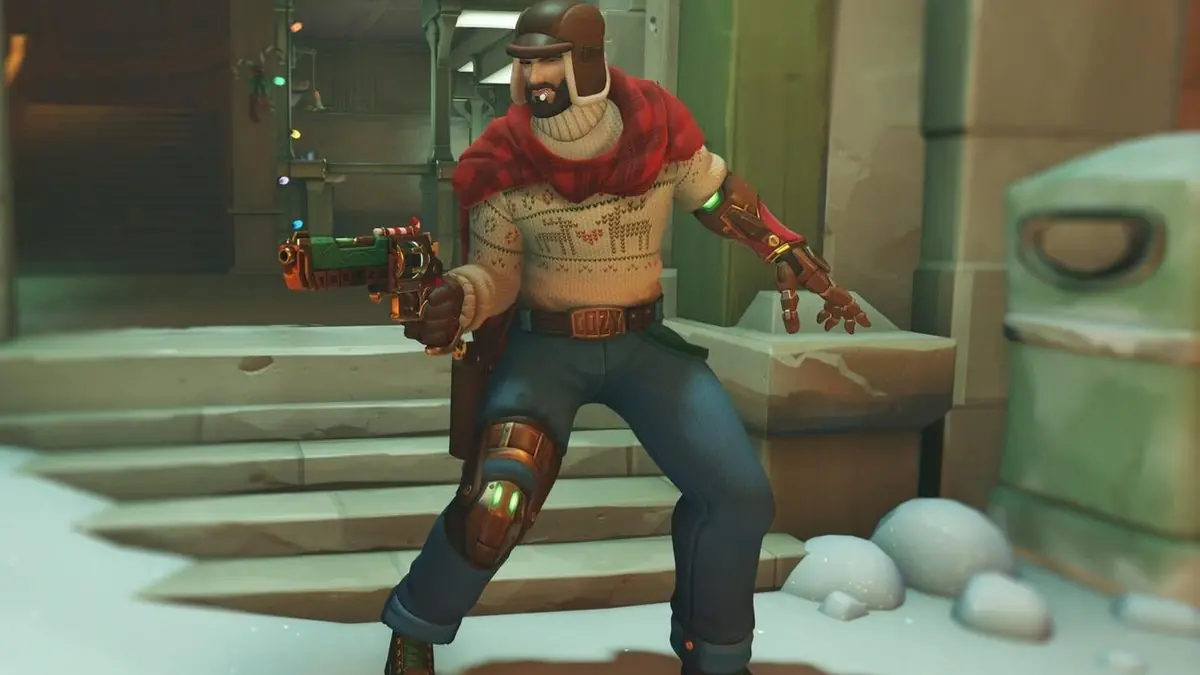
Sometimes the smallest details in our favorite games catch our attention in the biggest ways. That’s exactly what happened when an Overwatch player took a closer look at Cassidy’s aiming posture and decided something just didn’t look right.
The discussion started simple enough on the Overwatch subreddit, but it’s got the community thinking about how our heroes actually hold their weapons.
“I always found Cassidy’s posture very uncomfortable. How can he aim like that?” — u/0Dyavol on r/Overwatch
The post has pulled in over 1,400 engagements, which shows just how much we care about these kinds of details. It’s not just nitpicking — when you’re spending hundreds of hours playing a character, you start to notice everything about how they move and fight.
Cassidy’s aiming stance does look pretty stiff when you really think about it. His shoulders seem tense, and his grip on Peacekeeper doesn’t quite match what you’d expect from a seasoned gunslinger. For a character who’s supposed to be this smooth, experienced cowboy, his posture feels more like someone who just picked up a gun for the first time.
This kind of feedback isn’t new for Cassidy. Ever since the character’s rebrand from McCree, players have been watching every change closely. We’ve seen updates to his appearance, voice lines, and animations, but some of us still feel like something’s off about how he carries himself in battle.
The conversation goes deeper than just one character though. When we’re talking about competitive FPS games, animation quality really matters. These aren’t just pretty pictures — they affect how we connect with our heroes and how believable the game world feels.
In a game like Overwatch, where each hero has such a distinct personality, their animations tell us who they are. Tracer’s bouncy, energetic movements match her upbeat attitude. Widowmaker’s precise, controlled motions reflect her cold efficiency. But Cassidy? His animations sometimes feel like they’re fighting against his cowboy identity.
Other players have pointed out similar issues across different heroes. Some of Soldier: 76’s running animations look robotic. Mercy’s staff-holding posture can seem awkward during certain abilities. These might sound like tiny complaints, but they add up to how the game feels overall.
Blizzard has shown they’re willing to tweak these details. We’ve seen animation updates for several heroes over the years, usually in response to community feedback. The challenge is balancing realistic movement with the stylized art direction that makes Overwatch unique.
There’s also the technical side to consider. Game animations need to work across different poses, abilities, and situations. A more “realistic” aiming stance for Cassidy might look weird when he’s using Combat Roll or Magnetic Grenade. The animators have to find poses that work for everything the character does.
But that’s exactly why community feedback like this matters so much. We’re the ones spending time with these characters every day. We notice when something feels off, even if we can’t always explain why. When hundreds of players agree that Cassidy’s posture looks uncomfortable, that’s valuable information for the development team.
The discussion also highlights how much we care about the little things in Overwatch. This isn’t about game-breaking bugs or balance issues — it’s about wanting our heroes to feel as cool and authentic as possible. We want Cassidy to look like the confident gunslinger he’s meant to be.
Looking ahead, Blizzard continues to refine character animations with each update. Season 9 brought visual improvements to several heroes, and the team has shown they’re not afraid to revisit older animations when needed. Community posts like this one often influence which characters get attention in future patches.
Whether we’ll see changes to Cassidy’s aiming stance specifically remains to be seen. But the fact that over a thousand players stopped to discuss it shows that these details really do matter to us. Sometimes the smallest improvements can make the biggest difference in how a character feels to play.