Something special is happening with Overwatch right now. While most of us have gotten used to seeing player counts spike and crash faster than a Tracer recall, Blizzard’s hero shooter is doing something that shouldn’t be possible. It’s keeping players around.
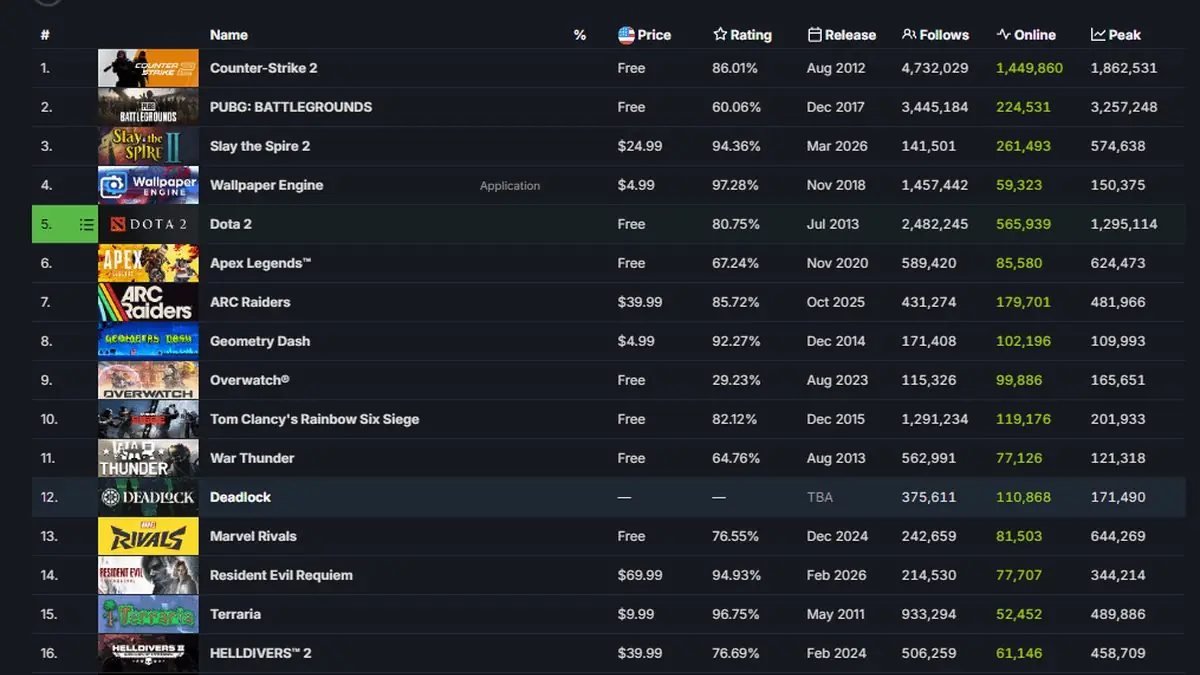
We’re talking about a game that’s over 10 years old. In gaming terms, that’s ancient. Most multiplayer games are lucky to maintain their launch numbers for six months, let alone experience growth this late in their lifecycle. But here we are in March 2026, and Overwatch is still pulling numbers that would make newer games jealous.
The stats don’t lie, and neither do the players tracking them. A recent post on the Overwatch subreddit laid out just how wild this retention really is:
“Over a month later and Overwatch is still cracking 100k players. This is crazy strong retention, btw. It’s very rare a game over ten years old manages to double it’s player count peak and then keep the majority of them a month later.” — u/Tough_Holiday584 on r/Overwatch
That’s the kind of data that makes industry analysts do double takes. We’re not just talking about a small bump or a weekend surge. This is sustained engagement from a massive player base that decided to stick around after whatever brought them back initially.
To put this in perspective, most games follow a predictable pattern. They launch, peak, then slowly decline as players move on to the next shiny thing. Even successful live service games struggle to grow their audience years after release. The fact that Overwatch not only doubled its previous peak but held onto most of those players for over a month? That’s not supposed to happen.
So what’s driving this unexpected renaissance? We can point to several factors that likely contributed to this surge. The game has seen consistent updates and balance changes that have kept the meta fresh. The introduction of new heroes and maps has given long-time players reasons to return while attracting newcomers who might have missed the initial wave.
But there’s something deeper happening here too. Overwatch has always been about community and teamwork in ways that many other shooters aren’t. The game rewards cooperation over individual skill, and that creates bonds between players that last longer than typical gaming relationships. When people come back to Overwatch, they’re not just returning to a game – they’re coming back to a community.
The timing might also be perfect. With so many new multiplayer games launching in broken or incomplete states, Overwatch offers something increasingly rare: a polished, balanced experience that actually works. Players are tired of being beta testers for unfinished products. Overwatch represents stability and quality in a market full of rushed releases.
This retention success also speaks to something we’ve all felt but rarely see proven with hard numbers. Age doesn’t matter if the core gameplay is solid. Overwatch’s fundamental mechanics – the hero switching, the objective-based gameplay, the emphasis on teamwork – these elements haven’t gotten old because they were designed to last.
The impact goes beyond just one game too. This kind of sustained growth for a decade-old title sends a message to the entire industry. Publishers who’ve been chasing trends and abandoning games after poor launches might want to take notes. Long-term support and community building can pay off in ways that quick cash grabs never will.
For us as players, this is incredibly encouraging. It shows that games we love don’t have to die just because they’re not the newest thing on the market. With the right care and feeding, our favorite titles can experience second lives that are even better than their original runs.
Looking ahead, the real test will be whether Overwatch can maintain this momentum through the rest of 2026. The gaming landscape is more competitive than ever, with new releases dropping every month trying to capture our attention. But if the past month has taught us anything, it’s that Overwatch still has plenty of fight left in it.
The next few months will be crucial. Blizzard needs to keep the content pipeline flowing and the community engaged. If they can do that, we might be looking at one of gaming’s greatest comeback stories. And honestly? After everything this game and its community have been through, that’s exactly what we all deserve.