Corporate sabotage in gaming just went from conspiracy theory to courtroom reality. Build A Rocket Boy, the studio behind MindsEye, just dropped a bombshell that’s got the entire industry talking.
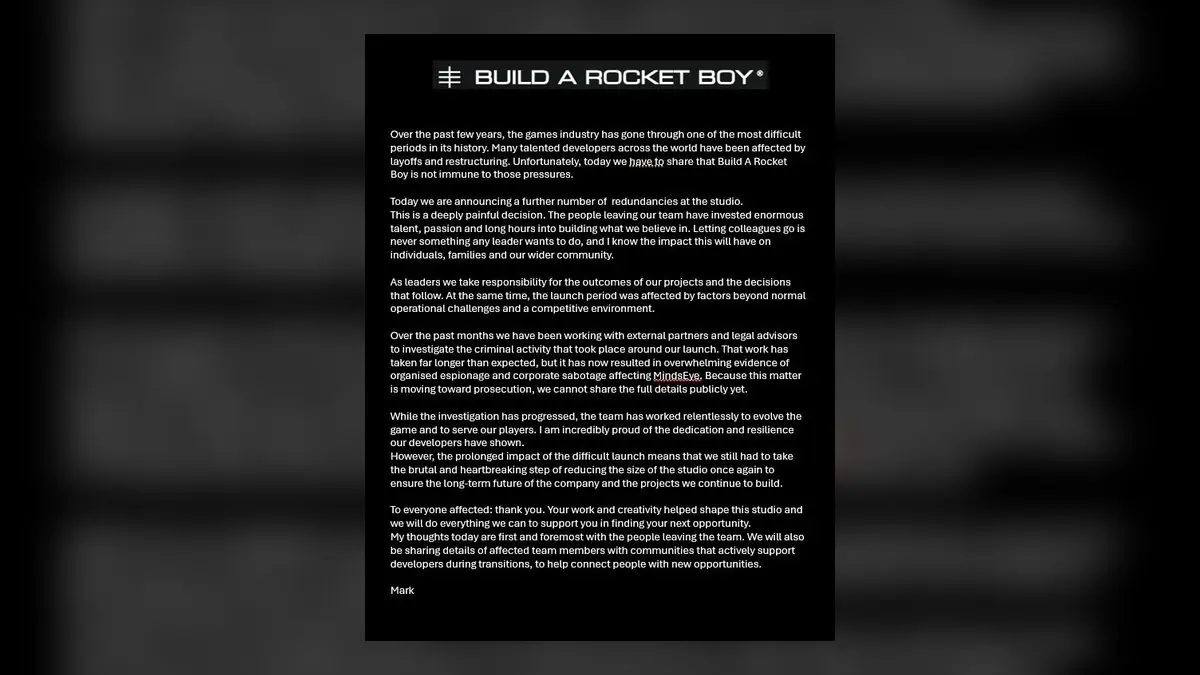
The studio didn’t just announce layoffs — they revealed they’re taking legal action against what they call “organised espionage and corporate sabotage” that targeted their game. This isn’t your typical post-launch blame game. We’re talking about alleged coordinated attacks that the studio says have evidence for.
“Build A Rocket Boy has announced layoffs at the studio following the difficult launch period of MindsEye. The statement also confirms that legal action is being pursued after evidence of organised espionage and corporate sabotage affecting the game.” — @EverywhereNET
MindsEye’s launch didn’t go as planned, that much was obvious. But linking layoffs directly to alleged sabotage? That’s a whole different level. The studio isn’t just saying their game failed — they’re saying someone actively worked to make it fail.
Corporate espionage in gaming isn’t exactly new, but studios usually keep it quiet. When companies suspect foul play, they handle it behind closed doors. The fact that Build A Rocket Boy is going public with legal action suggests they’ve got some serious evidence.
Think about it. Game development is a multi-million dollar business where inside information is gold. Knowing a competitor’s release date, marketing strategy, or technical problems could be huge. Studios guard their secrets like state secrets for good reason.
The gaming industry has seen its share of dirty tactics over the years. Employees jumping ship with proprietary tech. Coordinated review bombing campaigns. Even alleged attempts to poach entire development teams right before major releases. But organized corporate sabotage? That’s taking things to a criminal level.
What makes this case interesting is the timing. MindsEye struggled at launch, and now we’re learning there might have been external forces at play. It raises uncomfortable questions about how many other “failed” launches might have had help failing.
The legal angle here could be game-changing. If Build A Rocket Boy can prove organized sabotage in court, it sets a precedent. Other studios dealing with suspicious circumstances might feel more confident about pursuing their own legal action.
There’s also the human cost. Real people lost their jobs because of MindsEye’s struggles. If those struggles were artificially created through sabotage, that makes the layoffs even more tragic. These aren’t just numbers on a corporate spreadsheet — they’re developers, artists, and designers who put years of work into the project.
The evidence must be pretty compelling for a studio to go this public. Making false accusations of corporate sabotage would be career suicide in an industry where reputation is everything. Build A Rocket Boy is clearly confident in their case.
What’s really wild is how this could change the industry. If sabotage is more common than we thought, studios might need to invest heavily in security. That means less money for actual game development and higher costs across the board.
The legal proceedings should be fascinating to follow. Corporate espionage cases in gaming are rare, so there’s not much precedent to work with. The outcome could influence how the entire industry handles competitive intelligence and security.
For MindsEye itself, this revelation puts the game’s struggles in a completely different light. Players who criticized the launch might need to reconsider their harsh judgments. It’s hard to succeed when someone’s actively working against you.
The bigger picture here is about trust and competition in gaming. If studios can’t trust that their competitors are playing fair, it creates a toxic environment that hurts everyone. Innovation suffers when developers are watching their backs instead of focusing on their games.
Moving forward, all eyes will be on the legal proceedings. Build A Rocket Boy’s case could expose just how deep these alleged sabotage efforts went. Were other games affected? Are there more studios dealing with similar issues in silence?
This story is far from over. The gaming industry just got a wake-up call about the dark side of competition. Whether this leads to better security practices or just more paranoia remains to be seen.
One thing’s for sure — MindsEye’s troubled launch just became a lot more complicated.