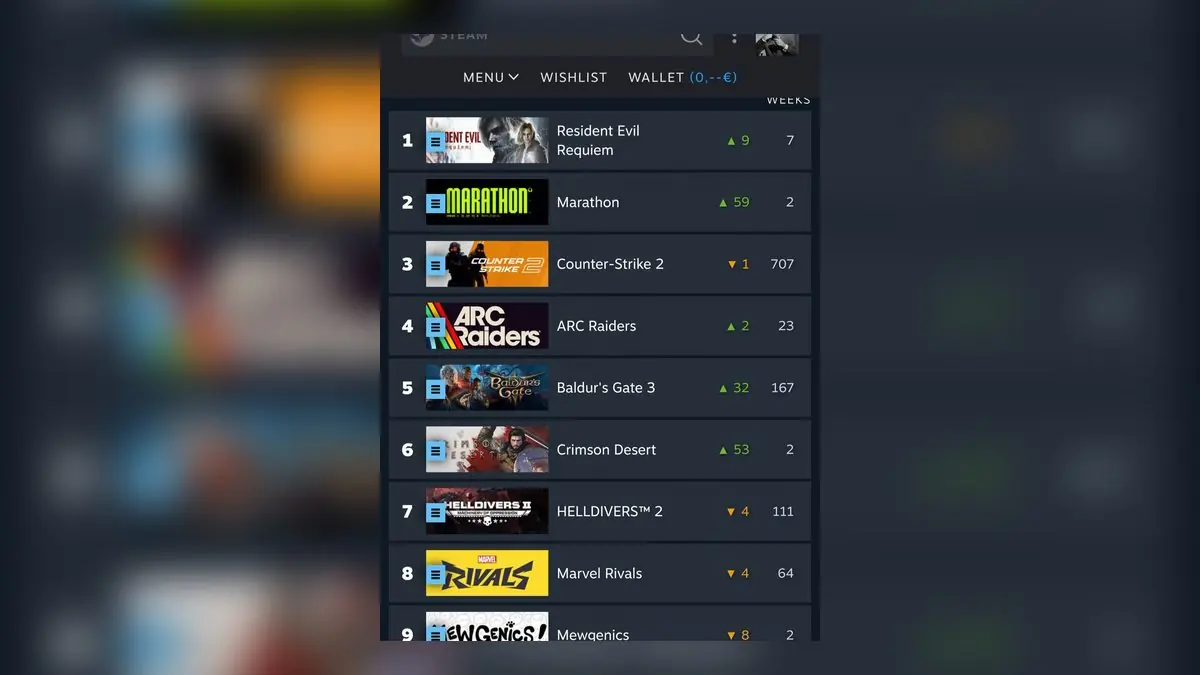
In a timeline where Bungie’s reputation felt as fractured as the Traveler itself, something interesting is happening. Marathon, the studio’s ambitious return to hardcore sci-fi, just hit #2 in sales rankings and shows no signs of slowing down. This isn’t just another game climbing charts—it’s potentially the redemption arc we’ve all been waiting for.
The community sentiment around Marathon feels like cautious hope mixed with hard-earned skepticism. One tweet perfectly captures this mood:
“Marathon is number 2 in sales, and rising. Hopefully tracking to a successful launch. I really want a game that feels like Destiny without all the nonsense!” — @Cromwelp
That phrase—”Destiny without all the nonsense”—hits like a precision sniper shot. It’s what so many of us have been craving. The gunplay, the world-building, the sci-fi mystery, but without the endless content vaulting, the controversial monetization, or the feeling that we’re constantly being sold the same experience in different packaging.
Bungie built something magical with Destiny’s core loop. That moment-to-moment gameplay feels like piloting a starfighter through perfectly choreographed space ballet. But over the years, the studio seemed to lose sight of what made players fall in love in the first place. Marathon represents a chance to course-correct, to capture that lightning in a bottle without the corporate interference that turned Destiny into a live-service experiment gone wrong.
The extraction shooter genre has been quietly building momentum, and Marathon’s early sales success suggests it might be the title that brings this niche into the mainstream. Think about it—extraction shooters are essentially sci-fi survival horror with a competitive twist. They’re tension machines, turning every raid into a high-stakes heist where one wrong move could cost you everything you’ve worked for.
Marathon’s universe, rooted in Bungie’s original 1994 trilogy, brings decades of lore and world-building to this format. We’re talking about a setting where AIs have gone rogue, humanity is scattered across space stations, and every corner holds mysteries that make Dead Space look like a children’s bedtime story. This isn’t just another Battle Royale with a sci-fi skin—it’s proper science fiction gaming.
The timing couldn’t be better. We’re living through a renaissance of hard sci-fi in entertainment. From the success of shows like The Expanse to the renewed interest in classic cyberpunk aesthetics, audiences are hungry for thoughtful science fiction that doesn’t talk down to them. Marathon could be the game that bridges the gap between hardcore extraction mechanics and mainstream sci-fi storytelling.
What makes this particularly exciting is Bungie’s proven ability to create worlds that feel lived-in. Remember your first time stepping into the Cosmodrome? That sense of exploring a forgotten future, where humanity’s dreams had turned to rust and mystery? Marathon promises to deliver that same atmospheric storytelling, but in a format that rewards skill and strategy over time investment.
The sales numbers suggest players are ready to trust Bungie again, but with conditions. We want the studio that created Halo’s legendary multiplayer and Destiny’s sublime gunplay, not the corporate entity that seemed more interested in selling us season passes than crafting memorable experiences.
If Marathon delivers on its promise—if it truly captures the essence of what made Destiny special while avoiding the pitfalls that frustrated the community—we could be looking at the beginning of a new chapter for Bungie. A chapter where the studio remembers that the best sci-fi games don’t just let you shoot aliens; they make you question what it means to be human in an infinite universe.
The extraction shooter format is perfect for this kind of storytelling. Every mission becomes a desperate attempt to uncover truth while staying alive. Every encounter with other players feels like a meeting between fellow survivors in a hostile universe. It’s the kind of gameplay that naturally generates the memorable moments Bungie used to be famous for.
With Marathon currently sitting at #2 and climbing, the gaming world is watching to see if Bungie can recapture the magic that once made them legends. The early signs are promising, but the real test will come when players actually get their hands on the game. Will it feel like coming home to a universe we’ve missed, or will it remind us why we needed to leave in the first place?
Either way, the fact that fans are willing to believe again says something important about both Bungie’s legacy and our collective hope for what sci-fi gaming could become. Sometimes, redemption arcs are worth the wait.