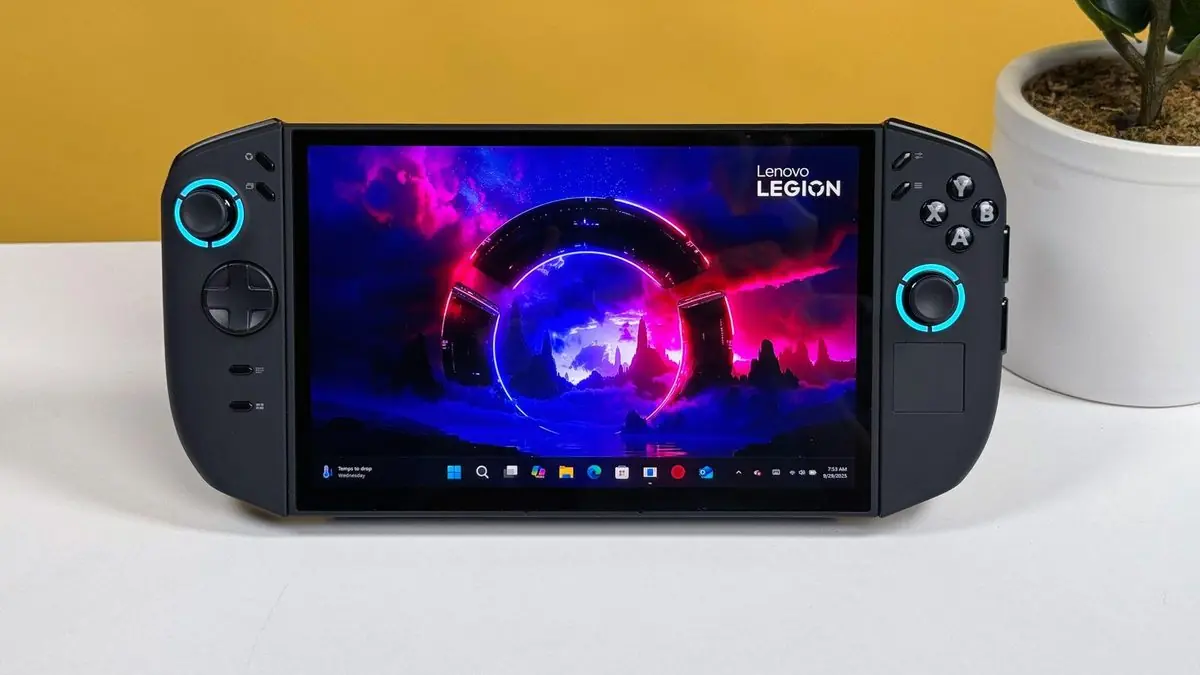
Three grand for a handheld gaming PC. Let that sink in for a second. For context, that’s RTX 4070 laptop territory, or a solid desktop build with a 4060 Ti and plenty left over for peripherals. But here’s Lenovo with the Legion Go 2, asking premium laptop money for something that fits in your backpack.
The PC gaming community isn’t taking this news quietly. The discussion started heating up when the pricing details surfaced, and the reactions have been… intense.
“Lenovo hikes Legion Go 2 handheld gaming PC to almost $3,000 for 2 TB model” — u/PaiDuck on r/pcgaming
That Reddit thread pretty much sums up the community sentiment. When your handheld costs more than most people’s entire gaming setup, you’re going to catch some heat. The original Legion Go launched around $700-800, so we’re looking at nearly a 4x price jump for the premium model. That’s not an incremental upgrade – that’s a completely different product category.
The specs better be absolutely bonkers to justify this pricing. We’re talking about a device that needs to outperform not just the Steam Deck OLED ($649) and ROG Ally ($700), but also compete with actual gaming laptops in the same price range. A $3,000 gaming laptop gets you serious horsepower – RTX 4070/4080 class GPUs, high-refresh displays, and desktop-class cooling solutions.
For handhelds, the value proposition has always been about compromise. You sacrifice some performance for portability. You get decent 1080p gaming instead of 1440p ultra settings. That’s the trade-off that made the Steam Deck successful – solid performance at a reasonable price point.
But at $3K, Lenovo is betting on a different market entirely. This isn’t competing with budget handhelds anymore. They’re going after the premium segment – people who want desktop-class gaming in a portable form factor and don’t mind paying for it. Think MacBook Pro pricing for gaming.
The question is whether the hardware delivers. If this thing is packing next-gen APU technology, premium display tech, and desktop-level cooling in a handheld form factor, the pricing might actually make sense. But if it’s just a beefed-up version of existing handheld tech with more storage, that’s a tough sell.
Storage alone doesn’t justify the price jump. A 2TB SSD upgrade shouldn’t cost $2,200 over the base model – you can get high-end NVMe drives for under $200. So either Lenovo’s pricing strategy is completely out of touch, or there’s more to this story than just storage capacity.
The timing is interesting too. The handheld gaming market is heating up with new entries from ASUS, MSI, and others. Everyone’s trying to find their niche. Some focus on budget-friendly options, others on premium features. Lenovo seems to be betting that there’s a market for ultra-premium handhelds.
Where does this leave the market? If the Legion Go 2 succeeds at this price point, expect other manufacturers to test premium pricing too. If it flops, it might actually be good news for consumers – more competition in the $600-900 range where most people actually shop.
The real test will be independent benchmarks and reviews. At $3,000, this device needs to absolutely rip through AAA games at high settings while maintaining decent battery life. Anything less, and Lenovo’s going to have a very expensive flop on their hands.
For now, the Legion Go 2 represents either a bold bet on premium handheld gaming or a massive miscalculation of what the market wants. The community reaction suggests it might be the latter, but stranger things have happened in tech. Sometimes the market rewards bold moves, even when the initial reaction is skeptical.