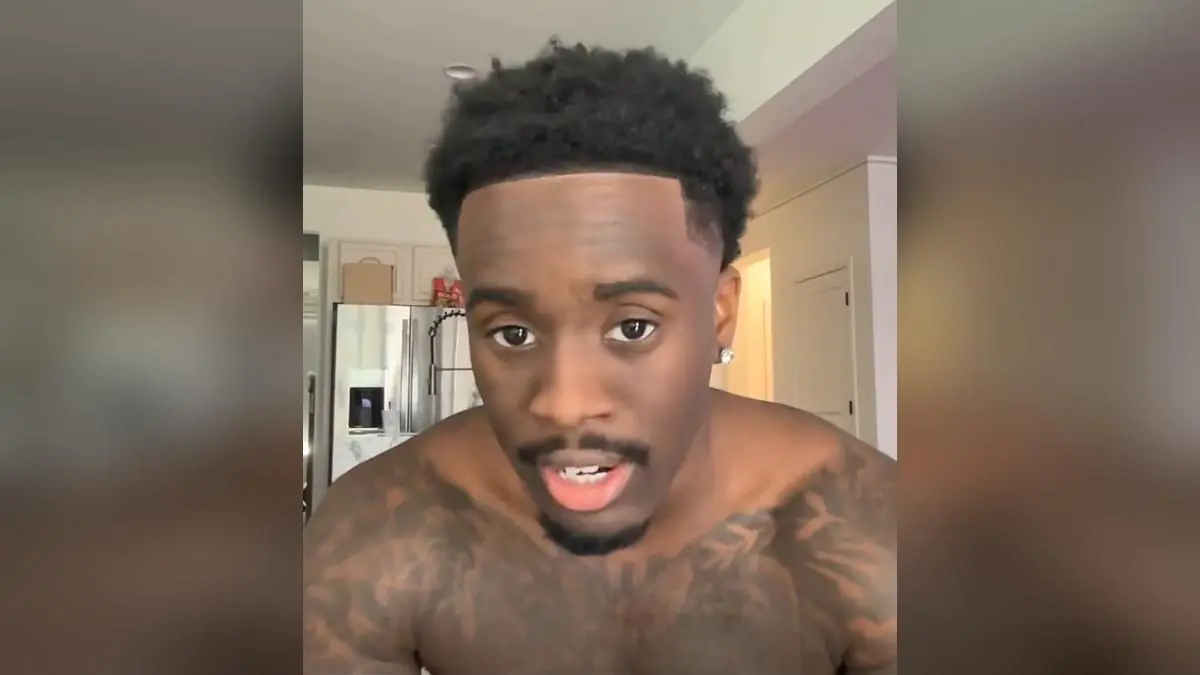
You do know about Kai Cenat, right? He is currently the king of streaming, and also the person whose record-setting subscribers almost broke Twitch. A while back, he made an eventful announcement which wasn’t a new game nor a great IRL stream. It was, however, an update concerning his personal life. In the most recent video, Kai discussed his state of mind and unmasked the source of his anxiety and fear that had been haunting him for months. He said he was “fighting with mental health out of self-doubt and fright of accomplishing the goals that I really want to accomplish.” But he ended on an encouraging note with, “Let it be known that I truly want to create.” This is the unfiltered peek into the life of one of the biggest, if not the biggest, streaming stars, and the reactions online have been… I mean, it’s the internet, so it’s a total mixed bag…
The update that was picked up by Dexerto also includes a quote from Kai where he states, “I just wanted to let you guys know that sometimes it is important to take care of your mental health. To be honest, it has been getting better.” That’s the main idea, in fact. He acknowledges the struggle and at the same time points at the healing. For a person whose character is all about constant, wild energy, showing this type of weakness is a very big step. And one has to respect that, even if one does not support him. The pressure of being that well-known is not just about playing games and making people laugh, it is an ongoing fight to be the best, to come up with new things, and to not be forgotten. That pressure does exist, whether you are rich or poor.
However, the moment the tweet got out, the replies feed became a warzone of different opinions. It was like a perfect mirror of these days’ conversations about mental health and success across the world. Some were very supportive. WEB3Theo user expressed it briefly as, “Kai’s being honest—success is not only hard work, it is also fear conquered and honesty respected.” On the other hand, Samuel Peter gave a more sophisticated view: “I do not think that self-doubt ever completely goes away, even in the case of Kai. I believe the triumph lies in the process of learning to live with it instead of trying to get rid of it. However, I respect him for revealing it.” This is actually quite a mature viewpoint. The idea that success does not magically remove anxiety is something a lot of people need to hear.
On the flip side, there was a counterperspective. A typical treating it as “rich people’s problems” dismissing. Someone wrote: “Booo fucking hoooo. A millionaire streamer is sad. Tell him to join the real world.” by William Seamus and Popa Dumitru’s, “Rich people talking about struggles—the hardest thing for them is to choose to be sad over the money.” It is a calamitous, albeit somewhat rough, reaction. It implies that financial security leads to emotional stability—a notion that anyone who has been even slightly aware of the situation knows is a total fallacy. Money can only solve money-related issues. It cannot alter the setup of your brain, remove the pressure, or erase the loneliness that sometimes comes with being a celebrity. In fact, JohnsAdventures made a very keen observation along these lines: “Success can rewire your brain to only experience ‘okay’ feelings when you are winning. Once that stops, anxiety occupies the space.” That puts it very clearly. The battle never really ceases so the definition of success keeps changing all the time.
And there were some of the not so helpful replies too. Nicktacular with the sarcastic, “Just light some fireworks indoors, you’ll be fine.” Ouch. Is it too soon? Maybe. And a user with the name ‘monke’ added the comment, “no tears in the mansion.” It is all quite internet-ish. A blend of sarcasm, memes, and real confusion about how a person so rich could be feeling so down. But that is exactly why Kai’s revealing his struggles is so significant. It questions such stereotypes. User casinokrisa presented a more thorough reasoning saying that, “Public vulnerability can win trust but it also carries the risk of audience fatigue if it is not backed up with constant content output.”
That’s the tight rope walk for creators, right? Expose too much, and you will be seen either as unstable or whiny. Say nothing, and you’ll be considered as a robot who is unapproachable.
What I find particularly intriguing is the attention given to taking it easy. Kai did not just show his pain; he also linked it with the yearning to produce. “I really want to create.” For a lot of artists and entertainers that is the whole thing.