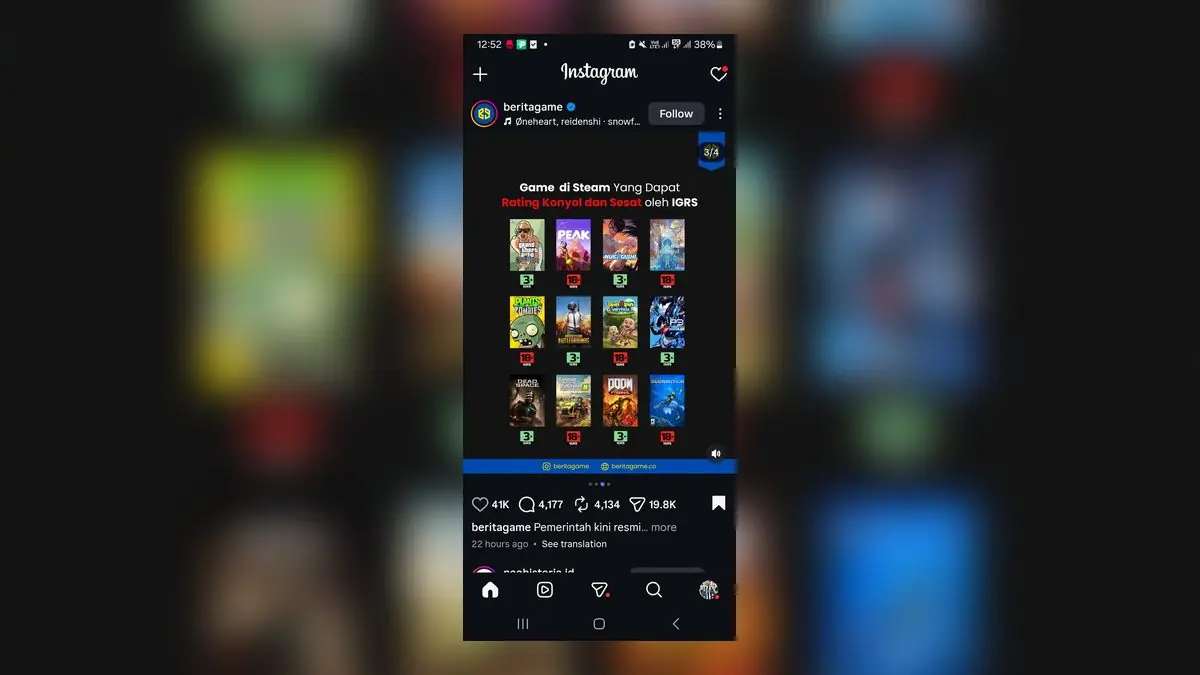
The gaming world loves a good controversy, and Indonesia just served up a fresh one. The country’s government rolled out a brand new video game ratings system, and let’s just say the community isn’t impressed. In fact, they’re calling it “hilariously wrong.”
This story broke when Indonesian gamers started sharing screenshots of the new ratings across social media. The reactions? Pure disbelief mixed with some serious side-eye at their government’s gaming knowledge.
“From Indonesia: Our government just made a ratings system. These are the hilariously wrong ratings.” — u/Icy_Oil_1645 on r/Steam
When a gaming community collectively facepalms at government regulation, you know something went sideways. The post gained traction fast on Reddit’s Steam community, where gamers are never shy about calling out what they see as regulatory overreach or just plain ignorance.
The fact that Indonesian gamers are describing their own government’s work as “hilariously wrong” tells you everything you need to know. This isn’t just disagreement – this is a complete disconnect between regulators and the people they’re trying to regulate.
Game rating systems are supposed to help parents and consumers make informed choices. They’re meant to be clear, consistent, and based on actual game content. When the gaming community itself is laughing at the classifications, that’s a red flag the size of a stadium jumbotron.
This situation highlights a bigger problem we see worldwide. Governments often try to regulate gaming without really understanding it. They’ll classify a puzzle game as violent or rate a strategy game for mature audiences when it’s basically digital chess. The disconnect is real, and Indonesian gamers are feeling it hard right now.
Indonesia isn’t the first country to stumble with game ratings. We’ve seen similar issues across Southeast Asia and beyond. The challenge is that gaming moves fast – new genres, gameplay mechanics, and content types emerge constantly. Regulatory bodies often lag behind, using outdated frameworks to judge modern games.
The gaming industry in Indonesia is massive and growing. Mobile gaming especially has exploded there, with millions of players across all age groups. When the government gets ratings wrong, it could affect which games are available, how they’re marketed, and whether developers want to enter the Indonesian market at all.
For Indonesian developers, this creates uncertainty. If the rating system doesn’t make sense, how do you plan your game’s content? How do you know what will get approved? Bad regulations can stifle local game development just when the scene is starting to boom.
The community’s reaction also shows how connected global gaming culture has become. Indonesian gamers are sharing their frustration on international platforms like Reddit, getting support from players worldwide who’ve faced similar issues with their own governments.
This kind of regulatory mismatch hurts everyone. Parents can’t trust the ratings to make good decisions for their kids. Gamers can’t access the content they want. Developers face unpredictable approval processes. It’s a lose-lose-lose situation.
The irony is thick here. Indonesia has a vibrant gaming culture with esports teams, streaming communities, and mobile gaming champions. The country produces gamers who compete at the highest international levels. Yet their government just created a rating system that makes the community laugh – and not in a good way.
Social media is amplifying this story fast. Screenshots of the “wrong” ratings are spreading across platforms, becoming a meme about government incompetence in gaming regulation. That’s not great for Indonesia’s image in the global gaming community.
The big question now is whether Indonesia’s government will listen to the feedback. Will they revise the system based on community input? Or will they double down and create more friction between regulators and gamers?
Smart governments work with their gaming communities to create fair, accurate rating systems. They consult with players, developers, and industry experts. They understand that gaming isn’t just entertainment – it’s culture, economy, and identity rolled into one.
Moving forward, Indonesia has a choice. They can fix this system by actually engaging with their gaming community, or they can watch as their regulatory credibility gets respawned at the nearest checkpoint. The gaming community has spoken loud and clear – the current system is a swing and a miss.
For now, Indonesian gamers are stuck with ratings they consider a joke. But if there’s one thing the gaming community excels at, it’s persistence. They’ll keep pushing for change until the system actually makes sense. Game on, Indonesia – your move.