
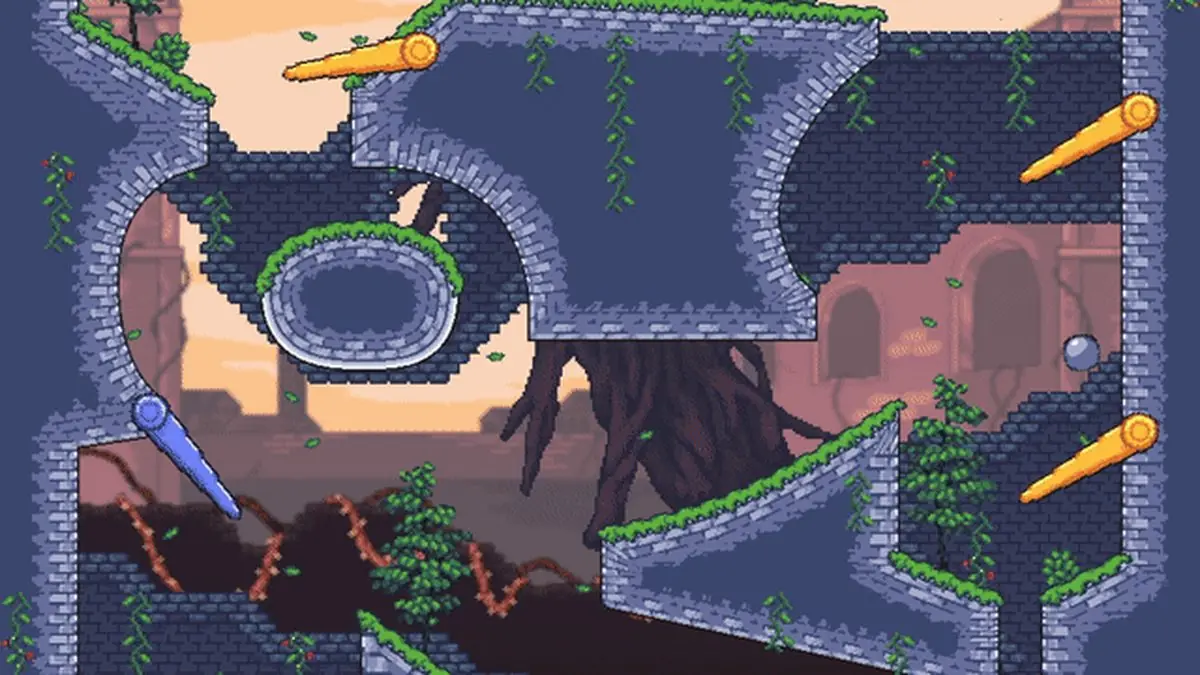
Sometimes the best plays come from nowhere. OneThatEatYou just pulled off one of those surprise moves that makes you sit up and pay attention. Their new demo The Fallosophy takes two things that should never go together — pinball and rock climbing — and somehow makes it work.
This isn’t your typical indie platformer. The developer took the chaotic physics of a pinball machine and turned it into a vertical climbing challenge. You’re not just jumping from platform to platform. You’re bouncing, ricocheting, and fighting gravity with every move up the wall.
“I turned pinball into a brutal vertical climbing game with only two buttons. The Fallosophy demo is now live!” — u/OneThatEatYou on r/pcgaming
The word “brutal” isn’t thrown around lightly here. Anyone who’s played a pinball machine knows how unforgiving those physics can be. Now imagine that chaos translated to a climbing game where one wrong bounce sends you tumbling back down. That’s the kind of risk-reward gameplay that separates the casual players from the grinders.
What’s really smart about this design is the two-button approach. In a world where games keep adding more complex control schemes, OneThatEatYou went the opposite direction. Sometimes the most innovative play is the simplest one. Two buttons means anyone can pick it up, but mastering the timing and physics? That’s where the real skill ceiling lives.
The climbing mechanics create a completely different rhythm than traditional platformers. Instead of precise jumps and perfect timing, you’re working with momentum and angles. Every bounce becomes a calculated risk. Do you go for the safe route that takes longer, or risk the direct path that could send you back to the bottom?
This kind of genre-mixing shows what makes indie development so exciting right now. Big studios stick to proven formulas because they have to hit revenue targets. Indie developers can take wild swings and see what connects. The Fallosophy is exactly that kind of experimental gameplay that pushes the medium forward.
The physics engine becomes the real star here. Pinball physics aren’t just window dressing — they’re the core mechanic that everything else builds around. The way your character bounces off surfaces, gains momentum, and interacts with the environment creates gameplay that feels completely fresh. It’s like watching a rookie player discover a new strategy that nobody else thought of.
Vertical climbing games have been around forever, but this approach feels totally unique. Instead of static platforms and predictable jumps, every surface becomes dynamic. The environment reacts to your movement in ways that keep you guessing. That unpredictability creates the kind of “just one more try” gameplay loop that hooks players for hours.
The demo timing is perfect too. March is when a lot of gamers are looking for something different after the big holiday releases. Dropping a demo that you can try right now removes all the barriers. No pre-orders, no wait times — just download and see if this crazy concept actually works.
OneThatEatYou clearly understands their audience. PC gamers love weird experimental stuff, especially when it comes from passionate indie developers. The r/pcgaming community has a good eye for spotting innovative gameplay, and this post is getting the attention it deserves.
The two-button design also makes this incredibly accessible. No complex combos to memorize or finger gymnastics required. That’s huge for bringing in players who might be intimidated by more complex indie games. Sometimes the best innovations come from removing complexity, not adding it.
This is the kind of project that could inspire other developers to take similar risks. When someone proves that seemingly incompatible genres can work together, it opens up whole new possibilities. We might start seeing more games that blend unexpected mechanics in creative ways.
The demo approach is smart strategy too. Let players experience the concept firsthand instead of trying to explain it in marketing materials. Some gameplay ideas are so unique that you have to feel them to understand them. The Fallosophy definitely falls into that category.
For OneThatEatYou, this demo represents a major opportunity to build buzz around their concept. If the gameplay delivers on the promise, word-of-mouth could turn this into one of those sleeper hits that takes off organically. The indie scene loves supporting developers who take creative risks and execute them well.
The real test comes next. Can this concept sustain a full game experience, or is it more of a clever tech demo? Great gameplay hooks need depth to keep players engaged long-term. If OneThatEatYou can build meaningful progression and variety around these core mechanics, they could have something special.
Right now, the demo is available for anyone curious enough to give it a shot. In the indie world, that’s often how the best discoveries happen — someone takes a chance on something weird and finds their new favorite game.