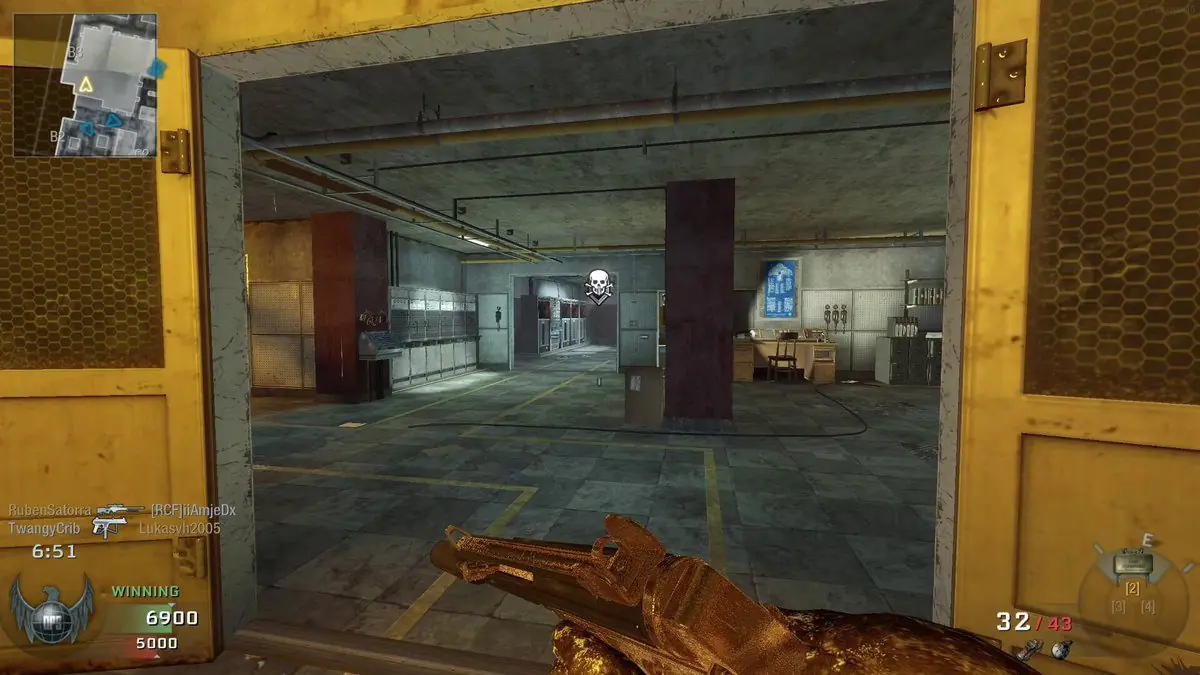
Sometimes a single tweet cuts right through the noise. That’s what happened when gaming account @ExoGhost dropped a simple reference to Call of Duty: Black Ops from 2010. No fancy commentary. No hot takes. Just the game and its year. The response was immediate — 814 likes and 75 retweets from gamers who got it.
The numbers tell the story. This wasn’t just random nostalgia. This was recognition.
“Call of Duty: Black Ops 1 (2010)” — @ExoGhost
That tweet hit because it reminded people of something they’d lost. Black Ops wasn’t just another COD game. It was the last time the franchise felt completely dialed in. Every weapon had weight. Every map had purpose. The campaign didn’t treat you like an idiot.
Treyarch knew what they were building back then. The AK-74u wasn’t just another SMG — it had bite and recoil that demanded respect. The FAMAS could delete enemies but kicked like a mule. Weapons felt dangerous in your hands and terrifying when pointed at you.
The maps were built for war, not Instagram. Nuketown was chaos by design. Firing Range had clean sight lines and smart cover. Array gave snipers real estate but kept them honest with flanking routes. Every angle served a tactical purpose.
But here’s where it gets frustrating. Look at what we get now.
Modern COD games feel like they’re designed by committee. Too many bells and whistles. Too much hand-holding. The weapon balance shifts every week because everything’s built for maximum engagement metrics instead of solid gameplay.
The maps? Most of them feel like theme parks. All flash, no substance. They’re designed to look good in trailers but play like garbage when you’re actually trying to hold down a lane or set up a proper defense.
Current titles throw so much at the screen you can’t tell what’s happening. Operator skins that break immersion. Weapons that feel like toys. Movement systems that prioritize spectacle over tactical thinking.
Black Ops understood something fundamental: good FPS design is about constraints, not options.
The loadout system was tight. You had to make real choices. Take the longer barrel for range but lose mobility. Spec for stealth but sacrifice firepower. Every attachment had trade-offs that mattered.
The progression felt earned. Unlocking the Galil or the AK-74u meant something because you had to work for it. No battle passes. No premium currencies. Just play well and get rewarded.
The campaign still holds up because it respected your intelligence. Complex story about mind control and conspiracy without treating you like a child. Characters felt real, not like action figures. Mason’s mental breaks weren’t just plot devices — they were genuinely unsettling.
Zombies mode was pure. Four players, waves of undead, mystery box gambling. No convoluted Easter eggs requiring YouTube tutorials. Just survival horror at its finest.
Competitive play had room to breathe. The game didn’t constantly adjust your experience based on hidden algorithms. Good players dominated. Bad players learned or lost. Simple.
So why does this matter in 2026? Because the gaming industry keeps chasing trends instead of fundamentals.
Black Ops worked because it was complete. Every system supported the core experience. The art direction, sound design, and gameplay all pointed in the same direction. Modern games feel scattered — like different teams worked on different pieces without talking to each other.
The FPS genre needs that focus again. Players are tired of games that feel like live services disguised as shooters. They want tight gameplay loops, balanced competition, and respect for their time.
This nostalgia wave isn’t just about missing the past. It’s about recognizing what actually works.
The question is whether anyone’s listening. Treyarch is still around. They still know how to build solid shooters. But they’re working within a system that prioritizes engagement over excellence.
Maybe the viral response to a simple Black Ops reference will remind developers what players actually want. Not more cosmetics or seasonal content. Just a well-made game that respects their intelligence and rewards their skill.
The blueprint exists. It’s sitting right there from 2010. Whether anyone has the guts to follow it again remains to be seen.