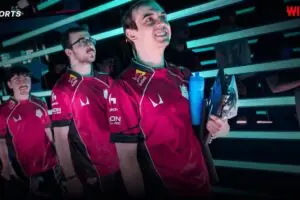
Sometimes the biggest disasters teach us the most valuable lessons. Riot Games learned this the hard way in 2017 when their Mid-Season Invitational in Brazil became one of esports’ most embarrassing venue failures.
Picture this: a massive 15,000+ seat arena in Brazil, ready to host some of the world’s best League of Legends teams. The lights are on, the cameras are rolling, and the seats are… empty. We’re talking painfully, awkwardly empty.
“In 2017, MSI was held in Brazil, a 15,000+ seats arena was used and the Brazillian crowd didn’t show up. Riot subsequently did a 90% discount and lowered the ticket price from 80R$ to 8R$” — u/Numerous_Fudge_9537 on r/leagueoflegends
That’s not a typo. Riot slashed ticket prices by 90%. From 80 Brazilian reais down to just 8 reais. That’s like cutting a $50 ticket to $5. When you’re doing discounts that steep, you know something went seriously wrong.
But the real kicker? Even with those rock-bottom prices, the arena stayed mostly empty. So Riot did what any desperate event organizer would do – they tried to hide it. The company literally covered the upper tiers of the arena with black fabric to make things look better on the broadcast.
Imagine being a viewer at home, watching what looks like a packed venue, not knowing that Riot was basically playing hide-and-seek with empty seats. It’s both clever and deeply embarrassing at the same time.
The 2017 MSI disaster didn’t just hurt Riot’s pride – it scared them away from Brazil entirely. For nine whole years, from 2017 to 2026, Riot avoided hosting any international League events in the country. That’s nearly a decade of Brazilian fans missing out on top-tier competition in their backyard.
This year, Riot finally returned to Brazil with the First Stand event. But here’s where the story gets funny in a sad way – they went from one extreme to the other. Instead of a massive 15,000-seat arena, they chose a tiny 150-seat studio.
Now Brazilian fans are complaining again, but for the opposite reason. The venue’s too small! It’s like Riot was so traumatized by those empty seats that they decided to play it super safe. Better to have 150 people fighting for tickets than 15,000 empty chairs, right?
This whole saga shows us something important about esports venue planning. It’s not just about picking the biggest arena you can find. You need to understand your local market, price things right, and build real excitement in the community.
Brazil has always been passionate about gaming and esports. The country has produced incredible League players and has a huge gaming community. So what went wrong in 2017? Maybe the timing was off, or the marketing didn’t connect, or the ticket prices were too high for the local economy.
The pricing issue seems especially important. 80 reais might not sound like much to us, but in the context of Brazilian wages and spending power in 2017, that could have been a significant expense for many fans.
Riot’s overcorrection with the 150-seat studio tells us they’re still figuring things out. It’s smart to start small and build up rather than risk another embarrassing disaster. But 150 seats for a country with millions of League fans? That feels a bit too cautious.
The lesson here isn’t just for Riot – it’s for the entire esports industry. Venue selection is an art, not a science. You need to balance ambition with reality, understand your local audience, and price things appropriately.
Other game companies are watching this story unfold. When you see events like The International or CS2 Major championships, the organizers are probably thinking about Brazil and wondering how to avoid Riot’s 2017 mistake while not overcorrecting like they did in 2026.
So what’s next for Riot in Brazil? The 150-seat studio was clearly a test run. If First Stand goes well, we might see them gradually increase venue sizes for future events. Maybe next time it’ll be a 500-seat theater, then a 2,000-seat auditorium, working their way back up to arena-sized events.
The Brazilian gaming community deserves better than both extremes – empty 15,000-seat arenas and cramped 150-seat studios. Hopefully, Riot has learned enough from both experiences to find the sweet spot that works for everyone.