There is a widespread saying that ‘History is written by the victors.’ The contemporary Avatar: The Last Airbender universe Twitter account made a tweet with the same statement. The reactions? They were quite vociferous indeed. It appears like a rock thrown simultaneously into the hornet’s nest of philosophical debate and Avatar lore. Gamers and fans of the series are going deep into the matter to find out what it signifies in the world of bending and in our world.
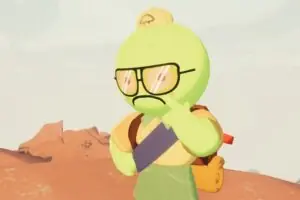
For those who aren’t acquainted with it in brief: the tweet from @4vataruniverse simply read ‘History is written by victors’ and came along with a picture. The tweet caused a huge discussion thread where gamers connected Fire Nations’ propaganda in Avatar, pondered over historical parallels in the real world, and even got engaged in some surprisingly heated debates. The focal point is who gets to tell the story after a fight; a discussion which Avatar has tackled very artfully.
Okay, going through the reactions is quite an adventure. One user C.S. Myers presented an idea that possibly a lot of gamers share: ‘I don’t think in the history of TV there has ever been a series that deals with the themes of war and its after-effects while still being kids and adults friendly the way Avatar does. If you asked me, it is indeed a one-of-a-kind saga.’ C.S. Myers is not wrong! Avatar never underestimated its audience. The Fire Nation was shown as changing history, for example, in the episode ‘The Ember Island Players’ where a corny play entirely misrepresents Team Avatar’s journey. The Fire Nation was actually the winner during the war, therefore it was the one dictating the narrative. It is an extremely clever writing that gets one thinking.
Nevertheless, the discussion turns to the real, and by that I mean the real world. Another user skibidi ohio india mode (got to love internet nicknames) debated with another user on how the governments always are the so-called ‘victorious’ party that rewrites the history. It is a typical chicken-or-the-egg situation regarding power and who gets to tell the story. And, of course, since it is internet, somebody brought up Imperial Japan as an example, while another person countered with the issue of atomic bombs. This is heavy stuff that illustrates how a cartoon’s themes can activate discussions about actual historical events and the teaching thereof. What was I saying? Oh yes, Avatar.
There are responses that are funnier and more meta and they are worth their weight in gold. One user just stated ‘Avatar was a documentary’ which is a very humorous way to say that the show’s messages are so much in tune with the reality. Another user, PitchblackDragon, ironically tweeted, ‘”The Cartoon says it so it’s true”,’ making fun of the whole idea of taking out philosophical quotations from an animated show. But Avatar is the case: it tackles massive themes in such a way that they are digestible, thus it can linger on the minds of people for years.
There was also that ridiculously specific thread that got me giggling. It all started when someone said ‘sneak attack’ and then another user, Devil Leg Sanji, just reacted with ‘Sneak attack.’ To which the third person, LayerZeroKid, replied ‘😭🙏🏽 please pick up a dictionary.’ The random, human interactions amid a deep discussion remind one that they are on social media platforms. It is not all well-structured essays; it is messy, full of typos, and at times people do not understand each other. The whole thing is a vibe.
And the hype that is character-specific cannot be ignored. One user thought it would be great to have an Air Nomad monk Gyatso fight scene, and that’s true. Someone’s commenting on the Fire Nation’s dark deeds was simply met with ‘Okay Azula pack it up,’ which is a whole mood. It shows the intensity of devotion that the fandom has for these characters and their moral labyrinth. The Fire Nation was not merely a gang of mustache-twirling villains; it was a self-created reality that lived by its own rewritten history.
So where do we stand? The tweet, a simple phrase and picture, opened up a whole vault of discussions, nostalgia, and even dispute analyses. It proves that Avatar: The Last Airbender is not just a children’s show that you watched after school. It is a piece of media that has dealt with the themes of imperialism, propaganda, and historical bias in such a way that even today the interest of gamers is almost two decades later. The discussion it has generated is a testament to its writing. The show illustrated that the ‘victors’ ruled the narrative, but in the end, it was about the revelation of the true history—the one that comprised the Air Nomad genocide, the Water Tribes’ struggles, and the hope of balance. In a way, the ongoing discussion among PlayStation and Xbox gamers about what to play next is a modern echo of these themes of choice and narrative.