
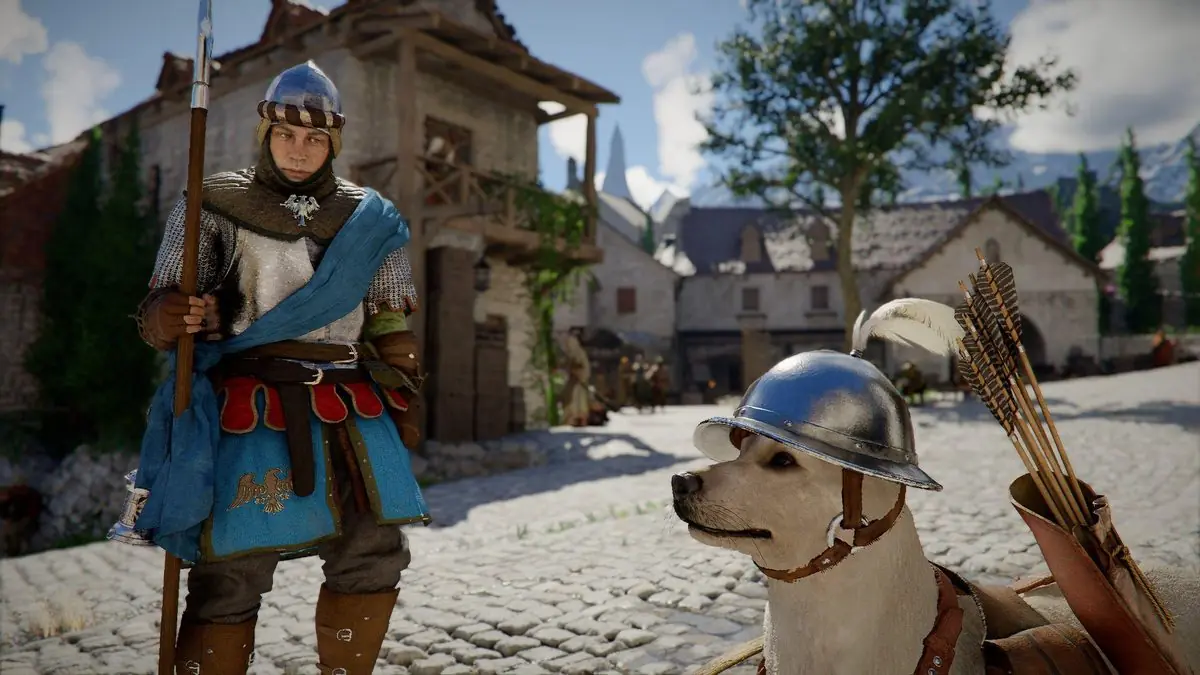
A candid comment from a former Elder Scrolls Online executive has ignited discussion about the boundaries between single-player and MMO design. The industry veteran expressed admiration for Pearl Abyss’s upcoming Crimson Desert while simultaneously questioning whether its approach crosses an unspoken line in game development philosophy.
The comment, which surfaced on Reddit‘s PC gaming community, centers on what the former ESO boss described as making ‘a singleplayer MMO’ – a design approach he characterized as ‘almost like cheating.’ This perspective offers a rare glimpse into how seasoned MMO developers view the increasingly blurred lines between traditional multiplayer experiences and single-player adventures.
“‘Why didn’t anyone think of this before?’: Former Elder Scrolls Online boss loves Crimson Desert, but calls making ‘a singleplayer MMO’ ‘almost like cheating'” – u/wsrvnar on r/pcgaming
This reaction speaks to a fundamental tension in modern game design. Traditional MMOs like Elder Scrolls Online require careful balancing of social systems, persistent world mechanics, and player interaction frameworks. Meanwhile, Crimson Desert appears to borrow these established systems while removing the complexities of managing thousands of concurrent players.
The timing of this commentary proves particularly noteworthy. Pearl Abyss has positioned Crimson Desert as an ambitious departure from their MMO roots with Black Desert Online. The studio has consistently emphasized the game’s single-player focus, despite incorporating mechanics typically associated with persistent online worlds.
Meanwhile, the broader industry continues wrestling with hybrid approaches to game design. Titles like Genshin Impact and Destiny 2 have demonstrated the commercial viability of games that straddle traditional genre boundaries. These successes have emboldened developers to experiment with unconventional combinations of established mechanics.
The former ESO executive’s perspective illuminates the craftsmanship challenges inherent in MMO development. Creating systems that function smoothly across thousands of players requires extensive technical infrastructure and careful design consideration. Single-player games leveraging similar mechanics can focus purely on individual player experience without these constraints.
Notably, this isn’t the first time industry veterans have questioned genre-blending approaches. Similar debates emerged around games like The Witcher 3, which incorporated progression systems typically found in MMOs, and Horizon Zero Dawn, which borrowed heavily from open-world MMO quest design.
The ‘cheating’ characterization suggests a deeper philosophical divide within the development community. Some designers view genre conventions as earned through years of iteration and problem-solving. Others see these same conventions as tools to be freely adapted across different game types.
This perspective becomes more complex when considering player expectations. Modern gamers increasingly expect robust progression systems, expansive worlds, and engaging content loops regardless of whether they’re playing alone or with others. The distinction between single-player and multiplayer mechanics has become less relevant to players than the quality of the overall experience.
Crimson Desert represents a particularly interesting case study in this evolution. Pearl Abyss built their reputation on Black Desert Online’s complex MMO systems. Applying this expertise to a single-player experience allows them to deliver sophisticated mechanics without the technical overhead of managing a persistent online world.
The industry implications extend beyond individual games. If single-player experiences can successfully incorporate MMO-style progression and world design, traditional MMO developers may need to reconsider their value propositions. Social interaction and shared experiences remain unique to multiplayer games, but the mechanical advantages have narrowed considerably.
Meanwhile, player reception will ultimately determine whether this ‘cheating’ approach proves sustainable. Early reactions to Crimson Desert suggest strong interest in the hybrid concept. However, the game’s success will depend on execution rather than innovation alone.
Looking ahead, this debate reflects broader questions about genre evolution in the gaming industry. As development tools become more sophisticated and player expectations continue rising, the boundaries between traditional game categories will likely blur further. The question isn’t whether this trend will continue, but how quickly established developers will adapt to these changing expectations.
The former ESO boss’s commentary provides valuable insight into how industry veterans view these shifts. His simultaneous appreciation and skepticism captures the complexity of an industry grappling with rapid evolution while respecting hard-earned design wisdom.
Whether Crimson Desert’s approach proves to be clever innovation or genre confusion remains to be seen. What’s certain is that the conversation around hybrid game design will only intensify as more developers experiment with cross-genre mechanics and players embrace increasingly diverse gaming experiences.