The stakes just got real. PUBG Global Series Circuit 2 drops May 20 in Seoul, and 24 teams are about to find out what they’re really made of. Half a million dollars sits on the table. More importantly – the top 8 teams punch their ticket to the Esports World Cup.
No reset button here. Circuit 1 points carry forward, meaning every placement from the last three weeks still matters. The pressure’s been building since March, and now it’s time to deliver.
“PUBG Global Series Circuit 2 is about to drop! A little over a month after Circuit 1’s unpredictable three weeks, the 24 teams are back in Seoul. Circuit 2 isn’t a reset. The PGS Points earned in Circuit 1 carry directly into the standings, and the final results here decide who qualifies for the Esports World Cup.” – PUBG on Steam
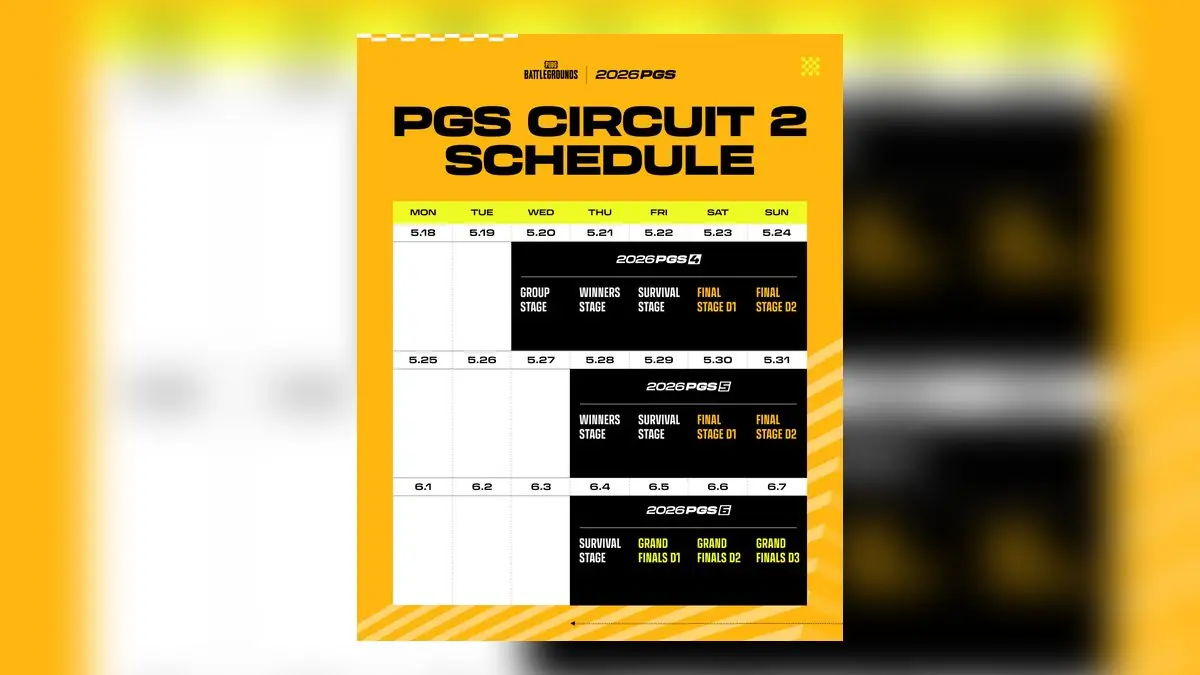
The tournament format is straightforward. Three phases – PGS 4, 5, and 6. Daily matches kick off at 19:00 KST. First two phases pay out $100,000 each. The final phase? That’s where things get serious with $300,000 on the line.
But here’s where it gets interesting. The game changed.
Terrain destruction just expanded to every major competitive map. Erangel now joins the list alongside Rondo, Taego, Sanhok, and Miramar. That’s not a small update – that’s a complete tactical overhaul.
Think about it. Teams spent Circuit 1 perfecting their rotations, memorizing every piece of cover, every angle. Now they can blow holes through mountains. Create new sightlines. Reshape the battlefield mid-match.
The smart teams saw this coming. They’ve been grinding the patch since April. The teams that didn’t? They’re about to learn some expensive lessons.
This isn’t just about who can aim straight anymore. Map control takes on a whole new meaning when you can literally change the map. Want to cut off a rotation? Blow up the ridge. Need a new firing position? Make one.
The tactical implications are massive. Traditional chokepoints become meaningless when teams can create their own paths. High ground advantage gets diluted when cover can be eliminated at will. Every team’s playbook just got rewritten.
Compound positioning becomes critical. Teams can’t just hold buildings anymore – they need to think three moves ahead. What happens when the enemy blows out your back wall? Where’s your fallback position when they crater your roof?
The top 12 teams from Circuit 1 are already sweating. They’re closest to qualification, but that also makes them the biggest targets. Everyone below them has nothing to lose and everything to gain.
Seoul’s Seongsu district will host the chaos. Same venue as Circuit 1, but everything else is different. The patch changes everything. Team dynamics shift. Strategies that worked a month ago might be worthless now.
Here’s the brutal truth – half these teams won’t make it to the Esports World Cup. The math is simple. 24 teams, 8 spots. That’s a 33% success rate. In esports terms, that’s a meat grinder.
The group stage seeding comes straight from PGS 3 results. No surprises there. Performance earned those seeds, and performance will determine who moves forward. Snake draft format means balanced groups, which means no easy paths to the top.
Watch for teams that adapted fastest to terrain destruction. They’ll have the edge early. But don’t count out the veterans. They know how to perform under pressure, and pressure is all this tournament offers.
The prize breakdown tells the story. $100,000 for PGS 4 and 5 each. That’s warmup money. The real prize is PGS 6’s $300,000, but more importantly, it’s the qualification points that come with it.
Three weeks to separate the elite from the wannabes. Three weeks for teams to prove their Circuit 1 performance wasn’t a fluke. Three weeks for 16 teams to watch their Esports World Cup dreams die.
May 20 kicks off with Day 1 Group Stage starting early – 14:00 KST instead of the usual 19:00. Teams better be ready. There’s no easing into this tournament.
The patch 41.1 update isn’t just about terrain destruction either. Balance changes, weapon adjustments, and map tweaks all factor into team preparation. Smart squads have been scrimming nonstop since the patch dropped.
Expect aggressive early-game plays as teams test new destruction strategies. Expect conservative late-game positioning as nobody knows how the new meta will shake out. Expect upsets as underdogs leverage chaos to their advantage.
The battlefield got more dangerous. The stakes got higher. Time to see who’s really built for this level of competition.